Scented Flowers and Their Effect on Mood
Why lavender calms, freesia lifts the mood and lily of the valley evokes spring — and how to choose scent for a room on purpose.
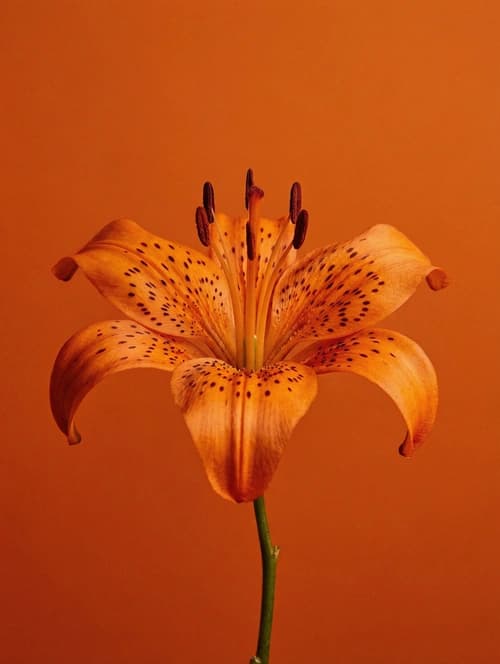
Flower scent isn't decoration — it works directly on your mood, and there's a solid reason for that. Smell is the only sense with an almost unfiltered direct line to the brain's centres for emotion and memory. That's why a bouquet can calm a room, energise it, or trigger a childhood memory in seconds. This guide shows which flower carries which mood — and how to choose scent on purpose rather than by chance.
Why scent works so directly: unlike sight or hearing, whose signals first pass through a relay station (the thalamus), scent molecules take a shortcut. They dock in the nose, and the signal goes via the olfactory bulb straight to the amygdala (emotion) and hippocampus (memory). This short route explains why a smell triggers a feeling before you can even name it — and why hardly any sense evokes vivid childhood images as reliably as smell.
Lavender — the classic for winding down. The key compound is linalool. When inhaled, it travels via the airways into the brain, where it acts on the same receptors (GABA-A) as many calming substances. Human studies show lavender scent can lower heart rate and improve sleep quality. For the bedroom, a reading corner or a get-well visit, lavender is the obvious choice — a few stems on the nightstand are enough.
Freesia — the mood lifter. Its scent is bright, lightly citrus-sweet and is perceived as fresh and invigorating. Freesias work wherever you want to feel awake and in good spirits: the kitchen, the desk, the breakfast table. Unlike heavy, sweet scents they don't tire you out but keep the air in the room 'light'. Anyone giving a bouquet to cheer someone up rarely goes wrong with freesias.
Lily of the valley — the spring anchor. Its sweet scent is considered calming and mood-lifting and is, for many, inseparable from May, gardens and childhood — a prime example of the memory power of smell. Important and often underestimated: lily of the valley is highly toxic in all parts (cardiac cardenolides). The scent in a room is harmless, but the flower water belongs out of reach of children and pets, and you should wash your hands after cutting the stems. In households with a dog or cat, this goes double.
How to choose scent by room and goal — a small decision aid: for calm and sleep, reach for soothing scents like lavender. For energy and focus, for fresh, light ones like freesia. For nostalgia and warmth, for memory-rich classics like lily of the valley or hyacinth. A rule of thumb: one dominant scent per room. Never mix several intense fragrances in one bouquet — the result is noise instead of mood, and the individual notes cancel each other out.
Dosage is decisive. The same scent that relaxes in moderation can trigger headaches in too large a quantity — especially with intense varieties like hyacinth or lily. In the bedroom a small accent is enough; in the living room you can go further. Strongly scented bouquets also don't belong at a sickbed or in small, poorly ventilated rooms. If you react sensitively to scents or pollen, our guide to allergy-friendly flowers offers low-scent alternatives.
Freshness carries the scent. A simple, often overlooked truth: a tired flower barely smells. Essential oils evaporate as the bloom wilts, and the scent peaks in the first few days. High-quality, genuinely fresh stock smells more intense and for longer — the reason we at Fleura buy fresh daily at the Veiling Rhein-Maas rather than stocking up. For the full scent effect, check for freshness when buying and keep the bouquet in the cooler — but not draughty — part of the room for the first days.
Frequently asked
- Which flower smells best for relaxing?
- Lavender is the classic for relaxing — its compound linalool has a proven calming effect and can improve sleep quality. The sweet scent of lily of the valley is also perceived as soothing. For bedrooms and reading corners, lavender is the obvious pick because it relaxes without overloading the room with heavy scent.
- Can flower scents trigger headaches?
- Yes, especially in too large a quantity and with intense varieties like hyacinth or lily. The same scent that's pleasant in moderation can cause headaches when concentrated. The solution is dosage: only a small accent in the bedroom, well-ventilated rooms, and don't place strongly scented bouquets right by the bed or in tight, closed spaces.
- Is the scent of lily of the valley dangerous?
- The scent in a room is harmless. The plant itself is dangerous: lily of the valley is highly toxic in all parts (cardiac cardenolides), including the flower water. Keep the vase and water out of reach of children and pets, and wash your hands after cutting the stems. In households with a dog or cat, extra caution is warranted.
- Which scented flower suits which room?
- Rule of thumb: one dominant scent per room. For calm and sleep, soothing scents like lavender in the bedroom. For energy and focus, fresh, light ones like freesia in the kitchen or at the desk. For warmth and nostalgia, memory-rich classics like lily of the valley or hyacinth in the living room. Several intense scents in one bouquet cancel each other out.
Related topics
Flower Library
Lavender
Flower Library
Freesia
Flower Library
Lily of the Valley
Flower Library
Hyacinths
Flower Library
Cotton Lavender
Flower Library
Jasmine
Flower Library
Stocks
Flower Library
Phlox
Flower Library
Artemisia
Flower Library
Tuberose
Flower Library
Violets
Flower Library
Sweet Peas
Plants
Basil
Plants
Curry Plant
Plants
Catmint
Plants
Pansy Orchid
Plants
Dancing Lady Orchid
Plants
Sage
Plants
Heliotrope
Plants
Lemongrass
Occasions