Encyclopedia
Plants
House and garden plants in robust nursery quality — straight from the Veiling Rhein-Maas. With honest care tips from 45 years of practice.
 Year-round
Monstera
Monstera deliciosa
The Monstera is arguably the most popular houseplant of all — and one of the most rewarding. Its large, split leaves green up any room instantly. We source our Monstera in robust nursery quality directly via the Veiling Rhein-Maas, so it arrives well-rooted and acclimatised.
View entry →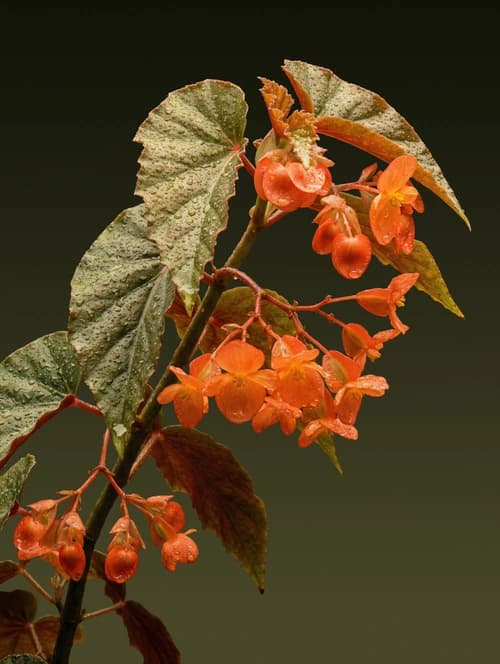 Year-round
Urn Plant
Aechmea fasciata
The aechmea, or urn plant, is the most elegant of the bromeliads: silver-grey banded foliage in a strict rosette, topped by a sculptural pink flower head that lasts three to six months. It is a textbook example of grateful care — you water mainly into the leaf funnel, not the soil. We buy our urn plants with the flower head just fully coloured at the Veiling Rhein-Maas, so you get the maximum time from this extraordinary display.
View entry → Year-round
Aeonium
Aeonium arboreum
Aeonium looks like a flower that never fades: perfectly layered leaf rosettes on woody stems, in the cultivar ‚Schwarzkopf‘ a dramatic near-black red. As a Canary Islands native it ticks differently from other succulents — it grows in the cool half of the year and rests in high summer. Know that rhythm and this sculptural rosette tree will give you pleasure for years.
View entry →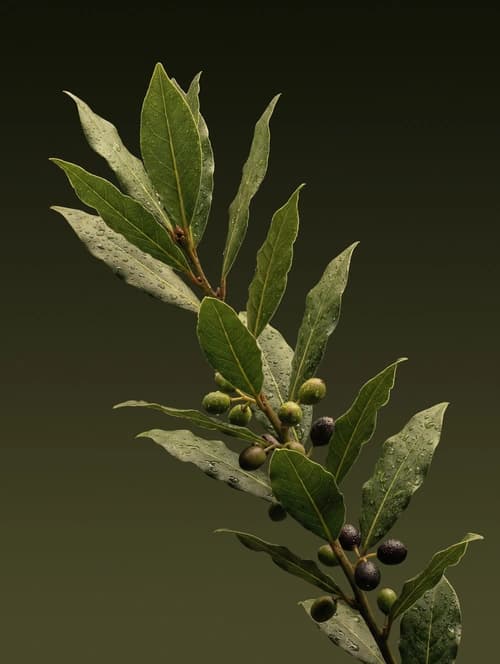 Year-round
Chinese Evergreen
Aglaonema commutatum
Aglaonema, the Chinese evergreen, is the answer to one of the most frequent questions in our shop: which plant survives a darker corner of the room and still looks like something? Its foliage is magnificently patterned — silvery, creamy white or, in modern varieties, even glowing red — and it is among the most shade-tolerant foliage plants of all. At the auction we deliberately pick densely leaved plants with strong markings.
View entry → Year-round
Elephant Ear
Alocasia
The Alocasia, commonly known as the elephant ear, is an architectural beauty with large, arrow-shaped leaves and striking venation. It instantly brings tropical flair into any room and makes a genuine statement piece. We select our plants with the eye for detail grown over 45 years in floristry, so only strong, well-rooted specimens reach you.
View entry → Year-round
Aloe Vera
Aloe vera
Aloe Vera is probably the most popular succulent for the windowsill: easy to care for, architecturally beautiful and a real eye-catcher with its fleshy, toothed leaf rosettes. In our Pempelfort shop we deliberately pick compact, sturdily grown specimens that keep their shape for years. Anyone looking for a plant that forgives almost everything yet still has character is in the right place.
View entry → Year-round
Flamingo Flower
Anthurium andraeanum
The anthurium is one of the most rewarding flowering houseplants of all: its lacquer-red, heart-shaped spathe with the upright spadix glows for many weeks, often nearly all year round. We love it because it reliably brings colour into the living room even for beginners and looks handsome through its glossy, leathery leaves even when not in bloom. A vigorous, carefully chosen plant already carries several blooms and buds at the same time when it arrives.
View entry → Year-round
Zebra Plant
Aphelandra squarrosa
The aphelandra, aptly called zebra plant, is a double beauty: bold white veins draw stripes across the glossy dark-green foliage, and above it a pyramid-shaped golden-yellow flower spike glows for weeks. It is a diva among houseplants — but offer it warmth, light and humidity and it rewards you richly. We buy our zebra plants in budded quality at the Veiling Rhein-Maas so the flower opens in your home.
View entry → Year-round
Areca Palm
Dypsis lutescens
The areca palm, also known as the golden cane palm, is one of the most popular indoor palms of all, bringing tropical flair into any room with its elegantly arching, finely feathered fronds. It grows bushy from several canes and helps filter the indoor air. At Fleura we look for strong, densely foliaged specimens from the start, so the palm arrives healthy and lush in your home.
View entry →Year-roundBamboo
Fargesia & Phyllostachys
Bamboo is the fastest privacy screen you can plant: evergreen, elegantly rustling and fully winter-hardy in the mild Rhineland. But let us say it right at the start, because we have seen it often enough in Düsseldorf gardens: planting a running bamboo without a rhizome barrier means planting yourself a problem. With the right species — or the right barrier — bamboo is one of the most rewarding garden plants there is.
View entry → Year-round
Basil
Ocimum basilicum
Basil is probably the most popular kitchen herb on German windowsills — and at the same time the one most people fail with. The reason is almost never a lack of care, but too much of it: incorrect watering and a spot that is too cold. With a few simple rules, however, a pot of basil lasts many weeks and delivers a steady supply of fresh leaves for pesto, tomatoes and salads.
View entry →
Bigleaf Hydrangea
Hydrangea macrophylla
The bigleaf hydrangea is the classic hydrangea with the big, round mophead blooms — the epitome of the summer front garden and one of the best-selling flowering shrubs of all. From June to September it flowers in pink, blue, violet or white, the blue shades being a small miracle of soil chemistry: they only develop in acidic soil with available aluminium. Take two things to heart — plenty of water and the right pruning — and it will give you decades of pleasure.
View entry →Year-roundBegonia
Begonia
The begonia is one of the most versatile houseplants of all: sometimes it dazzles with lush cushions of flowers, sometimes with dramatically patterned foliage. At Fleura we value it as an easy-care, year-round beauty that adds colour to any home and, with a little attention, lasts remarkably long.
View entry → In season
Barberry
Berberis
Barberry is the classic shrub for impenetrable, colourful hedges: dense, thorny and with foliage from yellow-green through purple to almost black-red. Yellow flowers glow in May, followed in autumn by red berries and strong autumn colour. It is undemanding, takes clipping well and offers valuable, safe nesting cover for birds within its thorny tangle.
View entry →
Elephant's Ears
Bergenia
Bergenia is one of the most honest perennials in the range: evergreen, indestructible and among the very first to flower in early spring, when its thick stems push pink bell blooms out of the leathery foliage. Many varieties turn their large leaves bronze-red in winter — structure for the bed when nothing else is standing. It earns its nickname elephant's ears with those broad, leathery leaves.
View entry →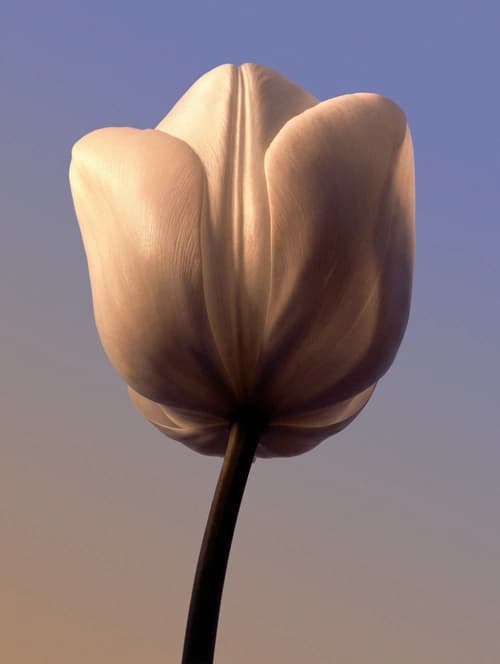 Year-round
Parlor Palm
Chamaedorea elegans
The parlour palm has been the definitive indoor palm for over 150 years — it already graced Victorian parlours, hence its English name. It stays compact, grows slowly, copes with little light and is considered non-toxic to cats and dogs. When someone asks us for an uncomplicated palm for their flat, it is almost always our first answer.
View entry →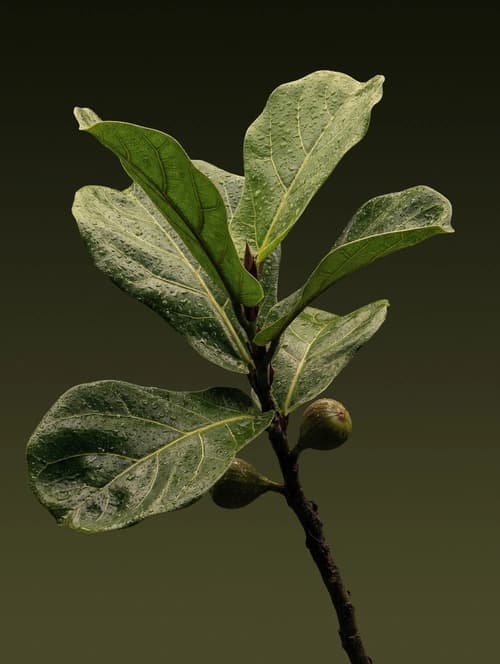 Year-round
Weeping Fig
Ficus benjamina
The weeping fig was Germany's best-selling indoor tree for decades — and rightly so: fine, glossy foliage, elegantly arching branches and a genuine tree feeling in the living room. It does have one quirk you need to know about: it responds to every change of location by dropping leaves. Give it a fixed, bright spot and then leave it in peace, and you have a companion for decades.
View entry →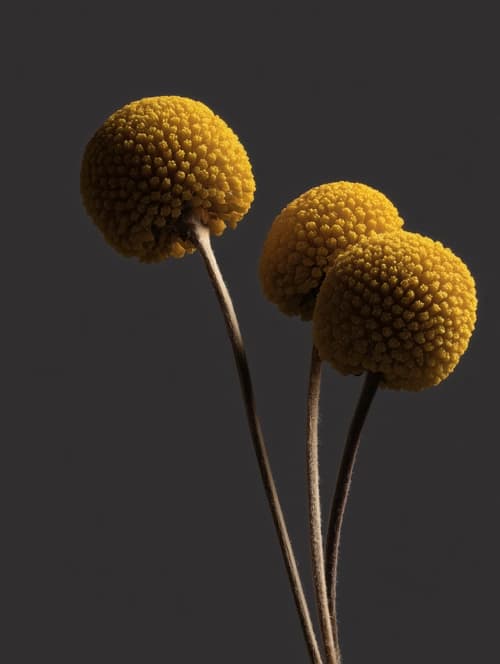 Year-round
Bishop's Cap Cactus
Astrophytum
The bishop's cap is a small jewel among cacti: a globular to columnar body with usually five sharply drawn ribs that looks like a star when viewed from above. The best-known species, Astrophytum myriostigma, is completely spineless and covered instead in fine white woolly flecks. A classic for collectors, and an easy-going character plant on the windowsill for beginners.
View entry →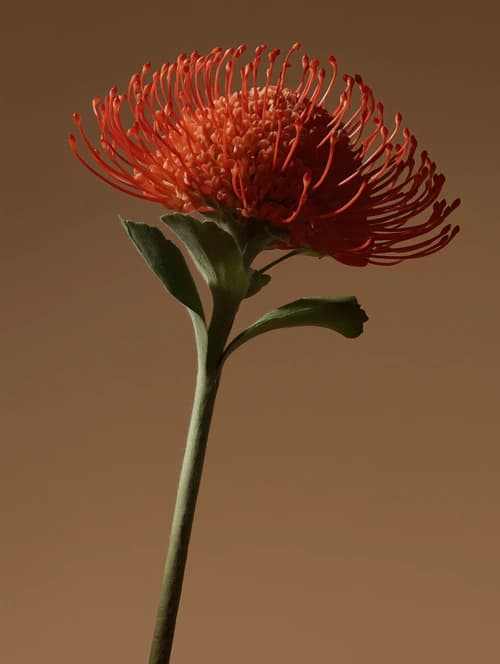
Wisteria
Wisteria sinensis
Hardly any climber stages spring as dramatically as wisteria: in April and May, fragrant blue-violet flower racemes up to half a metre long hang from pergolas and facades. Behind the spectacle, however, is a powerhouse that deserves respect — the twining stems can literally crush downpipes and weak supports, and all parts of the plant, especially the seeds and pods, are poisonous. Properly trained and pruned twice a year, it rewards you with a garden experience for life.
View entry →Year-roundBlue Fescue
Festuca glauca
Blue fescue is probably the best-known blue ornamental grass: a dense, hedgehog-like cushion of fine, steel-blue blades that barely reaches twenty centimetres. It is evergreen, extremely drought-tolerant and one of the most rewarding structural plants for rock gardens, containers and grave planting. We source our plants in compact nursery quality directly via the Veiling Rhein-Maas.
View entry →Squill
Scilla
Few spring flowers glow as intensely blue as the squill: nodding starry bells in a gentian blue that looks almost electric between brown leaves in March. Scilla is undemanding, fully hardy and one of the best naturalisers for lawns and woodland edges. We source our plants in nursery quality via the Veiling Rhein-Maas.
View entry →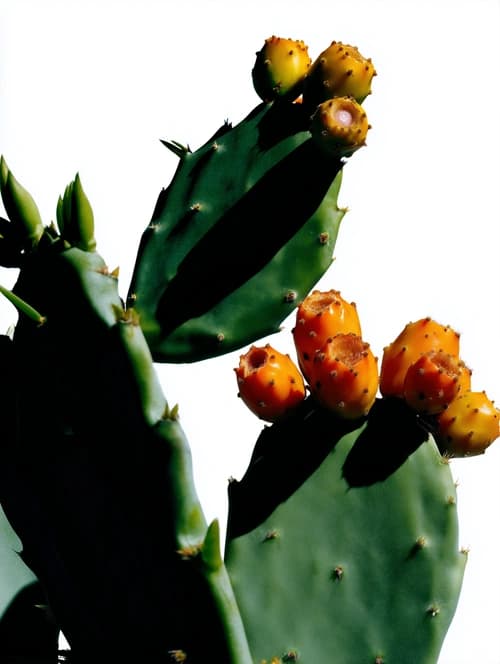 Year-round
Snake Plant
Dracaena trifasciata
The snake plant is arguably the most low-maintenance houseplant of all: architectural, undemanding and almost indestructible. We recommend it again and again at our Pempelfort shop precisely because it asks so little of its owners while looking reliably good. Its strict, upright leaves bring calm and structure to any room.
View entry →
Savory
Satureja
Savory is the classic partner of all legumes: its peppery, spicy aroma makes beans, lentils and stews more digestible and rounder in flavour — not for nothing is it also called pepper herb in German. In pot and bed it is remarkably easy-going. We buy our herb pots in sturdy nursery quality via the Veiling Rhein-Maas.
View entry →
Bougainvillea
Bougainvillea
Bougainvillea, known in German as Drillingsblume, brings the Mediterranean onto the terrace: cascades of glowing bracts in pink, purple or orange, appearing in waves from May to September. It is no beginner plant — it wants full sun, a smart watering hand and a frost-free winter home. Give it that, and it rewards you with a richness of colour no other container plant matches.
View entry → Year-round
Bromeliad
Bromeliaceae
Bromeliad is the collective name for an entire plant family of over 3,000 species — from the pineapple through guzmania and aechmea to the soil-free air plant. As houseplants they share a recipe for success: rosette growth, vivid flower heads that last for months, and care that feels more like topping up than gardening. We buy our bromeliads fresh each week at the Veiling Rhein-Maas and give honest advice on which genus suits which window.
View entry →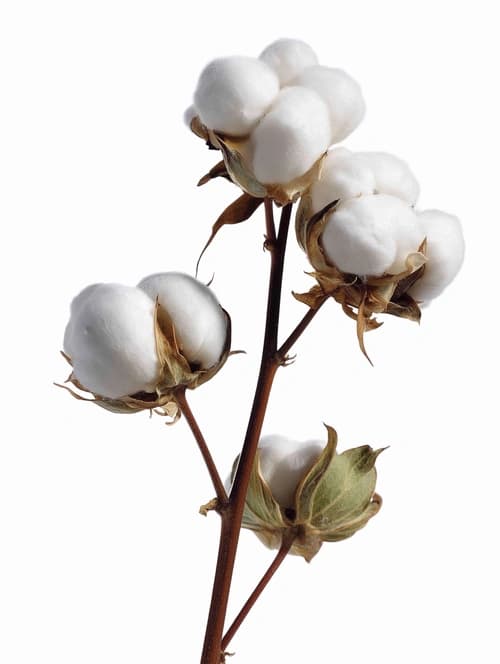 Year-round
Baby's Tears
Soleirolia soleirolii
Baby's tears is a green miniature carpet of thousands of tiny leaves, spilling over the rim of its pot like a soft cushion. Few plants look as friendly and tidy on a windowsill. In floristry we have valued it for decades as underplanting, bowl filler and terrarium plant. Keep your watering in check and it will reward you for a long time — it does not forgive drying out.
View entry →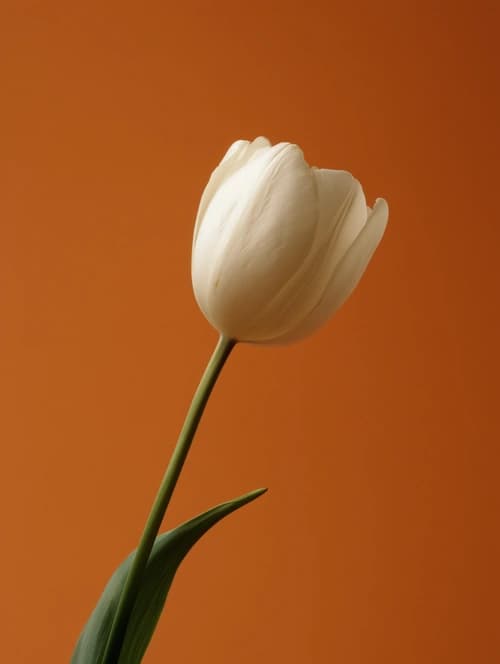 Year-round
Boxwood
Buxus sempervirens
Boxwood is the topiary plant par excellence: densely branched, evergreen and long-lived over decades. Whether as a low border, a clipped ball in a pot or an ornate figure, it gives structure to any garden or terrace. In our Düsseldorf workshop we have also long valued it as a sturdy cut green for wreaths and arrangements.
View entry →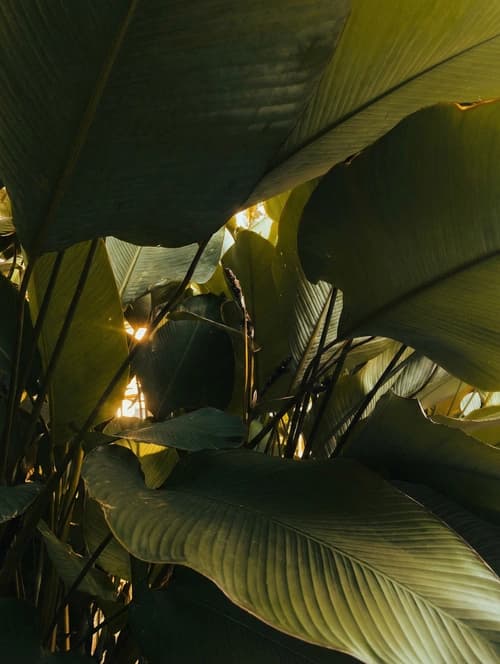 Year-round
Coleus
Coleus scutellarioides
The coleus is the painter among foliage plants: wine red, lime, copper and purple sweep across the soft leaves in countless patterns. It grows rapidly, is child's play to propagate from cuttings and works in a pot on the windowsill just as well as on the balcony or terrace in summer. We buy our coleus in compact, well-branched quality at the Veiling Rhein-Maas.
View entry →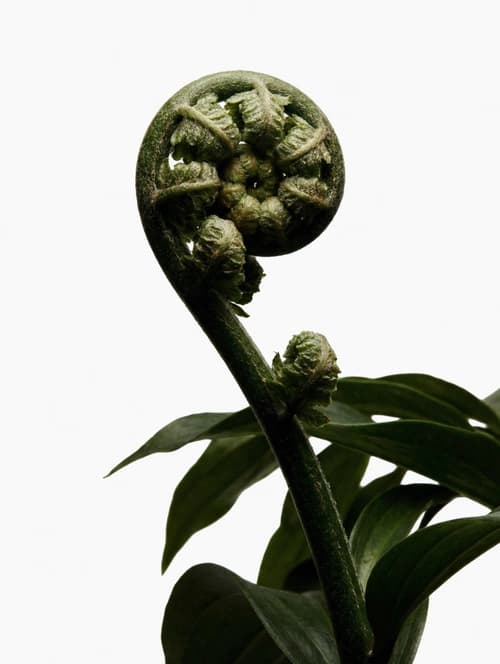 Year-round
Calathea
Goeppertia (syn. Calathea)
The calathea, known in German as Korbmarante (basket prayer plant), is the diva among foliage houseplants: patterned leaves that look hand-painted and visibly rise at night, reopening each morning. In our Pempelfort shop we advise honestly before you buy, because she only rewards consistent care with her full beauty. In return she is listed by the ASPCA as non-toxic to cats and dogs and is harmless to have around children.
View entry → Year-round
Turtle Vine
Callisia repens
Callisia, often sold as turtle vine, is one of the most rewarding hanging plants there is: small, densely set leaves on soft shoots that quickly grow over the rim of the pot and form a lush green curtain. Especially popular is the cultivar „Pink Lady“ with pink-and-cream striped foliage. It grows briskly, forgives beginner mistakes and can be regrown from any piece of shoot.
View entry →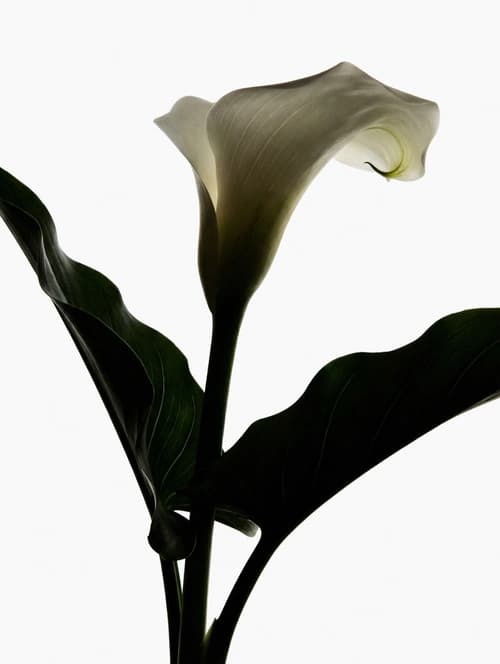 Year-round
Cambria Orchid
x Cambria
The cambria is the orchid for everyone who has so far only dared to keep a Phalaenopsis: a robust multi-genus hybrid bred for living-room conditions, with star-shaped, often tiger-patterned blooms in red-brown, yellow or pink. Strictly speaking, „Cambria“ is not a botanical name but a trade term for a whole family of crosses. We buy our cambrias in bud at the Veiling Rhein-Maas — so you get the full six to ten weeks of flowering at home.
View entry →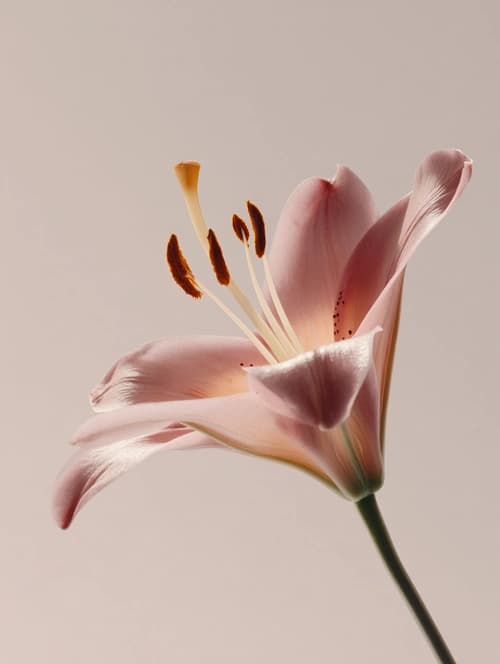 In season
Chinese Silver Grass
Miscanthus sinensis
Chinese silver grass is the backbone of the modern grass garden: upright clumps, silvery shimmering plumes from late summer and a winter silhouette you will be grateful for in January. It grows in clumps — without the runner worries of true reed — and is one of the most uncomplicated perennials we know. Only one thing is decisive: cutting it back at the right time.
View entry →Firecracker Flower
Crossandra infundibuliformis
The crossandra is a little piece of the tropics for the windowsill: above glossy, dark green foliage, fan-shaped blooms in warm salmon orange glow for weeks, pushed out one after another from green flower spikes. Here it is still an insider tip among flowering houseplants — give it warmth, light and even moisture and it rewards you with an astonishingly long flowering season.
View entry →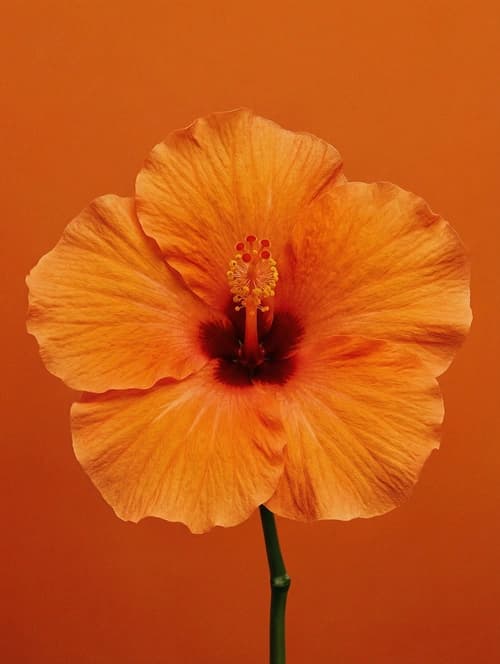 Year-round
Never-Never Plant
Ctenanthe
Ctenanthe is the often overlooked relative of calathea and maranta — yet it is tougher than both. Its leaves carry a striking striped or herringbone pattern, in many species with a purple-red underside, and fold upright in the evening with an audible rustle. If you want the leaf splendour of a calathea but have failed with one before, this is the more forgiving alternative.
View entry →Curry Plant
Helichrysum italicum
The curry plant is a charming trickster: it smells intensely of curry, yet botanically has nothing to do with the spice blend. Its silver-grey, needle-fine shoots make it one of the loveliest texture and fragrance plants for pots, balconies and herb beds. We buy our herb pots in sturdy nursery quality at the Veiling Rhein-Maas — well rooted and hardened off, not forced.
View entry →In seasonBoat Orchid
Cymbidium
The cymbidium, or boat orchid, is the queen of winter orchids: long, gracefully arching spikes with up to twenty waxy blooms that last two months and more in a cool spot. It is not a windowsill orchid for the warm living room but a cool-house plant with clear demands. Meet them and you are rewarded with one of the most spectacular displays of the orchid year — we buy it fresh at the Veiling Rhein-Maas from October to March.
View entry →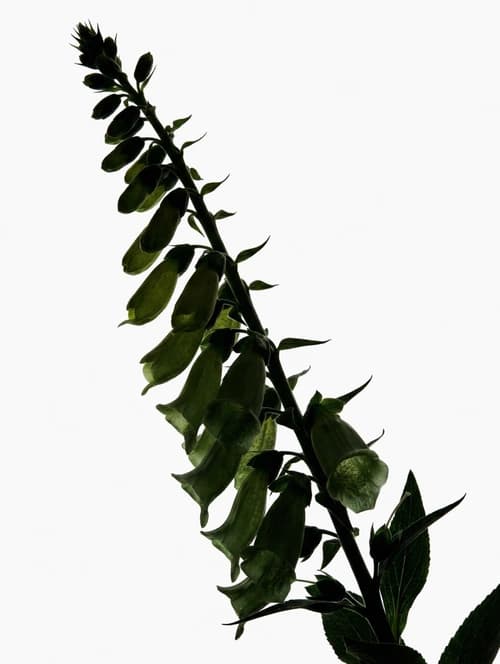 Year-round
Dendrobium Orchid
Dendrobium
Dendrobium is the second most important pot orchid in the trade after Phalaenopsis — and to many the more beautiful one: instead of a few large blooms it carries whole clusters of smaller flowers packed along upright canes. Two very different groups dominate the market, and it pays to know which one you have, because their care differs. We buy our dendrobiums in bud with the first flowers open at the Veiling Rhein-Maas, so the display lasts many weeks at home.
View entry →
Deutzia
Deutzia
Deutzia is the quiet star of early summer: between May and July, thousands of small star-shaped flowers in white to pink cover the entire shrub, often so densely that the foliage almost disappears. It is undemanding, fully hardy, tolerant of urban conditions and non-toxic — a shrub that works in nearly every garden. As a relative of the hydrangea it likes fresh soil, but is far less fussy.
View entry →Year-roundDumb Cane
Dieffenbachia seguine
Dieffenbachia is one of the most striking foliage plants for living spaces: large, variegated leaves that play with the light, and an upright, tropical habit. In our Duesseldorf-Pempelfort workshop we value it as a low-maintenance office plant that holds up reliably even in fairly subdued light. Important to know: it is toxic and belongs somewhere children and pets cannot reach.
View entry →
Dill
Anethum graveolens
Dill, the classic pickling herb, is one of the most popular culinary herbs of all — its fine, aniseed-fresh flavour is indispensable in fish dishes, salads and pickled cucumbers. As a potted plant it is a little more demanding than its reputation suggests, but with a few tricks it does well. We buy our herb pots fresh via the Veiling Rhein-Maas, sown sturdily rather than overcrowded.
View entry → In season
Mandevilla
Mandevilla
Mandevilla is the container plant for hot summers: large trumpet-shaped blooms in red, pink or white above glossy dark green foliage, from May into October. Thanks to its fleshy storage roots it even survives a dry holiday weekend. It climbs on a trellis and trails from a basket — hardly any plant is as rewarding on a south-facing balcony.
View entry → Year-round
Dischidia
Dischidia
Dischidia is the lesser-known sister of the hoya: an epiphytic hanging plant with fleshy little leaves on fine, trailing stems. Depending on the species, coin-round, oval or heart-shaped leaves line up densely — a living green curtain. We source our dischidias in well-established hanging quality via the Veiling Rhein-Maas.
View entry →In seasonTwinspur
Diascia
Twinspur is nemesia's delicate sibling: loose sprays of small, heart-like blooms in pink, salmon and apricot tones that sway gently in the wind. Hardly any balcony plant looks as natural and light. Yet it is tougher than it looks and, with two small cutbacks, flowers from May to October.
View entry → Year-round
Dragon Tree (Dracaena)
Dracaena
The dragon tree is the easy-going structural plant par excellence: upright stems, slender arching tufts of leaves and a toughness that copes even with darker corners. At our shop in Pempelfort we deliberately pick well-rooted specimens, because an established dragon tree often stays with a home for many years. If you want a large, low-maintenance houseplant with architecture, this is it.
View entry →In seasonCape Primrose
Streptocarpus
The Cape primrose is the secret star among flowering houseplants: above a rosette of long, soft leaves float trumpet-shaped blooms in blue, violet, pink or white for months on end, often with a finely patterned throat. It flowers even longer than its relative the African violet and is hardly more demanding. For semi-shaded windowsills there is scarcely a more rewarding perpetual bloomer.
View entry →In seasonSweet Alyssum
Lobularia maritima
Sweet alyssum is the flower you smell before you see it: its low cushions of hundreds of tiny cruciform blooms give off a warm honey scent that draws bees and hoverflies like a magnet. As a gap-filler and edging it has been indispensable since cottage-garden days. We buy our bedding stock compact and well rooted at the Veiling Rhein-Maas.
View entry →Year-roundEcheveria
Echeveria
The echeveria forms perfectly symmetrical leaf rosettes that resemble stone flowers - from powdery blue-green to pink and copper-flushed tips. As an undemanding succulent it fits any windowsill and forgives the occasional missed watering. At Fleura we select only strongly rooted, compactly grown plants, because only a well-lit specimen keeps its dense rosette shape instead of stretching leggily upward.
View entry →Year-roundTree Ivy
x Fatshedera lizei
The tree ivy is a botanical curiosity: a true cross between two different genera, combining the hand-shaped leaves of ivy with the shrubby habit of the Japanese aralia. The result is an indestructible foliage plant for cool, shady spots where little else wants to grow. We buy our tree ivies in well-branched, sturdy quality at the Veiling Rhein-Maas.
View entry →Year-roundPothos
Epipremnum aureum
Pothos is probably the most low-maintenance foliage plant of all - trailing, robust and almost indestructible. Its heart-shaped, often variegated leaves bring plenty of life to any room with minimal effort. We happily recommend it to plant beginners because it forgives mistakes and forms metre-long shoots with a little patience.
View entry →Year-roundYew
Taxus baccata
The yew is the queen of clipped hedges: deep dark green, fully screening, extremely long-lived — and as the only conifer it reliably resprouts even from old wood. A yew stump sawn back radically will green up again; no thuja or cypress can do that. Its gravity is part of the deal: nearly all parts are highly poisonous, which must be known and respected when planting.
View entry →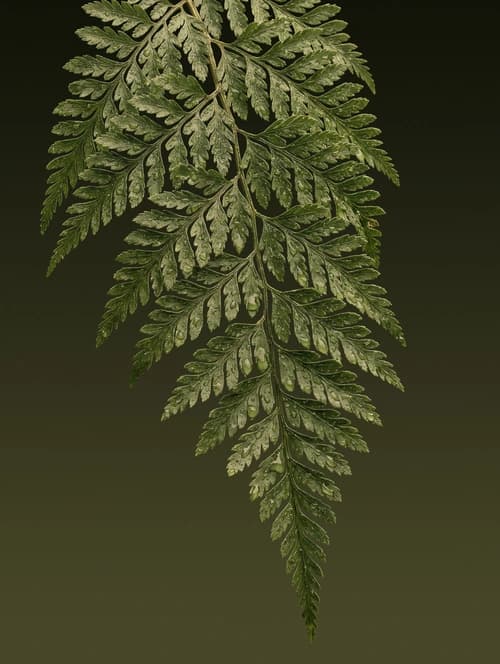 Year-round
Peace Lily
Spathiphyllum wallisii
The peace lily is one of the most forgiving yet elegant houseplants around: glossy dark green foliage paired with striking white flower bracts that appear almost year-round. In our Pempelfort workshop we have long recommended it for darker corners where other plants give up. It tolerates mistakes and signals its thirst clearly by drooping its leaves.
View entry →In seasonMonkshood
Aconitum napellus
Monkshood is one of the most beautiful blue perennials in the garden — and at the same time the most poisonous plant in Europe. Its deep blue flower spires bring a colour to the part-shade bed in summer and autumn that hardly any other perennial delivers. We say it as plainly as a specialist shop must: if you have small children or nibbling pets, do not plant it. Everyone else gains a long-lived, proud rarity.
View entry →Year-roundPonytail Palm
Beaucarnea recurvata
The ponytail palm is the most patient houseplant we know: its bulbous trunk base stores water for weeks, and its crown of narrow, arching leaves grows slowly but steadily. If you tend to forget watering or travel a lot, you will hardly find a more grateful housemate. We buy our ponytail palms with a well-developed, firm trunk base at the Veiling Rhein-Maas.
View entry →Barrenwort
Epimedium
Ask us for a perennial for the ultimate problem spot — dry shade under trees — and we almost always end up at barrenwort. In April its small, spurred flowers hover above the foliage like a swarm of fairies; for the rest of the year it forms a dense, elegant carpet of leaves that defeats even root pressure and slugs.
View entry →In seasonAngelonia
Angelonia angustifolia
Angelonia is the answer to hot summers: where snapdragons give up in July, it just keeps flowering. The upright flower spikes in violet, pink and white look like little orchids and go for weeks without deadheading. We buy our angelonias at the auction in compact, well-rooted quality — they are among the most uncomplicated summer bloomers in our range.
View entry →Year-roundString of Pearls
Senecio rowleyanus
The string of pearls is probably the quirkiest hanging succulent of all: pea-sized, perfectly round leaves line up along thread-thin stems like a green pearl necklace. The beads are water reservoirs — a perfect adaptation to its arid homeland. We buy our plants with densely beaded strands at the Veiling Rhein-Maas.
View entry →In seasonHeather
Erica gracilis
As the days grow shorter, heather is one of our favourite companions for balconies, graves and autumn arrangements. Its dense cushions of tiny flowers glow in pink, white and purple long after the summer bloomers have faded. At the Veiling Rhein-Maas we select compact, well-rooted potted plants with full buds so the colour lasts for many weeks.
View entry →Tarragon
Artemisia dracunculus
Tarragon is the finest seasoning herb of French cuisine: without it there would be no sauce béarnaise and no fines herbes. Its sweet, aniseed-like aroma is unmistakable — provided you get the right tarragon. We buy our herb pots in nursery quality at the Veiling Rhein-Maas and make a point of stocking true French tarragon.
View entry →In seasonJapanese Maple
Acer palmatum
The Japanese maple is the aristocrat among garden shrubs: slow-growing, picturesque in silhouette, with finely cut, fan-shaped leaves that blaze out in orange, scarlet and gold in autumn. Hardly any other plant brings so much Japanese garden calm to terraces and small gardens — provided the site is right.
View entry →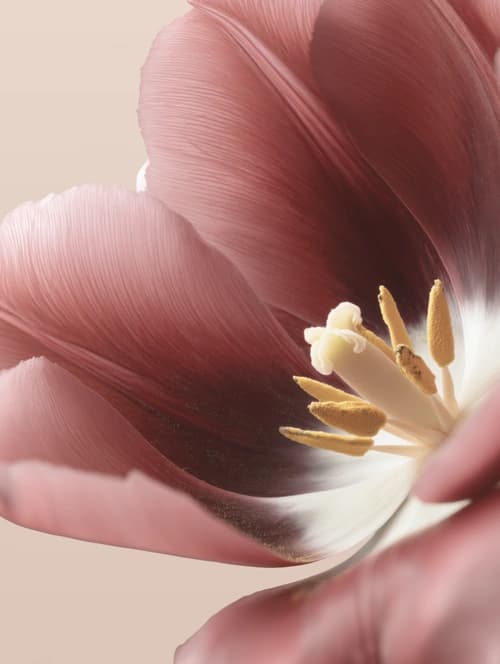 In season
Fan Flower
Scaevola aemula
Fan flower is our tip for anyone who wants true blue on the balcony: its half-round, fan-shaped blooms glow in a blue-violet that few summer flowers offer. On top of that, the Australian is remarkably tough — heat, wind and rain barely bother it. In hanging baskets and along box edges it flowers from May until frost without any deadheading.
View entry →Red Hot Poker
Kniphofia
The red hot poker is the exclamation mark of the summer bed: dense flower spikes rise above grassy tufts of leaves, shading from yellow at the base to glowing red at the tip — as if torches were burning in the border. Hardly any perennial brings this much exotic flair to an ordinary garden. With the right winter protection, this South African is a lasting presence in the Rhineland too.
View entry →Feather Grass
Stipa
Feather grass is the finest of all common ornamental grasses: hair-thin blades and silky awns that start moving at the slightest breeze. In prairie borders, gravel gardens and containers it brings a lightness no flowering plant can replace. We buy our plants in compact nursery quality directly at the Veiling Rhein-Maas.
View entry →Year-roundPrickly Pear
Opuntia
The prickly pear with its flat, ear-shaped pads is probably the most recognisable cactus silhouette in the world — from the Mexican coat of arms to the windowsill. Especially popular is the „bunny ears“ Opuntia microdasys with its golden-yellow dots. Those very dots have a catch, though: they are glochids, ultra-fine barbed bristles that lodge in the skin at a touch. Admired from a small distance, the opuntia is one of the easiest, sunniest houseplants there is.
View entry →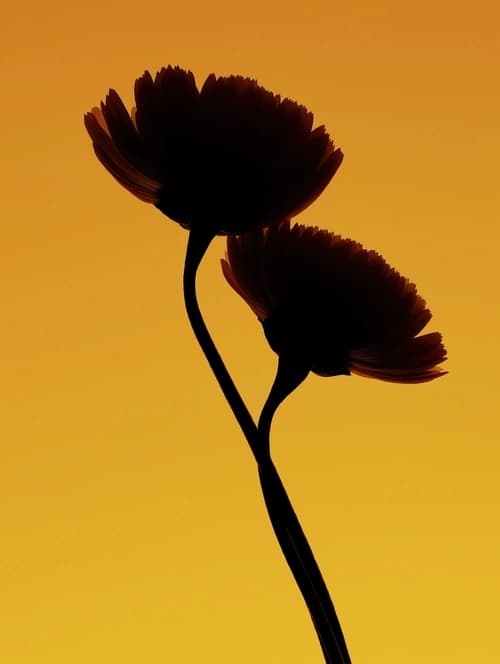 In season
Stonecrop
Sedum
Stonecrop is the most indestructible perennial of the late-summer garden: thick fleshy foliage that shrugs off drought, and broad flower heads mobbed by bees and butterflies from August to October. It is fully hardy and one of the best plants for low-maintenance borders, green roofs and grave planting. Depending on the season we stock it as a border perennial and as a low cushion form.
View entry →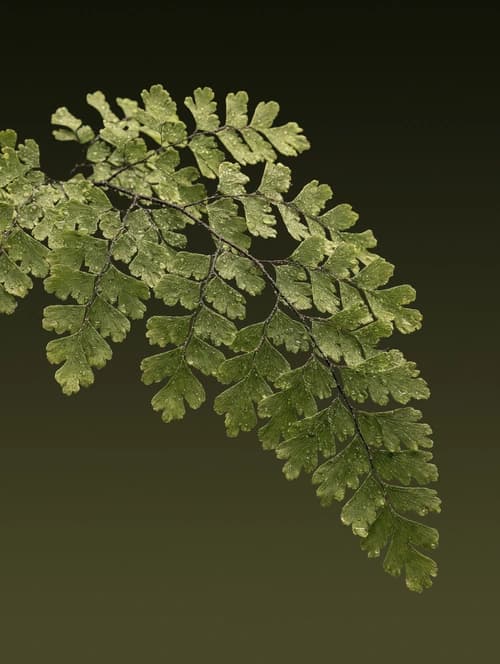 In season
Firethorn
Pyracantha
Firethorn lives up to its name: from September its branches hang laden with orange, red or yellow berries that glow into winter. Before that, in May, comes a snow-white cloud of blossom swarmed by bees. Evergreen, thorny and clip-tolerant, it is bird-protection shrub, hedge and espalier plant in one.
View entry →In seasonScarlet Sage
Salvia splendens
Scarlet sage is the classic among red bedding plants: upright flower spikes in a scarlet that glows from afar, above rich green foliage and a compact habit. Unlike its relative, culinary sage, it is purely ornamental — but in return it flowers from planting until frost. If you want impact in a bed or box, this delivers it guaranteed.
View entry → Year-round
Nerve Plant
Fittonia albivenis
The fittonia, or nerve plant, is a small plant with a big effect: every leaf is covered in a fine network of white, pink or red veins. At no more than 15 centimetres tall it fits on any windowsill or desk and, above all, into terrariums and bottle gardens, where its humidity needs are met automatically. Its famous party trick: when thirsty it collapses dramatically flat — and stands back up within hours of being watered.
View entry →In seasonBusy Lizzie
Impatiens walleriana
The busy Lizzie lives up to its name: from May until the first frost it flowers non-stop, and it does so exactly where most flowering plants go on strike — in the shade. North-facing balcony, shady windowsill or the dark spot under a tree: hardly any plant brings colour to low-light places so reliably. For pet households it is a safe choice, too.
View entry →Forsythia
Forsythia
When forsythia flowers, spring is official: in March and April the branches cover themselves completely in golden-yellow bell blooms before the leaves appear. The shrub is entirely undemanding, grows in almost any garden soil and forgives beginner mistakes. In floristry we value forsythia branches as forcing stock — cut stems open indoors weeks ahead of the garden.
View entry → Year-round
Maidenhair Fern
Adiantum
The maidenhair fern, also called Venus hair fern, is the most delicate fern in the houseplant range: gossamer-fine, fan-shaped leaflets on glossy black, wiry stalks that stir with every breath of air. This elegance has its price — it is a sensitive soul that demands constant moisture and high humidity. Provide that and you own one of the most beautiful foliage plants there is; it is also non-toxic to pets.
View entry →
Lady's Mantle
Alchemilla mollis
Lady's mantle is the great harmoniser of the garden: its yellow-green veils of flowers mediate between all colours, and the pleated leaves catch dew and raindrops like beads of quicksilver. No bed edge in an English cottage garden is without it. For us florists it is doubly valuable — hardly any filler makes summer bouquets look so effortlessly fresh and natural.
View entry →Year-roundSlipper Orchid
Paphiopedilum
The slipper orchid is the most characterful presence on the orchid shelf: its pouch-shaped lip, often flanked by striped or spotted petals, looks more like a creature than a flower. Contrary to its reputation, the tropical Paphiopedilum is well suited to living rooms — it is the only common orchid genuinely happy with low light. We buy our slipper orchids in bud at the Veiling Rhein-Maas, because a single bloom lasts up to three months in a cool spot.
View entry →In seasonFuchsia
Fuchsia hybrida
Fuchsia is one of the most rewarding summer plants for balcony and garden: for months its dancing, often two-toned bell flowers hang from the shoots like little ballerinas. It blooms reliably even where many others give up, namely in partial shade. In Duesseldorf-Pempelfort we have long recommended it for shaded north-facing balconies where geraniums get too little sun.
View entry →
Hosta
Hosta
The hosta is the queen of the shade bed: hardly any perennial brings as much calm and structure to dark garden corners with its large leaves, often blue-bloomed or marked with white. In summer, elegant flower stems with bell-shaped blooms in white to violet rise above them. We stock hostas as established pot-grown perennials from the auction — once planted, they grow more magnificent year after year.
View entry →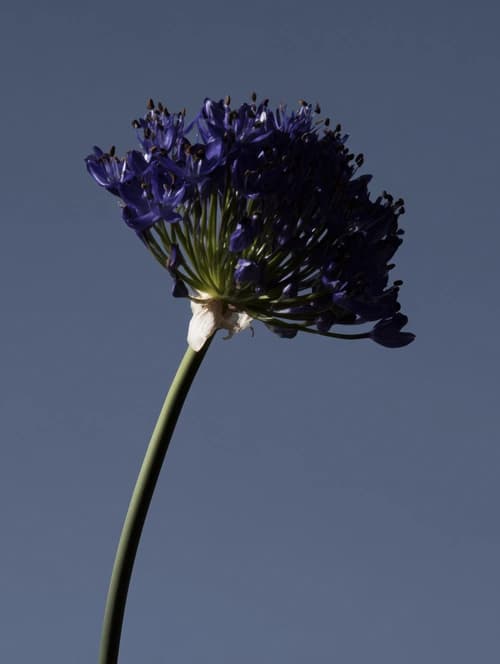
Garden Hydrangea
Hydrangea macrophylla
The garden hydrangea turns any partly shaded spot into a sea of blue, pink and violet with its lavish flower heads. In our Duesseldorf workshop we value it as a robust summer beauty that blooms for weeks and stays decorative for months once dried. Its colour can be steered through the soil, making it one of the most fascinating garden plants of all.
View entry →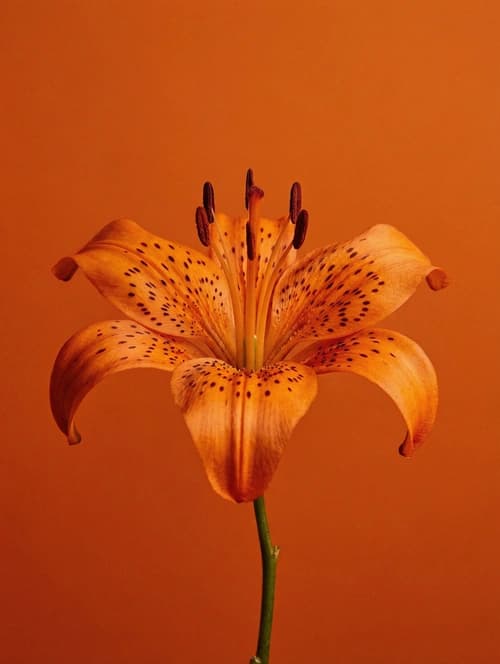 Year-round
Ox Tongue
Gasteria
The gasteria, aptly called ox tongue, is one of the toughest succulents for the windowsill: thick, tongue-shaped leaves, often prettily white-spotted or warty, arranged in two ranks or rosettes. Unlike most succulents it also copes with less sun — ideal for east and west windows. And it is considered non-toxic to pets, which makes it a good aloe alternative in households with cats.
View entry →Treasure Flower
Gazania
Gazania, popularly called midday gold in German, bears perhaps the most graphic blooms of all summer flowers: large, silky-sheened daisies in orange, yellow or red, often with dark ray rings and contrasting stripes. Like moss rose it is a sun worshipper from South Africa — the flowers open only in direct light. On hot, dry sites it is among the most reliable things summer has to offer.
View entry →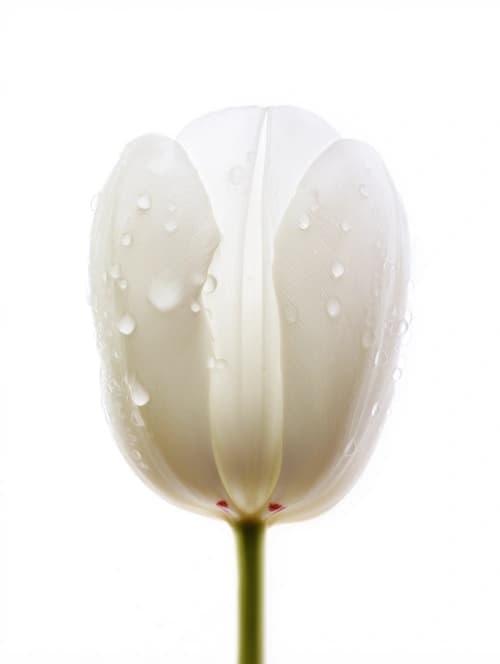 Year-round
Fiddle-leaf Fig
Ficus lyrata
The fiddle-leaf fig is probably the best-known statement houseplant of recent years: large, violin-shaped leaves with bold veining that give any room an architectural feel. In our shop in Duesseldorf-Pempelfort we pick sturdy, evenly leafed specimens, because a well-nourished plant settles far more reliably through its first weeks in a new spot. It is not a foolproof beginner plant, but it rewards consistent care with striking growth.
View entry →Honeysuckle
Lonicera
Honeysuckle is the garden's most romantic climber: on summer evenings its curved whorls of flowers release a sweet, far-carrying scent that draws moths from the whole neighbourhood. It clothes fences, pergolas and rose arches quickly and reliably — and with its evening fragrance belongs beside every seating corner and bedroom window.
View entry →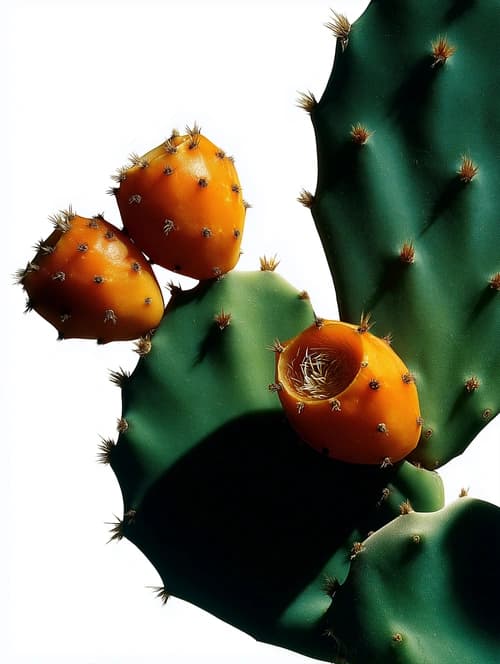 Year-round
Jade Plant
Crassula ovata
The jade plant — also called money tree or lucky plant in German — is one of the longest-lived houseplants of all: well cared for, it accompanies its owners for decades, growing into a small tree with a thick trunk. Its round, fleshy leaves resemble coins, hence the name and its reputation as a bringer of luck. Important for pet households: it is toxic to cats and dogs.
View entry →Obedient Plant
Physostegia virginiana
The obedient plant is the late-summer gift among perennials: when many beds are already tiring, it sends up its clean, spiky flower spires in pink or white from July onwards — and does not stop until September. Its party trick is unique: each bloom sits on a kind of joint, can be turned and stays put exactly as you position it. For the vase, it is one of the best late-summer cuts from your own garden.
View entry →
Leopard's Bane
Doronicum
Leopard's bane is the earliest daisy of the garden year: from April onwards it opens golden-yellow ray flowers above fresh green, heart-shaped leaves — at a time when tulips and forget-me-nots otherwise rule the border. The perennial is undemanding, long-lived and a good bee plant. Cut from your own garden it lasts surprisingly well in the vase.
View entry →In seasonGeranium
Pelargonium
Few plants shape a Düsseldorf balcony in summer like the geranium. It blooms tirelessly from May into October, tolerates sun and heat and even forgives the occasional missed watering. We deliberately supply our customers with well-rooted, properly hardened young plants so the wealth of flowers lasts as long as possible.
View entry →Year-roundStaghorn Fern
Platycerium bifurcatum
The staghorn fern is one of the most sculptural houseplants there is: its forked, silvery-felted fronds genuinely resemble elk antlers. As an epiphyte it does not need classic pot culture — mounted on a wooden board it becomes a living wall object. We buy our staghorn ferns in sturdy nursery quality at the Veiling Rhein-Maas, with well-developed shield fronds and firm antler fronds.
View entry →Year-roundGinseng Ficus
Ficus microcarpa
The ginseng ficus is the most popular beginner bonsai of all: a bizarrely thickened root trunk reminiscent of a ginseng root, crowned by a compact head of small, glossy leaves. Strictly speaking it is not a classically trained bonsai but a horticultural speciality form of Ficus microcarpa — in return it forgives beginner mistakes far better than true bonsai classics such as maple or pine.
View entry →
Photinia
Photinia x fraseri
Photinia — above all the variety „Red Robin“ — is the modern answer to the question of an evergreen hedge with colour: its young growth glows fiery red for weeks above the glossy dark green foliage. Add white flower corymbs in May and a good tolerance of clipping. It feels especially at home in mild regions like the Rhineland.
View entry →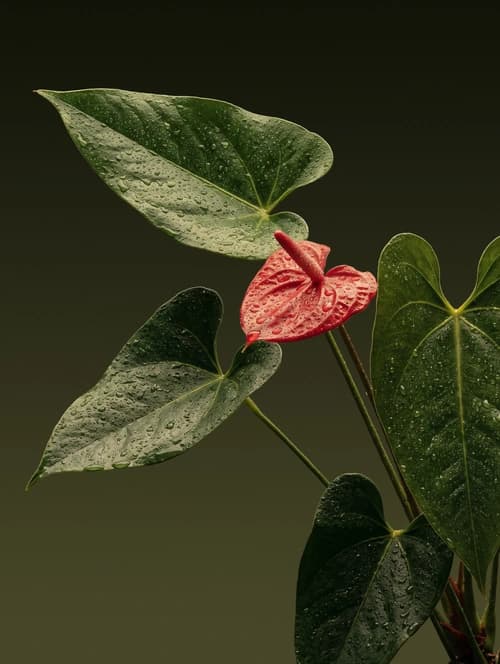
Gloxinia
Sinningia speciosa
The gloxinia is a flowering plant with real stage presence: velvety, bell-shaped blooms in deep purple, red or pink, often edged in white, above a rosette of soft, plush leaves. A classic gift houseplant, it flowers lavishly for four to eight weeks. What many people do not know: it grows from a tuber and can shoot again next year after a period of rest.
View entry →Year-roundZZ Plant
Zamioculcas zamiifolia
The ZZ plant is probably the most low-maintenance houseplant there is: glossy, waxy pinnate leaves on upright stems that shrug off dark corners and the occasional missed watering. We love it because it still looks fresh after years and never lets anyone down.
View entry →Year-roundMoney Tree
Pachira aquatica
The money tree is one of the most popular gift plants of all: its artfully braided trunk, crowned by glossy, hand-shaped leaves, makes it an eye-catcher — and its reputation as a bringer of luck and prosperity makes it the perfect housewarming gift. On top of that it is pleasingly easy to care for and non-toxic to pets. We source our money trees in sturdy nursery quality via the Veiling Rhein-Maas.
View entry →Leopard Plant
Ligularia
Ligularia is a perennial with real presence: huge, often darkly coloured leaves, topped in high summer by golden-yellow flower spikes or large daisy clusters well over a metre tall. It is the first choice for moist, partially shaded corners, pond edges and heavy soils — exactly the places where many other showpiece perennials fail. Give it water and it pays you back in architecture.
View entry →Year-roundGolden Barrel Cactus
Echinocactus grusonii
The golden barrel cactus — affectionately dubbed „mother-in-law's cushion“ — is the picture-book cactus par excellence: a rich green, perfectly ribbed sphere beneath a lattice of golden spines. Indoors it grows only a few centimetres a year, but with good care lives for decades and gets handed down through generations. Chemically it is entirely non-toxic; only the stout spines command respect.
View entry →In seasonBidens
Bidens ferulifolia
Bidens is one of the most dependable balcony plants we know: from May until the first frost it covers itself non-stop in small golden star-shaped flowers. It grows in a trailing habit, forgives the odd missed watering and needs no deadheading. If you want a sunny window box that glows with minimal effort, this is your plant.
View entry → Year-round
Blue Star Fern
Phlebodium aureum
The blue star fern is the modern one among indoor ferns: blue-green, frosted, lobed fronds that look more like a design plant than a classic woodland fern. It is also surprisingly easy-going — it tolerates dry heating air far better than most of its relatives. We buy our Phlebodium in bushy nursery quality at the Veiling Rhein-Maas.
View entry →Year-roundGhost Plant
Graptopetalum paraguayense
Graptopetalum — aptly called ghost plant in English — bears rosettes like matt porcelain: frosted grey-blue, flushed pastel pink in plenty of sun. It is one of the most robust succulents there is, trails picturesquely over the pot rim with the years and is non-toxic to pets. If you have ever lost a succulent, this is your second chance with a near-guarantee of success.
View entry →Year-roundSpider Plant
Chlorophytum comosum
The spider plant is the easygoing long-runner among houseplants: undemanding, fast-growing and, with its arching white-and-green striped leaves, a rewarding eye-catcher for a shelf, hanging basket or windowsill. We pick sturdy, well-rooted specimens with a dense crown of leaves - so the plant easily shrugs off the odd care mistake. Ideal for anyone still new to plants.
View entry →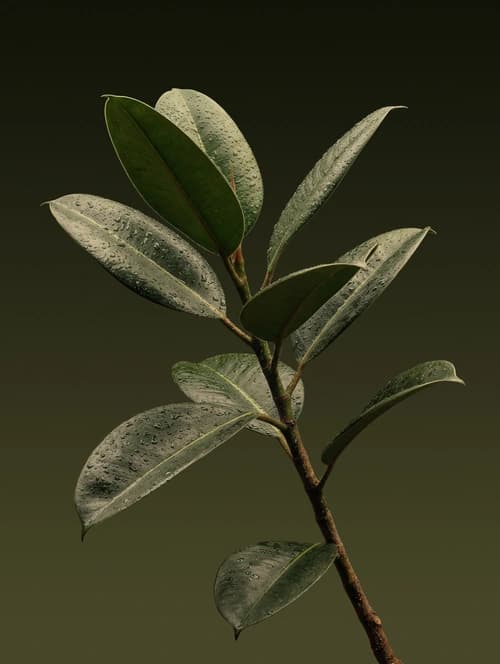 Year-round
Rubber Plant
Ficus elastica
The rubber plant is among the toughest and most striking houseplants of all: large, leathery leaves that reflect light as if polished, paired with a vigour that takes it from a small pot to an indoor tree. At Fleura we only pass on strong, well-rooted specimens – so it keeps growing for you straight away instead of struggling to settle in.
View entry →Year-roundGuzmania
Guzmania lingulata
The guzmania is one of the most rewarding houseplants there is: its star-shaped bract funnel glows red, orange, yellow or pink depending on the variety — and it holds that colour for months. At the Veiling Rhein-Maas we deliberately pick plants with a firm, still-young rosette so the colour lasts as long as possible at your home. What many people miss: the colourful part is not the actual flower but brightly coloured bracts — the true flowers are the small white stars at the centre.
View entry →Year-roundChin Cactus
Gymnocalycium
Gymnocalycium — called chin cactus for the chin-like bumps beneath its spine clusters — is a double phenomenon: as a green species it flowers more willingly and earlier than almost any other cactus, and as the bright red or yellow grafted „Hibotan“ it is one of the world's best-selling cacti. It also tolerates more semi-shade than most of its relatives — ideal for windowsills without a southern exposure.
View entry →
Baby Blue Eyes
Nemophila menziesii
Baby blue eyes is one of the loveliest spring bloomers among the annuals: delicate bowl-shaped flowers in pure sky blue with a pale centre, on low, softly cushioning plants. It flowers earlier than almost all summer annuals and — unusually for a blue-flowered plant — prefers it cool and semi-shaded. For boxes, bed edges and as a flowering groundcover beneath shrubs it is an insider tip.
View entry →Crinum Lily
Crinum
The crinum lily is one of the most imposing bulbs you can grow here: from a bulb the size of a fist to a childs head grow metre-long leaf rosettes and, in high summer, stems up to one and a half metres tall bearing large pink funnel flowers with a pleasant fragrance. Give it a warm spot and it rewards you for decades. We stock Crinum as a container and border plant in sturdy nursery quality.
View entry →Year-roundWindmill Palm
Trachycarpus fortunei
The windmill palm is the hardiest palm you can plant out permanently in our region — and for exactly that reason the most searched-for. Established specimens shrug off most winters in Düsseldorf's mild city climate. We will tell you honestly what it can and cannot do: winter-hardy does not mean maintenance-free, and the first years are decisive.
View entry →Dogwood
Cornus
Hardly any shrub genus offers as much year-round as dogwood: cornelian cherry opens the season in February with clouds of yellow bloom, the flowering dogwoods adorn themselves in May and June with large white or pink bracts, and the coloured-bark varieties glow coral red out of the bare winter garden. For us florists, the coloured cornus stems are indispensable material in the winter months.
View entry → Year-round
Rabbit's Foot Fern
Davallia
The rabbit's foot fern is a small curiosity among indoor ferns: furry, silvery-haired rhizomes creep over the rim of the pot, genuinely resembling rabbit's feet. Above them sits a fine, almost lacy canopy of fronds. Unlike many ferns, Davallia forgives the occasional short dry spell — the rhizomes store water. We source our plants in well-rooted hanging quality via the Veiling Rhein-Maas.
View entry →Houseleek
Sempervivum
Houseleek is the toughest rosette we carry: hardy to below minus 25 degrees, content with a handful of substrate and beautiful for years without any care. Its densely packed rosettes in green, red and silver make it ideal for rock gardens, troughs, green roofs and low-maintenance grave bowls. On top of that it is completely safe for children and pets.
View entry →Year-roundHaworthia
Haworthia
Haworthia is the perfect succulent for anyone short on space and time: a palm-sized rosette that grows reliably on a windowsill for years and asks for almost nothing. Unlike many succulents it also copes with less sun, and it is non-toxic to cats and dogs. We stock changing species in small pot sizes from our buying at the Veiling Rhein-Maas.
View entry →Hellebore
Helleborus niger
The Christmas rose is perhaps the bravest plant in our range: while almost everything else lies dormant, it opens its bowl-shaped flowers from late autumn into spring, often right in the snow. We deliberately choose potted plants with plenty of buds at the Veiling Rhein-Maas so they keep flowering for weeks after purchase. As an evergreen perennial it is both a winter eye-catcher in a pot and a plant for life in the bed.
View entry →In seasonGarden Mum
Chrysanthemum indicum-Hybriden
As the days grow shorter, the potted garden mum is the most reliable splash of colour for balcony, windowsill and doorstep. Its densely filled pompon and daisy-like flowers last for weeks, often well into November. At the Veiling Rhein-Maas we deliberately pick compact, fully coloured plants carrying plenty of unopened buds, because those are exactly the ones that keep going longest.
View entry →In seasonAutumn Crocus
Colchicum autumnale
The autumn crocus is one of the most idiosyncratic bulb flowers: its crocus-like, rosy-violet blooms emerge naked from the ground in autumn — entirely without leaves, which only follow the next spring. As beautiful as this late bloomer is, it has to be said plainly: the entire plant is highly poisonous. Know this and place it wisely, and you gain an enchanting splash of colour for the October garden.
View entry →Hibiscus
Hibiscus syriacus
Garden hibiscus is the late-summer gap-filler in the border: just when most shrubs have finished, it really gets going from July into September. Each funnel-shaped flower lasts only a day, but it is replaced morning after morning by hundreds of fresh buds. When we select stock at the Veiling Rhein-Maas auction we look for well-rooted, nicely branched plants so the shrub stands firm in the garden from the start.
View entry →In seasonHorned Violet
Viola cornuta
The horned violet is the dainty, perennial cousin of the pansy: smaller flowers, but tireless and in nearly every colour. From early spring it brings life to window boxes, beds and bowls and keeps flowering well into autumn. We select our horned violets at the Veiling Rhein-Maas with an eye on compact growth and healthy root balls, because only sturdily grown plants flower for months on end.
View entry →Year-roundWax Plant
Hoya carnosa
The wax plant fully earns its name: its thick, leathery leaves and spherical flower umbels look as though they were sculpted from wax. It is one of the most rewarding houseplants there is, forgives the odd missed watering and repays patience with star-shaped, sweetly scented blooms. In our Pempelfort shop we often recommend it to people looking for their first green companion.
View entry →In seasonCreeping Zinnia
Sanvitalia procumbens
Creeping zinnia looks like a miniature sunflower in trailing form: countless small yellow blooms with dark centres on a flat, dense cushion. It is one of the easiest summer flowers of all and blooms from June until frost without any deadheading. For box edges, hanging baskets and sunny bed borders there is hardly anything more reliable.
View entry →In seasonJapanese Forest Grass
Hakonechloa macra
Japanese forest grass is the most elegant shade grass we know: its bamboo-like leaves all spill in one direction, forming soft cascades that look combed. It grows slowly, never runs and turns any container into a small piece of Japanese garden. We source our plants in robust nursery quality directly via the Veiling Rhein-Maas.
View entry →Year-roundAfrican Milk Tree
Euphorbia trigona
The African milk tree looks like a cactus but is not one: Euphorbia trigona is a succulent spurge with three-angled shoots, small leaves along the ridges — and white latex sap, which clearly sets it apart from true cacti. As a ceiling-high green column it is one of the most effective architectural plants for a bright room. Important to know: the milky sap is toxic and irritates skin and mucous membranes.
View entry → Year-round
Flaming Katy
Kalanchoe blossfeldiana
Kalanchoe, affectionately called Flaming Katy, is the most undemanding flowering houseplant in our range. As a succulent it stores water in its thick, glossy leaves and forgives the odd missed watering. Its dense flower clusters glow for six to eight weeks — a reliable gift for anyone without a green thumb.
View entry →
Camellia
Camellia japonica
The camellia blooms while the garden sleeps: from December to April it opens elegant, almost porcelain-like flowers above glossy dark green foliage. It is the rose of winter — and tougher than its reputation suggests, provided the site and watering are right. In the mild Rhineland it even succeeds planted out in sheltered garden spots.
View entry →Year-roundPitcher Plant
Nepenthes
The pitcher plant is the most spectacular hanging plant we know: at the tips of its leaves it grows ornate pitchers in which it catches and digests insects. In our shop it likes to hang above the till — hardly any plant makes customers marvel as reliably. Modern hybrids are far more robust than their jungle image suggests.
View entry → In season
Nasturtium
Tropaeolum majus
Nasturtium may be the most generous summer flower of all: it trails, cascades and blooms tirelessly from May until frost — and the entire plant is edible, from the peppery-hot leaves through the glowing flowers to the buds. And it is child's play to grow. We source our young plants in sturdy nursery quality via the Veiling Rhein-Maas.
View entry → Year-round
Cat Grass
Cyperus zumula
Cats nibble on greenery — you cannot train it away, only redirect it. That is exactly what cat grass is for: a dedicated, guaranteed non-toxic pot the cat is allowed to graze on, so it leaves the Monstera, the pothos and the flower bouquet alone. The grass also helps it bring up swallowed hair. In our view, a pot of cat grass belongs in every home with an indoor cat.
View entry →Catmint
Nepeta
Catmint is lavender for everyone whose lavender refuses to cooperate: blue-violet clouds of flowers above silver-grey aromatic foliage, months of bloom and a toughness that forgives even difficult beds. Bees and bumblebees practically queue up, and many cats fall completely for the scent. For us, one of the most reliable border perennials there is — and completely non-toxic.
View entry →
Siberian Bugloss
Brunnera macrophylla
Siberian bugloss combines two ornamental assets in one plant: in April and May, clouds of sky-blue florets that look confusingly like forget-me-nots hover above the clumps. Afterwards, in the modern varieties, the large, heart-shaped, silver-frosted foliage takes over — and dresses the shade garden until frost. For us, one of the most valuable spring perennials of all.
View entry →Year-roundKentia Palm
Howea forsteriana
The Kentia palm is arguably the most elegant of all indoor palms: upright, feathery in growth and with gracefully arching fronds that instantly make any room feel calmer and larger. It is remarkably undemanding and even tolerates the shadier corners where other plants give up. At Fleura we have valued it for decades as the plant that stays beautiful for years without any drama.
View entry →
Chervil
Anthriscus cerefolium
Chervil is the finest spring herb in the kitchen: its delicate aroma, reminiscent of aniseed and parsley, elevates soups, egg dishes and the famous Frankfurt green sauce. It grows fast, likes it cool and does well on the windowsill — as long as you keep it out of blazing sun. We source our herb pots fresh via the Veiling Rhein-Maas in well-branched nursery quality.
View entry → Year-round
Cordyline
Cordyline fruticosa
The cordyline brings South Seas colour into the living room: depending on the cultivar, its sword-shaped leaves glow purple-red, pink or copper, held in a tuft atop a slender stem. At first glance it is often mistaken for a dragon tree, but it is more colourful — and slightly more demanding. We buy our cordylines in strongly coloured quality at the Veiling Rhein-Maas.
View entry →Year-roundCherry Laurel
Prunus laurocerasus
Cherry laurel is Germany's most planted evergreen hedge — for understandable reasons: it grows fast, screens completely, takes clipping well and copes with almost any soil. In May it carries white flower spikes that bees readily visit. In all honesty, though: it is poisonous in all parts and ecologically controversial — anyone planting it should know both.
View entry →Climbing Hydrangea
Hydrangea petiolaris
The climbing hydrangea solves one of the hardest garden problems: the shady north wall. A true self-clinger, it scales walls, fences and old tree trunks with adhesive rootlets, no trellis needed, and covers itself in white lacecap flower heads in June and July. Add golden autumn foliage and attractive peeling bark in winter. It demands only one thing without compromise: patience in the early years.
View entry →Clivia
Clivia miniata
The clivia, also called bush lily, is a houseplant with character: dark green, leathery fans of strap-like leaves from which, in late winter, a sturdy stalk pushes up carrying an umbel of glowing orange trumpet flowers. It is remarkably undemanding, lives for decades with good care — and flowers all the more reliably the more consistently you grant it a cool winter rest.
View entry →Snowflake
Leucojum
The snowflake — familiar to many as the spring snowflake or Märzenbecher — is the snowdrop's big sister: broader, bell-shaped flowers whose six equal-length petals each carry a green dot. It loves moist spots, naturalises magnificently there and flowers just when the garden needs white the most. We source our plants in nursery quality via the Veiling Rhein-Maas.
View entry →Year-roundCoconut Palm
Cocos nucifera
A potted coconut palm is a piece of the South Seas for the living room: long, fresh green fronds rise from the half-visible coconut — a real eye-catcher. Honesty is due, though: Cocos nucifera is a tropical beach plant and, in the long run, the most demanding palm for indoors. With maximum light, warmth and humidity you get several beautiful years from it; it rarely reaches the pensionable age of a kentia in living rooms.
View entry →
Mullein
Verbascum
Mullein is the cathedral of the natural garden: from a silvery, felted leaf rosette, a flower spire up to two metres tall rises in the second year, opening golden-yellow blooms for weeks on end. Wild bees and bumblebees work it from morning to night. See a mullein in evening light just once and the royal name explains itself.
View entry →Year-roundGrape Ivy
Cissus rhombifolia
Grape ivy, a climbing classic that has unfairly gone out of fashion, is a robust trailing plant with glossy dark-green, rhombus-shaped leaflets that works equally well in a hanging basket or on a trellis. Hardly any foliage plant copes better with office and stairwell conditions. We buy our grape ivy in densely leaved quality at the Veiling Rhein-Maas.
View entry →In seasonCoral Bead Plant
Nertera granadensis
The coral bead plant looks as if someone had scattered hundreds of orange beads over a green moss cushion. This small cushion plant is one of the eye-catchers of the autumn range and a popular little gift for the windowsill. It is seasonal decoration rather than a long-term companion — but its berries delight for weeks if it is kept cool and evenly moist.
View entry →Year-roundCilantro
Coriandrum sativum
Hardly any herb divides opinion like cilantro: indispensable in Asian and Mexican cooking for some, it tastes of soap to others — which is in fact partly genetic. The fresh greens are easy to grow in a pot once you know their quirk: coriander is annual, bolts quickly in heat and prefers to stand cool and evenly moist.
View entry →Crocus
Crocus
When the crocuses open, spring is official: their cups unfurl with the first warming sun and close again in the evening. As bulbs in the lawn, in clumps in the border or as potted stock for boxes and bowls, they are among the most rewarding heralds of spring. We source our potted crocuses in budded nursery quality directly via the Veiling Rhein-Maas.
View entry →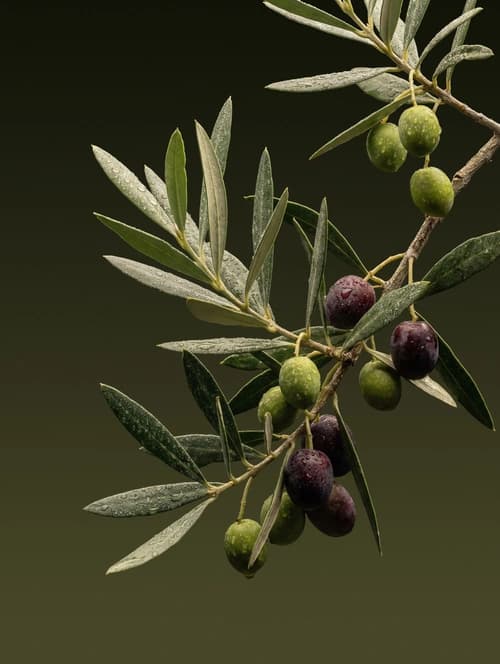 Year-round
Croton
Codiaeum variegatum
Hardly any foliage plant brings as much colour into a room as the croton: yellow, orange, red and green often marble across one and the same leaf. In return it demands a little more attention than a rubber plant — above all a consistently bright, warm spot without draughts. We buy our crotons in mature, fully coloured quality at the Veiling Rhein-Maas.
View entry →In seasonFountain Grass
Pennisetum
Hardly any grass invites touch like fountain grass: from high summer it pushes bottlebrush-like, fluffily soft spikes above gracefully arching foliage. It is the epitome of the autumn border and a rewarding container candidate for terraces and entrances. We buy our plants in free-flowering nursery quality directly at the Veiling Rhein-Maas.
View entry →Lavender Plant
Lavandula angustifolia
True lavender in a pot brings the spirit of Provence to balcony and terrace - silvery-grey foliage, dense flower spikes and that unmistakable, calming scent. As a sturdy, sun-loving container plant it is easy-going and faithful for years. We pick strong, well-rooted plants with firm growth so they take off the moment they go into their pot.
View entry →Year-roundLiving Stones
Lithops
Living stones may be the most curious houseplant of all: each little plant consists of just two fused, pebble-shaped leaves whose pattern mimics stones with uncanny accuracy — camouflage against grazers in the semi-desert. In autumn a surprisingly large white or yellow flower pushes out of the cleft. Care is simple but unforgiving: water at the wrong moment and you lose the plant.
View entry →Year-roundArborvitae
Thuja
Arborvitae has been Germany's classic hedge for decades: fast-growing, fully screening, frost-hardy and, with varieties like ‚Smaragd‘, neat in shape even without clipping. Its aromatic scent of crushed foliage is part of many childhood garden fences. Two things deserve honest mention: thuja is poisonous, and — unlike yew — it forgives no cut into old wood.
View entry →In seasonFloss Flower
Ageratum houstonianum
Floss flower is the classic for blue bed edgings: its fluffy, pompom-like flower clusters in blue-violet sit so densely that the low varieties read as a continuous ribbon of colour — from May until the first frost. Its German name, liver balm, comes from old herbal medicine and has nothing to do with the modern bedding plant. We buy our bedding stock compact and full of buds at the Veiling Rhein-Maas.
View entry →Year-roundString of Hearts
Ceropegia woodii
The string of hearts is one of the most enchanting hanging plants: small, silvery marbled heart-shaped leaves line up like beads along thin purple stems. As a semi-succulent it stores water in its leaves and tubers, generously forgiving forgotten waterings. We source our plants with long, dense strands via the Veiling Rhein-Maas.
View entry →Privet
Ligustrum
Privet is arguably the most uncomplicated hedging plant you can put in: fast-growing, extremely tolerant of clipping, city-proof and content with almost any soil. In June and July it carries fragrant white flower panicles that bees love, and in autumn glossy black berries for the birds. Important to know: berries and leaves are toxic to people and pets.
View entry →
Lobelia
Lobelia erinus
Hardly any balcony flower delivers such a rich, true blue as lobelia: the low cushions and trailing varieties cover themselves from May into September with hundreds of small lipped blooms. In German folk speech it is called Männertreu — men's faithfulness. We buy our bedding stock compact and full of buds at the Veiling Rhein-Maas.
View entry →Year-roundBay Laurel
Laurus nobilis
True bay laurel is seasoning and design element in one: an evergreen container shrub with leathery, aromatic leaves that enrich any kitchen freshly picked — and, clipped into shape, frame entrances and terraces in Mediterranean style. It is surprisingly easy-going and, well kept, lives for decades. We source our bay trees in sturdy nursery quality via the Veiling Rhein-Maas.
View entry →Lungwort
Pulmonaria
Lungwort is among the very first perennials of the year: as early as March the small funnel flowers open, blooming pink and shifting to blue with age — both colours sit on one plant at the same time. After flowering, the white-spotted foliage decorates the shade until autumn. For bumblebees it is one of the most important early nectar sources there is.
View entry →Meadowsweet
Filipendula
Meadowsweet is the fragrant perennial of the wet meadow: creamy-white or pink veils of bloom that smell of honey and almonds in high summer and turn whole stream banks into foam. In the garden, Filipendula is the first choice for wet corners and pond edges where other showpiece perennials give up. There is real cultural history in it too — as an ancient medicinal plant its old genus name Spiraea gave aspirin its name.
View entry →
Magnolia
Magnolia
When the magnolias open in April, nobody in Düsseldorf walks past unmoved: thousands of tulip-sized blooms on still-leafless branches — a spectacle that lasts only two or three weeks and is all the more precious for it. Magnolias are ancient trees; their flowers were pollinated by beetles before bees even existed. Planted properly, a magnolia becomes a tree for a century.
View entry →Oregon Grape
Mahonia aquifolium
Oregon grape is one of the most rewarding evergreen shrubs there is: glossy, holly-like foliage, golden-yellow flower clusters in March and April as an early bee pasture, and frosted blue berries in late summer. It grows where many other shrubs give up — in dry shade under trees. For us florists its firm foliage is also a proven cut green.
View entry →Year-roundPrayer Plant
Maranta leuconeura
The Maranta, also called arrowroot or prayer plant, is one of the most expressive foliage plants there is: its patterned leaves with their often vivid red veins lift upwards in the evening and unfold again in the morning. At Fleura we value it as a living houseplant that brings genuine movement into a home. Anyone who has watched the leaves close at dusk understands its nickname at once.
View entry →Rose Grape
Medinilla magnifica
The medinilla is the diva among flowering houseplants — and what a diva: from sturdy, leathery leaf pairs grow pendulous flower trusses up to forty centimetres long in soft pink, canopied by pink bracts like little baldachins. A medinilla in bloom is a statement. It demands warmth, humidity and a delicate touch, but rewards you with a floral spectacle lasting many weeks.
View entry →In seasonMexican Sunflower
Tithonia rotundifolia
Mexican sunflower is the late-summer star for large beds: from July, countless velvety orange blooms open on bushy plants up to two metres tall, looking like small, refined sunflowers. Hardly any annual is visited as intensively by butterflies and bumblebees. With space and sun, tithonia delivers an orange firework until frost.
View entry →Year-roundPansy Orchid
Miltonia
The pansy orchid, named for its velvety flower faces, is the most romantic orchid in the range: large, flat blooms with dark mask markings and a fragrance reminiscent of roses. It comes from Andean cloud forests and behaves accordingly: not an orchid for a hot south-facing sill, but for cool, evenly moist spots. We buy our pansy orchids fresh at the Veiling Rhein-Maas and say it honestly: it is the most demanding of the common pot orchids — and one of the most rewarding.
View entry →Year-roundSensitive Plant
Mimosa pudica
Hardly any houseplant delivers as many wow moments as the sensitive plant: touch its feathery leaves and they fold up within seconds — hence the nickname “touch-me-not”. Don't confuse it: the yellow “mimosa” branches in floristry come from the silver wattle (Acacia dealbata), an entirely different plant. This entry is about the living, touch-sensitive Mimosa pudica for your windowsill.
View entry →Year-roundMint
Mentha
Mint is the most rewarding beginner's herb of all: vigorous, thirsty, practically indestructible — and available in a range of varieties running from classic peppermint menthol to strawberry and chocolate notes. Its only „flaw“ is its urge to conquer: in a bed it wanders everywhere on underground runners, which is why the pot is its best friend.
View entry →Ice Plant
Delosperma
The ice plant is our tip for anyone wanting to green up a hot, dry spot where everything else dies of thirst: a south-facing balcony, a roof terrace, a rock garden. The succulent leaves store water, the silky, glossy flowers glow in colours that look almost artificial — and you hardly ever water. Continuous flowering does not get much easier.
View entry →In seasonNemesia
Nemesia
Nemesia may be the most underrated balcony flower: small snapdragon-like blooms in almost every colour, many varieties with a fine vanilla or honey scent, and all of it for months. It stays compact, fits any box and, well cared for, flowers from May into October. Anyone who has once had a scented variety plants it again every year.
View entry → Year-round
Neoregelia
Neoregelia
The neoregelia is the bromeliad for everyone who values leaf colour over flowers: instead of a tall flower spike, it floods the centre of its flat rosette with glowing red, pink or violet at flowering time — an effect that lasts many months. The actual flowers stay small and hidden in the water-filled funnel. We carry neoregelias from our buying at the Veiling Rhein-Maas as a modern, long-lived alternative to classic flowering plants.
View entry →In seasonNerine
Nerine
When almost everything in the garden has finished flowering, the nerine is just getting started: in September and October it pushes its glowing pink umbels up on leafless stems. Hardly any other bulb brings this much colour so late in the year. We stock nerine as a pot and border plant in sturdy nursery quality — usually the hardy Nerine bowdenii, which comes back reliably here in the Rhineland.
View entry →Year-roundBird's Nest Fern
Asplenium nidus
The bird's nest fern is the fern for everyone who has had no luck with ferns so far: instead of filigree fussiness it shows broad, glossy, undivided fronds growing in a funnel from a central point — the nest that gives it its name. It forgives dry air better than most of its relatives and is considered non-toxic to pets. In a bright bathroom it is in its element.
View entry →Oleander
Nerium oleander
Oleander is the essence of a Mediterranean summer: a hardy container shrub that flowers tirelessly from June to September in pink, white, red or yellow. Easy-going and heat-tolerant, it rewards a sunny, warm spot with abundant bloom. At the Veiling Rhein-Maas we select sturdy, well-branched plants carrying plenty of buds so the flowering season runs as long as possible.
View entry →Year-roundOlive Tree
Olea europaea
The olive tree brings Mediterranean calm to any terrace: silvery shimmering foliage, a gnarled trunk and a presence that only grows more beautiful over the years. We select strong, well-rooted plants with a compact crown, because a healthy root ball decides whether an olive tree survives many summers here. As a container plant it is easy-going and forgives a forgotten watering can far more readily than too much of one.
View entry →Year-roundDancing Lady Orchid
Oncidium
The oncidium, affectionately called the dancing lady or tiger orchid, is the most playful orchid in the range: instead of a few large blooms it carries dozens, sometimes hundreds of small flowers on branching sprays that dance in every draught. Most varieties glow in warm yellow with brown markings, and the famous „Twinkle“ series has an intense vanilla scent. We buy our oncidiums with sprays half open at the Veiling Rhein-Maas — so the flowers dance for weeks at your home instead of in the shop.
View entry →Oregano
Origanum vulgare
Oregano is the pizza herb par excellence — and at the same time a robust perennial that thrives in beds and balcony boxes in our climate too. Harvested fresh from the pot it tastes far livelier than dried supermarket stock. We source our herb pots in sturdy nursery quality via the Veiling Rhein-Maas, well branched rather than forced.
View entry →Easter Cactus
Rhipsalidopsis gaertneri
The Easter cactus is the spring counterpart to the Christmas cactus: a segmented, spineless cactus that opens its star-shaped blooms in red, pink or white right on cue between March and May. Unlike desert cacti it likes neither heat nor bone-dry soil. We buy our Easter cacti in bud via the Veiling Rhein-Maas auction, so the flowers open at your home rather than in the shop.
View entry →Year-roundMoonstones
Pachyphytum oviferum
Pachyphytum earns its English name moonstones honestly: the thick, egg-shaped leaves look like a handful of matt moonstones in blue-grey, pink and lilac. The botanical epithet oviferum means „egg-bearing“ — it could hardly be more apt. This little Mexican is easy-going, non-toxic to pets and a favourite in our succulent bowls.
View entry →Passion Flower
Passiflora
The passion flower bears perhaps the most artful bloom you can grow in a pot on a balcony or terrace: a filigree wheel of rays in blue-violet and white that looks as if a watchmaker had built it. As a climbing container plant it conquers trellises and obelisks in summer, flowers tirelessly from June into September — and in winter needs only a bright, frost-free berth.
View entry →In seasonEgyptian Star Flower
Pentas lanceolata
The pentas is a little flowering powerhouse: above rich green, slightly velvety foliage, dense clusters of five-pointed star flowers in red, pink, white or lavender open all summer long. On the balcony and terrace it is a butterfly magnet, in a bright room a persistent bloomer. It is easy to care for, heat-tolerant and safe for pet households.
View entry →Year-roundPeperomia
Peperomia
Peperomia, sometimes called radiator plant, is one of the most underrated houseplants in the range: compact, incredibly varied and, thanks to its fleshy, water-storing leaves, surprisingly easy to care for. From the ridged Peperomia caperata to the melon-striped argyreia and the coin-leaved polybotrya, there is one for every taste — and all are considered non-toxic to pets. For small flats and shelves there is hardly anything better.
View entry →Beauty Bush
Kolkwitzia amabilis
When the beauty bush opens in May, the name explains itself: thousands of pearl-pink bell flowers with yellow-marked throats cover the elegantly arching branches so densely that the whole shrub looks drenched in foam. In German it is called the mother-of-pearl shrub. And yet it is completely uncomplicated — hardy, prune-tolerant, drought-tolerant and a safe bet even for garden novices.
View entry →Year-roundParsley
Petroselinum crispum
Parsley is Germany's most-used kitchen herb — and in a pot on the windowsill a loyal, steady supplier, provided you know two things: it is biennial, and it hates blazing midday sun more than you would think. Flat-leaf varieties clearly beat curly ones for aroma, while curly parsley is unbeatable for decoration.
View entry →In seasonPetunia
Petunia x hybrida
The petunia is arguably the most popular balcony plant of summer: trailing, continuously flowering and available in a palette from delicate white to almost black violet. From May into October it bears its funnel-shaped blooms tirelessly. When buying at the Veiling Rhein-Maas we look for strongly rooted, well-branched young plants, because only those truly flower right through the season.
View entry →Mock Orange
Philadelphus
Mock orange — known in German as farmer's jasmine — is the great perfumer of early summer: in June, hundreds of white bowl-shaped flowers open, their sweet jasmine-and-orange fragrance filling whole gardens in the evening. It is not related to true jasmine, but hardly falls short of it in scent. The shrub itself is tough, fully hardy and one of the easiest bloomers of all.
View entry →Year-roundMoth Orchid
Phalaenopsis
The moth orchid is by far the most popular indoor orchid, and for good reason: its butterfly-like flowers often last two to three months while asking for surprisingly little effort. Choosing a plant in top A1 quality means strong roots and firm buds that open in succession, stretching the flowering period considerably further.
View entry →Year-roundPhilodendron
Philodendron
The Philodendron is a houseplant classic and one of the most undemanding of all — perfect for anyone short on time but keen on greenery. With several hundred species, the genus ranges from delicate climbers to bold statement foliage. Because we source our plants in robust nursery quality via the Veiling, they arrive well-rooted and acclimatised.
View entry →Year-roundChinese Money Plant
Pilea peperomioides
The Pilea, also called the Chinese money plant or pancake plant, is one of the most charming houseplants of recent years: compact, easy-going and unmistakable with its round leaves on slender stems. It readily produces offsets, so a single plant soon becomes a small family. At the Veiling we deliberately pick strong, well-rooted specimens that keep growing at home rather than sulking first.
View entry →Year-roundElephant Bush
Portulacaria afra
The elephant bush, also known as porkbush or dwarf jade, is a small succulent with big character: red-brown stems densely set with round, glossy little leaves that respond beautifully to shaping. No wonder it ranks among the most popular beginner bonsai. It is undemanding, takes pruning well, is non-toxic to pets — and forgives just about everything except wet feet.
View entry →Moss Rose
Portulaca grandiflora
Moss rose is the answer to the hottest spot on the house: a succulent summer flower with fleshy needle-like leaves that store water, and silky blooms in glowing candy colours. Where petunias and geraniums demand daily watering, it manages for days without. The flowers open only in sunshine — a small price for such mastery of drought.
View entry →In seasonGaura
Oenothera lindheimeri
Gaura is movement in the bed: on wiry, metre-high stems, small white or pink butterfly-like blooms open ceaselessly and dance in the slightest breeze. It flowers without pause from June until the first frost and is astonishingly drought-proof — a perennial made for hot city summers and gravel gardens. We like to use it wherever plantings feel too static.
View entry →Astilbe
Astilbe
Astilbe brings light into the shade: above feathery, fern-like foliage, plume-shaped flower panicles in white, pink and carmine red float over the bed like crests of foam in summer. Hardly any other perennial flowers as reliably in part-shaded, moist spots. A nice aside for us in Düsseldorf: the most important garden varieties were bred right next door in Wuppertal.
View entry →Primrose
Primula vulgaris
For many people the primrose is the first colour of the year, often appearing in February when the rest of the garden is still grey. With its dense cushion of flowers above a rosette of strong green leaves, it instantly lifts the mood on balconies, windowsills and borders. In our selection we look for compact, well-rooted plants with plenty of buds, because those last far longer than rushed, force-grown stock. That way the joy of a primrose often lasts weeks rather than days.
View entry →Coral Bells
Heuchera
Hardly any perennial delivers so much colour without a single flower: coral bells glow with foliage in caramel, lime, silver and deep purple — almost all year, since many varieties are evergreen. In early summer, delicate flower sprays hover above the leaf mounds. We love using heuchera in boxes, grave plantings and bed edges, and source it in compact quality via the auction.
View entry →Striped Squill
Puschkinia scilloides
The striped squill is one of the most delicate spring bloomers of all: porcelain-blue starlets with a fine darker stripe on every petal, barely fifteen centimetres tall. It flowers as early as March, naturalises willingly and returns in greater numbers every year. We stock it as pre-forced pot plants in spring and as bulbs in autumn.
View entry →Japanese Kerria
Kerria japonica
Kerria is the uncomplicated yellow-maker of spring: in April and May, bright yellow flowers — densely doubled pompons in the popular cultivar „Pleniflora“ — line the cane-like shoots, which stay green even in winter. It grows in sun or shade, in almost any soil, and forgives just about every care mistake. Only its suckers deserve to be known before planting.
View entry →In seasonReed Grass
Calamagrostis
Feather reed grass is the rock among ornamental grasses: strictly upright, steadfast in any weather and a dependable structure from its June flowering into winter. The cultivar „Karl Foerster“ is one of the most widely planted grasses in the world — entirely deservedly. We buy our plants in robust nursery quality directly at the Veiling Rhein-Maas.
View entry →Year-roundMistletoe Cactus
Rhipsalis
Rhipsalis is the cactus that does not seem to be one: no spines, no desert look, but a soft green curtain of thin, branching shoots. As a rainforest epiphyte it likes semi-shade and even, light moisture — the exact opposite of classic cactus care. It is non-toxic to cats and dogs, making it one of our most recommended hanging plants for pet households.
View entry →Rhododendron
Rhododendron
Hardly any garden shrub flowers as overwhelmingly as the rhododendron: in May, entire bushes disappear beneath ball-sized flower trusses in almost every colour. It is evergreen on top of that and lives for decades with good care. Its only real demand is the soil — understand that, and the rhododendron becomes one of the most rewarding flowering shrubs there is.
View entry →In seasonPanicle Hydrangea
Hydrangea paniculata
The panicle hydrangea is the most uncomplicated of all hydrangeas — and the only one that genuinely tolerates full sun. Instead of round mopheads it carries large, cone-shaped flower panicles from July, shifting from cream through pink to wine red and decorating the garden into October. Because it flowers on the current year's wood, it also forgives the bold pruning that defeats bigleaf hydrangeas. For beginners it is our first hydrangea recommendation.
View entry →Year-roundRosemary
Salvia rosmarinus
With its needle-like, resinous-scented leaves, rosemary brings a piece of the Mediterranean to balcony and windowsill. The evergreen subshrub is astonishingly long-lived, flowers pale blue in spring and belongs to the herbs you buy once and harvest for years. Its greatest enemy is not drought but an overly well-meant watering routine.
View entry →Flame Lily
Gloriosa superba
The flame lily is pure exotica: a dainty climber that pulls itself up by leaf tendrils and carries blooms like flickering flames — swept-back, waved petals in red and yellow above widely spread stamens. Here it can be grown from a tuber as a patio container plant. As spectacular as it is, one thing must be said just as clearly: the entire plant is highly poisonous.
View entry →Year-roundSage
Salvia officinalis
Sage is a kitchen herb, medicinal plant and ornamental shrub in one: its velvety, felted grey-green leaves smell savoury and astringent, and in early summer violet-blue flower spikes rise above them, magically drawing bumblebees. In a pot on a sunny balcony it is remarkably easy-going — and with coloured varieties from purple to tricolour variegation, it is far more than a mere extra.
View entry →Year-roundColumn Cactus
Cereus
The column cactus is probably the most architectural plant you can bring home: an upright, ribbed column that works like a green sculpture and gains impressive height over the years. It forgives weeks of neglect and needs little more than a sunny spot. We buy our column cacti in sturdy nursery quality directly via the Veiling Rhein-Maas — well-rooted and stable.
View entry →Andromeda
Pieris japonica
Andromeda — also called lily-of-the-valley shrub or Pieris — is an evergreen ericaceous shrub with a double display: from March to May, white or pink bell sprays hang over the foliage like lily-of-the-valley clusters, and the new growth of many cultivars glows fiery red. As a relative of rhododendron and heather it needs acidic, humus-rich soil and a semi-shaded spot. An honest word belongs here: Pieris is highly poisonous in all its parts — to children and pets alike.
View entry →Foam Flower
Tiarella
Foam flower is one of the finest perennials for shade: in spring, frothy, delicate flower spikes in white to soft pink hover above prettily marked, often dark-veined foliage. As a ground cover beneath trees and shrubs, Tiarella is almost indestructible and grows denser year after year. If you want to bring a dark corner of the garden to life, there is hardly anything more rewarding.
View entry →Year-roundUmbrella Plant
Schefflera arboricola
The umbrella plant, known in Germany as Strahlenaralie, is one of the most forgiving and rewarding green plants around: upright, densely foliaged and instantly recognisable by its umbrella-shaped clusters of leaves. We have recommended it for decades to anyone who wants plenty of greenery with little effort. With the right care it stays a faithful companion for many years.
View entry →African Lily
Agapanthus
Hardly any container plant brings as much Mediterranean flair to the terrace as the African lily: large blue or white spherical umbels on tall stems above rich green arching foliage. It flowers from June to August, grows more generous with the years and often accompanies its owners for decades. We stock Agapanthus in sturdy nursery quality, usually flowering-size plants in established pots.
View entry →In seasonBacopa
Sutera cordata
Bacopa — the snowflake flower in German — is the most reliable white trailing plant there is: its long shoots spill over box edges like a veil of blossom and flower from May until frost without deadheading. It is also one of the few balcony flowers that blooms willingly in part shade. We source our stock well branched via the Veiling Rhein-Maas.
View entry →Snowdrop
Galanthus nivalis
When the little white bells push through leaf litter and sometimes literally through snow, the garden year begins. The snowdrop is tougher than it looks: its own antifreeze proteins let it shrug off sub-zero temperatures. As potted stock for bowls and winter arrangements we source it in nursery quality via the Veiling Rhein-Maas.
View entry →Glory of the Snow
Chionodoxa
Glory of the snow is the friendly star among the small spring bulbs: starry flowers in blue-violet with a bright white eye that, unlike its relative the squill, open wide and face upwards. It flowers from late February, naturalises reliably and is wonderfully uncomplicated. We source our plants in nursery quality via the Veiling Rhein-Maas.
View entry →Year-roundChives
Allium schoenoprasum
Chives are perhaps the most German of all kitchen herbs: on buttered bread, in scrambled eggs, over soup — and as a winter-hardy bulb plant they are nearly indestructible. Their pink-violet flower globes are edible and a small bee pasture on top. One important note for pet owners: like all alliums, chives are toxic to cats and dogs.
View entry →Pineapple Lily
Eucomis
The pineapple lily is a small exotic for terrace and border: its flower spike, densely set with starry florets, carries a green tuft of leaves on top and looks like a slender pineapple. It flowers for weeks at the height of summer and is surprisingly undemanding. We stock Eucomis as a container plant in nursery quality — strong bulbs that come back year after year.
View entry →Year-roundBoston Fern
Nephrolepis exaltata
The Boston fern is the classic among indoor ferns — lush, homely and completely non-toxic to pets. Its long, elegantly arching fronds make it the perfect hanging and pedestal plant. We select our Boston ferns at the Veiling Rhein-Maas in dense nursery quality, so you get a full, healthy plant from day one.
View entry →Year-roundSatin Pothos
Scindapsus pictus
Scindapsus, often called satin pothos, is the elegant sister of the classic pothos: velvety, heart-shaped leaves with a silvery pattern that positively shimmers as the light shifts. It trails or climbs, grows reliably and forgives the odd missed watering. For us it is one of the most rewarding hanging and shelf plants there is — at the auction we deliberately pick plants with dense, even silver markings.
View entry →Year-roundSedge
Carex
Sedges are the workhorses among ornamental grasses: evergreen, winter-hardy and with cultivars for shade, sun, borders and window boxes. Their narrow, often elegantly arching leaves give any planting structure — from autumn grave arrangements to modern container combinations. We buy our sedges in robust nursery quality directly at the Veiling Rhein-Maas.
View entry →In seasonSkimmia
Skimmia japonica
Skimmia is the quiet queen of autumn and winter planting: a compact evergreen dwarf shrub whose wine-red bud clusters decorate from October right through to flowering in spring. Hardly any other plant bridges the dark season so reliably in boxes, pots and grave bowls. We buy our skimmias in compact, well-rooted quality directly at the Veiling Rhein-Maas.
View entry →Persian Violet
Exacum affine
The Persian violet is a little blue wonder for the windowsill: a compact cushion of glossy leaves strewn with hundreds of star-shaped, blue-violet flowers with bright yellow stamens — plus a fine, sweet fragrance you would not expect from such a small plant. Think of it as a summer-long bloomer: weeks of abundant flowers rather than years of cultivation.
View entry →Year-roundSundew
Drosera
The sundew is the most delicate of the carnivorous plants: its leaves carry hundreds of tentacles tipped with glistening sticky droplets, in which fungus gnats and fruit flies get caught. Here in Düsseldorf it is our insider tip for anyone annoyed by fungus gnats on their houseplants — beautiful and useful at once.
View entry →Spirea
Spiraea
Spirea is the workhorse among flowering shrubs: fully hardy, happy to be pruned, undemanding about soil and, depending on the species, in flower from April to August. Spring bloomers such as bridal wreath spirea shower themselves in white flower clusters, while summer spireas glow pink to carmine and stay nicely compact. For border edgings, low hedges and low-maintenance areas there is hardly anything more dependable.
View entry →Year-roundSpindle
Euonymus
Two garden worlds hide behind the name spindle: the evergreen, often variegated creeping euonymus that provide year-round structure as ground cover, bed edging and mini hedge, and the native spindle tree with its unmistakable pink-orange fruits and carmine autumn colour. Both are robust and easy-going — and both are toxic, which is worth knowing when choosing a spot.
View entry →Spider Flower
Cleome hassleriana
Spider flower is the diva of the summer bed: stems up to one and a half metres tall, crowned by spherical flower heads from which long stamens protrude like spider legs. Hardly any annual brings as much height, movement and lightness to a planting. It flowers onwards from bottom to top, adding new tiers until frost.
View entry →Holly
Ilex aquifolium
Holly is the classic winter shrub: glossy, dark green, spiny foliage all year round and bright red berries from autumn that hang on well into winter. In the garden Ilex aquifolium is a tough, prune-tolerant shrub for semi-shaded spots; in the workshop it is one of the most important foliages of Advent and Christmas floristry. Important to know: the pretty berries are toxic — to children and pets alike.
View entry →Cranesbill
Geranium
First, let us clear up the name muddle: cranesbill is the true geranium — the „geraniums“ in balcony boxes are botanically pelargoniums. The true Geranium perennial is hardy, indestructible and has long been voted a favourite perennial in England. Varieties like ‚Rozanne‘ flower from June until frost and are among the most rewarding border plants we know.
View entry →Year-roundBird of Paradise Plant
Strelitzia reginae
The bird of paradise is the diva of houseplants: architectural, paddle-shaped leaves and, at its best, a bloom that looks like an orange-and-blue tropical bird. It is tougher than its exotic appearance suggests and rewards a bright spot with years of vigorous growth. In our Duesseldorf-Pempelfort shop we pick our plants for healthy roots and firm foliage rather than quick shelf appeal.
View entry →Year-roundStromanthe
Stromanthe sanguinea
Stromanthe, usually sold as the variety „Triostar“, is one of the most spectacular foliage plants there is: every leaf is a one-off in green, cream and pink, and the underside glows purple-red. To be honest, it is no beginner plant — it demands high humidity and soft water. Give it that, and you get a plant that looks like a living watercolour.
View entry →Year-roundArrowhead Plant
Syngonium podophyllum
Syngonium, also known as arrowhead plant, is one of the best beginner houseplants we know: arrow-shaped leaves in green, white or soft pink, fast growth and an astonishing tolerance for care mistakes. Young plants grow compact and bushy; later they begin to vine. We buy our syngoniums in sturdy nursery quality directly at the auction — well rooted and with a dense base of foliage.
View entry →Daylily
Hemerocallis
The daylily is perhaps the most rewarding flowering perennial of all: robust, long-lived, virtually disease-free — in the perennial trade it is not called the „lazy gardener's plant“ for nothing. Each trumpet bloom lasts only a day, but an established clump opens new ones every morning for weeks. Important to know: despite the name it is not a true lily — yet it remains dangerous for cats.
View entry →Year-roundThyme
Thymus vulgaris
Thyme is the least complicated of the Mediterranean kitchen herbs: winter-hardy, evergreen, bee-friendly and loyal for years in pot or bed. Its tiny, aromatic leaves belong in French and Italian cooking alike — and in summer its pink-violet bloom turns the little subshrub into a bee pasture.
View entry →Year-roundAir Plant
Tillandsia
Air plants are the radicals among houseplants: they need no soil, no pot, no rooting ground — they absorb water and nutrients entirely through scales on their leaves. That makes them the darling of modern decor ideas, from hanging glass globes to driftwood arrangements. The one catch: with tillandsias, „low-maintenance“ does not mean „no maintenance“ — regular watering is a must, and we explain honestly how to do it right.
View entry →Year-roundSpiderwort
Tradescantia zebrina
Spiderwort is one of the most rewarding houseplants of all: its silvery, purple-backed leaves create instant impact, and it forgives almost any mistake in care. In our Duesseldorf workshop we happily recommend it to beginners who want fast results and lush trailing growth without daily fuss.
View entry →Grape Hyacinth
Muscari
Hardly any spring blue is as rich as that of the grape hyacinth: racemes densely set with little bells, glowing between daffodils and tulips from March. Muscari are robust, naturalise reliably and, as potted stock, are favourites of Easter floristry. We buy our grape hyacinths in budded nursery quality directly at the Veiling Rhein-Maas.
View entry →Trumpet Vine
Campsis radicans
Hardly any hardy climber brings as much holiday feeling to a house wall as the trumpet vine: from July to September it opens clusters of large, glowing orange trumpet flowers reminiscent of Mediterranean terraces. It climbs by itself with aerial rootlets, grows several metres tall and flowers all the more richly the hotter and sunnier its spot.
View entry →Year-roundAfrican Violet
Saintpaulia ionantha
The African violet is a classic currently making its comeback: velvety leaf rosettes topped with clouds of small flowers in violet, blue, pink or white — almost all year round with good care. Despite its name it is not related to true violets. Follow two or three ground rules, above all watering from below, and this compact perpetual bloomer will give you pleasure for years.
View entry →Year-roundVanda Orchid
Vanda
The vanda is the most spectacular orchid in the trade: large, often blue-violet blooms with net-like patterning — and below them a free-hanging tuft of silvery aerial roots, with no pot or soil at all. Exactly this growth habit makes it the most demanding orchid for the home, because water and humidity have to come from you. We carry vandas as special individual pieces from our buying at the Veiling Rhein-Maas — commit to their care and you get flowers of a colour depth found nowhere else.
View entry →In seasonHeliotrope
Heliotropium arborescens
Heliotrope is one of the few bedding plants you smell before you see it: its deep violet flower clusters give off a warm, sweet vanilla scent that fills a whole balcony on mild evenings. As a container and bedding plant it flowers tirelessly from May until the first frost. We collect our heliotropes from the auction in spring in compact, well-branched quality so they carry straight on flowering for you.
View entry →Year-roundVenus Flytrap
Dionaea muscipula
The Venus flytrap is the star among carnivores: its snap traps close in a fraction of a second, turning your windowsill into a living natural history museum. In our Düsseldorf workshop it is the plant children linger at the longest — and with a few simple rules it is easier to keep than its reputation suggests.
View entry →In seasonVerbena
Verbena
Verbenas are the heat professionals among balcony flowers: where petunias flag in high summer, their umbel-shaped flower heads carry on undeterred — in glowing colours from red through violet to apricot, many with a pale eye. Butterflies love them. We buy our bedding stock compact and healthy at the Veiling Rhein-Maas.
View entry →Year-roundFlaming Sword
Vriesea splendens
The vriesea earns its common name „flaming sword“: from a rosette of dark green, often cross-banded leaves rises a flat, sword-shaped flower head in vivid red that lasts three to six months. It is perhaps the most living-room-friendly of all bromeliads, coping with less light than its relatives. We buy our vrieseas with the sword fully coloured at the Veiling Rhein-Maas — so the long display only begins at your home.
View entry →Goat's Beard
Aruncus dioicus
Goat's beard is the great white plume of early summer: up to two metres tall, with creamy-white, arching flower panicles that look like a wild giant astilbe. As a native perennial it is indestructible, lives for decades without division and ranks among the most valuable specimen plants for the woodland edge. Planted properly once, it asks for practically nothing more.
View entry →In seasonLantana
Lantana camara
Lantana earns its German name Wandelröschen, the little changing rose: its flower balls change colour as they open, often from yellow through orange to red — several colour stages at once on a single head. It is also a true butterfly magnet and flowers tirelessly in full sun until frost. Just one thing must not be forgotten: it is poisonous and belongs out of reach of children and pets.
View entry →Year-roundPincushion Cactus
Mammillaria
The pincushion cactus is the most reliable bloomer among windowsill cacti: even young, fist-sized plants crown themselves each spring with a complete ring of small flowers. It owes its German name „wart cactus“ to the spirally arranged tubercles that carry the spines. With more than 160 species, Mammillaria is the largest cactus genus — and one of the easiest to start with.
View entry →Year-roundWashington Palm
Washingtonia
The washingtonia is the palm of Californian postcards — those sky-high trunks along the boulevards of Los Angeles. As a young plant it cuts a great figure in a bright living space and above all in a container: large, fan-shaped fronds with white threads curling along their edges, hence the nickname petticoat palm. It needs one thing above all: light, light and more light.
View entry →Weigela
Weigela
Weigela is one of the most rewarding flowering shrubs there is: in May and June it covers itself in hundreds of funnel-shaped blooms from pink to dark red, and many cultivars follow up with a lighter second flush in late summer. It grows in any ordinary garden soil, is reliably hardy and a productive nectar source for bumblebees. On top of that it is non-toxic — a worry-free choice for households with children and pets.
View entry →Christmas Cactus
Schlumbergera
The Christmas cactus is the most dependable winter bloomer among houseplants: when everything outside is grey, dozens of sweeping blooms in magenta, red, pink or white open on its flat, segmented shoots. Unlike its desert relatives it comes from the Brazilian cloud forest — know that, and you understand its entire care. Treated well it flowers for decades, punctually every Advent.
View entry →In seasonPoinsettia
Euphorbia pulcherrima
The poinsettia is the best-selling houseplant of the Advent season — and at the same time the one where most can go wrong at purchase. What looks like one big red flower is actually coloured bracts; the true flowers are the small yellow-green buttons in the centre. We buy our poinsettias late in the year and only from temperature-controlled stock at the Veiling Rhein-Maas — a single cold transport is enough to make the plant shed its leaves two weeks later.
View entry →Winter Aconite
Eranthis hyemalis
The winter aconite lives up to its name: often as early as January it opens its bright yellow bowl-shaped flowers above a green ruff — frequently before the snowdrops. Where it feels at home it naturalises into golden carpets that are among the first great insect pastures of the year. We source our plants in nursery quality via the Veiling Rhein-Maas.
View entry →Year-roundDesert Rose
Adenium obesum
The desert rose is one of the most spectacular succulents there is: above a bizarrely thickened, bottle-shaped trunk base — the caudex — it opens large funnel-shaped blooms in pink, red or white. It looks like a natural bonsai and, with good care, flowers for months. Important to know: its milky sap is highly poisonous, so it belongs out of reach of children and pets.
View entry →Year-roundYucca
Yucca gigantea (syn. Yucca elephantipes)
The yucca, also called palm lily, is probably the most low-maintenance architectural plant for bright rooms: a sturdy trunk topped with a rosette of stiff, sword-shaped leaves. It forgives drought but never an excess of water. We pick strong, well-rooted specimens with a healthy root ball so the plant becomes a reliable companion for many years.
View entry →In seasonMillion Bells
Calibrachoa
Million bells look like mini petunias by the hundred: from April until frost they smother themselves in small trumpet flowers in almost every colour — hence the English name. For hanging baskets and balcony boxes in the sun, little is more rewarding. We buy our bedding stock in compact, well-branched nursery quality at the Veiling Rhein-Maas.
View entry →Witch Hazel
Hamamelis
Witch hazel flowers when nothing else does: between December and March, clusters of thread-like blooms in yellow, orange or red unfurl on the bare branches and shrug off even hard frost — in the cold the flower threads simply curl up and unroll again. Add a fine fragrance and glowing autumn colour. It grows slowly and wants to be planted with forethought, but rewards you for decades.
View entry →Year-roundOrnamental Pineapple
Ananas comosus
The ornamental pineapple is a small bromeliad with a big presence: a stem rises from the leaf rosette carrying a real miniature pineapple that stays put for months. It makes a rewarding little gift, is easy to care for and safe around pets. We buy our ornamental pineapples with the fruit already well developed via the Veiling Rhein-Maas, so it stays decorative for a long time.
View entry →In seasonCrabapple
Malus
The crabapple is one of the most valuable small garden trees of all: in April and May it stands covered in white to purple-pink blossom, and from September cherry-sized apples glow in red, orange or yellow, hanging into winter on many varieties. On top of that it is bee pasture, bird food shrub and pollinator for orchard apples in one — and stays pleasantly compact at four to six metres.
View entry →In seasonOrnamental Grasses
Miscanthus sinensis
Ornamental grasses bring movement and feather-light structure to any garden and to autumnal bouquets. Chinese silver grass impresses with elegantly arching stems and silvery flower plumes that open in late summer and persist well into winter. At Fleura we value the long-lasting plumes as a natural design element that makes an arrangement feel light and alive.
View entry →Flowering Cherry
Prunus serrulata
Few trees transform a street like the Japanese flowering cherry: for two or three weeks in April the whole tree stands beneath a pink cloud of blossom, then the petals drift down like snow. Unlike the evergreen cherry laurel, it is a deciduous flowering tree — bred solely for this one overwhelming performance. Düsseldorf, too, has its little hanami moments each spring along its cherry blossom avenues.
View entry →Flowering Quince
Chaenomeles
Flowering quince is among the earliest flowering shrubs of the year: from March, bowl-shaped blooms in brick red, salmon, pink or white open directly on the still-bare, thorny wood — like little apple blossoms on dark branches. In autumn come yellow, wonderfully fragrant fruits that can be cooked into jelly. The shrub itself is undemanding, extremely hardy and valuable as early-spring bee forage.
View entry →In seasonFlowering Tobacco
Nicotiana
Flowering tobacco is a plant for people who sit in the garden at night: many varieties hold back during the day, but at dusk the star-shaped trumpet blooms open wide and release a heavy, sweet fragrance that draws in moths. In white and lime green it is also one of the most elegant gap-fillers in the summer bed. One important note: as a tobacco relative it is poisonous and does not belong in children's hands.
View entry →In seasonCyclamen
Cyclamen persicum
The cyclamen is the quintessential winter bloomer: above heart-shaped, often silver-patterned leaves, swept-back flowers in white, pink or red dance for weeks. From September to March it is one of the best-selling pot plants in our shop. Its only real demand is a cool spot — in an overheated living room it tires quickly, on a cool windowsill it flowers for months.
View entry →Year-roundJapanese Aralia
Fatsia japonica
The Japanese aralia is the plant for all those rooms too cool and dark for other houseplants: stairwells, bedrooms, chilly period-building hallways. Its large, glossy hand-shaped leaves quickly grow into a lush bush — provided you give it a fresh, not-too-warm spot. We buy our Japanese aralias in bushy, well-branched quality at the Veiling Rhein-Maas.
View entry →Indoor Azalea
Rhododendron simsii
The indoor azalea is the classic winter bloomer among potted plants: from November into March it opens hundreds of silky flowers when hardly anything blooms outside. It hails from cool mountain forests — and that is exactly its secret: the cooler the spot, the longer the flowering. In a warm living room it lasts two weeks; in a cool hallway, two months.
View entry →Year-roundAfrican Hemp
Sparrmannia africana
The African hemp is one of those plants you remember from your grandparents' house — and that is exactly why it is back in demand. Its large, velvety, light green leaves resemble linden foliage, but grow at record speed into a stately indoor tree. If you have space and a bright, rather cool room, you get one of the most characterful green plants of all.
View entry →Year-roundNorfolk Island Pine
Araucaria heterophylla
The Norfolk Island pine is probably the most elegant conifer for the living room — although botanically it is not a pine at all, but an ancient araucaria. Its soft, fresh green needles sit on horizontal tiers of branches that build up year after year like storeys. In our Düsseldorf shop it is especially popular in Advent: as a living, sustainable alternative to a cut Christmas tree.
View entry →Lemongrass
Cymbopogon citratus
Lemongrass brings Thai cuisine to the balcony and windowsill: the thickened stem bases season curries, soups like tom kha gai and teas with their unmistakable citrus aroma. As a tropical grass it wants one thing above all — warmth. We buy our herb pots in vigorously branched nursery quality via the Veiling Rhein-Maas.
View entry →Year-roundLemon Balm
Melissa officinalis
Lemon balm is the friendliest herb in the range: brushing its soft leaves releases a fresh lemon scent, tea from its fresh leaves is one of the most popular calming teas of all — and the plant itself is winter-hardy, vigorous and nearly indestructible. It is safe for pets and a feast for bees.
View entry →Year-roundPygmy Date Palm
Phoenix roebelenii
The pygmy date palm is the flat-friendly edition of the great date palms: a short, rough trunk crowned by a dense head of finely feathered, elegantly arching fronds. At a maximum of one and a half to two metres it stays manageable and still looks like a full-grown palm. It is considered non-toxic to pets — only the sharp spines at the frond bases deserve respect.
View entry →In seasonCotoneaster
Cotoneaster
Cotoneaster is the epitome of the low-maintenance ground cover: dense mats of small glossy leaves, countless white to pink flowers in May as a bee pasture, and from September a sea of bright red berries. It greens areas, banks and graves where little else will thrive — and asks almost nothing in return.
View entry →In seasonZygopetalum Orchid
Zygopetalum
The zygopetalum is the orchid for the nose: hardly any other indoor orchid is this fragrant — hyacinth-like, sweet and spicy, a single spike perfumes an entire room. On top of that comes colouring found nowhere else: green petals mottled brown over a violet-veined lip. We receive zygopetalums fresh via the Veiling Rhein-Maas mainly in autumn and winter — as a gift for orchid connoisseurs they are our first recommendation.
View entry →Year-roundUmbrella Sedge
Cyperus alternifolius
The umbrella sedge is the one houseplant you cannot overwater — as long as you water generously. As a marsh plant it loves wet feet and prefers to stand permanently in water. Above its slender stalks, umbrella-shaped whorls of leaves unfold, giving any room a light, almost Mediterranean feel. We buy our umbrella sedge in dense, sturdy quality at the Veiling Rhein-Maas.
View entry →Year-roundCypress
Cupressus
Hardly any tree carries as much landscape within it as the cypress: its dark green columns define Tuscany, Crete and Provence. Here in the Rhineland the true Mediterranean cypress grows most reliably in a container; for hedges and gardens its tougher relatives, the false and Leyland cypresses, take over. Knowing the difference spares you the most common disappointment: a frozen column after the first proper winter.
View entry →