Plants
Rubber Plant
Ficus elastica · Maulbeergewächse (Moraceae)
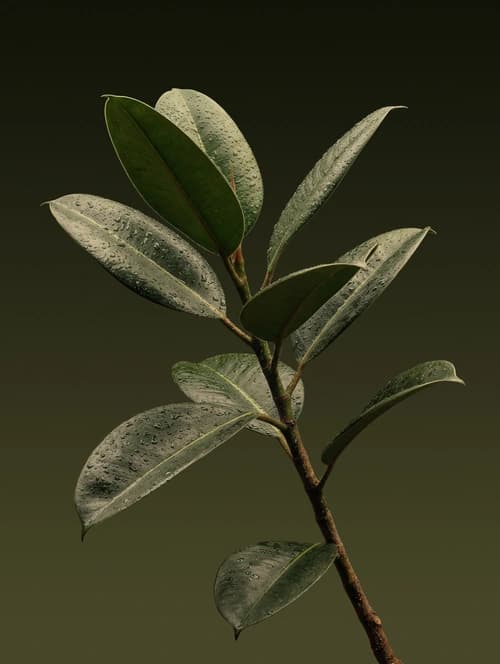
The rubber plant is among the toughest and most striking houseplants of all: large, leathery leaves that reflect light as if polished, paired with a vigour that takes it from a small pot to an indoor tree. At Fleura we only pass on strong, well-rooted specimens – so it keeps growing for you straight away instead of struggling to settle in.
- Light
- Bright with indirect light; avoid harsh midday sun. Variegated cultivars need more light to keep their markings.
- Watering
- Water moderately, letting the top two to three centimetres of substrate dry out between waterings. Avoid waterlogging - keep it slightly on the dry side.
- Care level
- Easy
- Botanical
- Ficus elastica
The rubber plant offers a surprising range of varieties. The classic, deep dark-green form (often sold as Robusta) is the most indestructible. The Burgundy cultivar shows almost black-red shoots and a wine-red leaf underside, while variegated types such as Tineke or Ruby carry cream-white to pink markings – though these need more light to keep their pattern.
In floristry and interior planting we value the rubber plant as an architectural specimen. Its large leaves create a calm, graphic accent that suits both modern, minimalist rooms and warm, homely interiors. As a floor plant in a beautiful cachepot it gives whole corners structure.
Quality in a rubber plant shows in the leaf gloss and a firm posture: healthy plants have plump, flawless leaves without brown edges and a strong, straight stem. When buying we make sure the root balls are well rooted but not matted – the basis for years of healthy growth.
Stylistically the rubber plant combines beautifully with other foliage. Beside delicate species such as fern or Pilea its calm presence stands out even more; grouped with monstera or bird of paradise it forms a dense, tropical jungle corner. On its own against a bright wall its shape reads most clearly.
Is Rubber Plant toxic to children and pets?
- Children
- Mildly irritating
- Cats
- Mildly irritating
- Dogs
- Mildly irritating
Mildly toxic to cats, dogs and children. The milky latex sap contains ficin and can cause vomiting, drooling and skin and mucous-membrane irritation. Keep out of reach.
Typical symptoms: Drooling, vomiting and gastrointestinal irritation; the latex sap can irritate skin and eyes.
In an emergency:call the German poison control centre in Bonn on +49 228 19240 (24/7) — for pets, contact an emergency vet directly. This information does not replace medical or veterinary advice.
Overview: toxic & non-toxic plants for cats, dogs and children
Care
- 01Bright spot with indirect light; avoid harsh midday sun as it bleaches the leaves. Variegated cultivars want more light than green ones.
- 02Water moderately: only water again once the top two to three centimetres of substrate have dried. Waterlogging quickly causes root rot – keep it slightly too dry rather than too wet.
- 03Room temperature between 18 and 24 degrees; avoid spots below 15 degrees and cold draughty corners.
- 04Dust the large leaves regularly with a damp cloth – this keeps them glossy and improves photosynthesis.
- 05Feed with a foliage-plant fertiliser roughly every three to four weeks from spring to late summer; pause in winter.
- 06Wear gloves when pruning or handling damaged leaves: the white milky sap irritates skin and mucous membranes.
Frequently asked
- Is the rubber plant toxic to cats, dogs and children?
- Yes, mildly toxic. The milky sap contains ficin and can cause vomiting, drooling and loss of appetite in pets, and skin and mucous-membrane irritation in people and animals. Keep the plant out of reach of cats, dogs and small children and wipe away any leaking sap straight away.
- Why is my rubber plant dropping its lower leaves?
- Usually too much water, a spot that is too dark or a draught is to blame. Check that the substrate dries out between waterings, move the plant somewhere brighter (without direct sun) and avoid cold windowsills. Losing a few older leaves is normal – heavy leaf drop is a care signal.
- How fast does a rubber plant grow and how big does it get?
- With good light and enough nutrients the rubber plant grows briskly and can reach over two metres indoors. If you prefer it bushy rather than tall, cut back the tip – it will then branch out. With the right care it will be with you for many years.
- Does the rubber plant have a season or is it available all year?
- As a houseplant the rubber plant is available all year round. Its actual growth is concentrated from spring to late summer – that is when you feed it and can also repot it. In winter it largely rests and accordingly needs less water.