Plants
Begonia
Begonia · Begoniaceae (Schiefblattgewächse)
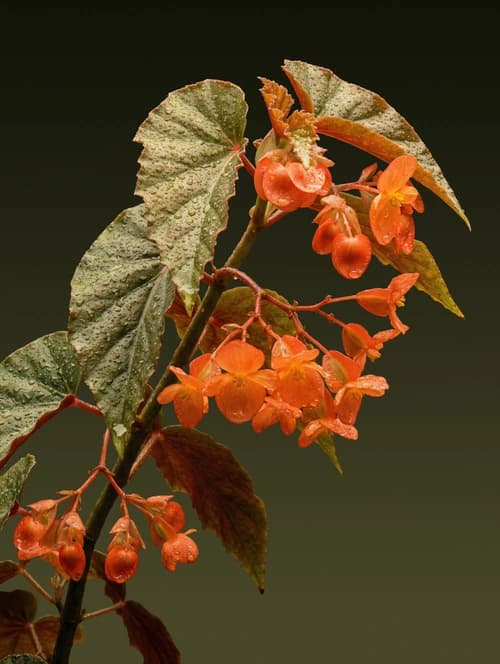
The begonia is one of the most versatile houseplants of all: sometimes it dazzles with lush cushions of flowers, sometimes with dramatically patterned foliage. At Fleura we value it as an easy-care, year-round beauty that adds colour to any home and, with a little attention, lasts remarkably long.
- Light
- Bright to semi-shaded, without harsh midday sun; foliage begonias tolerate more shade than flowering types.
- Watering
- Keep evenly slightly moist, avoid waterlogging; water onto the soil rather than over the foliage.
- Care level
- Easy
- Botanical
- Begonia
Begonias are roughly divided into three groups: foliage begonias such as Begonia rex and Begonia maculata (the polka-dot begonia) are grown above all for their spectacularly patterned leaves. Tuberous begonias and the robust Elatior begonia (Begonia x hiemalis), by contrast, produce double flowers for months. The iron-cross begonia (Begonia masoniana) stands out for its cross-shaped leaf markings.
For florists and plant sellers the begonia is a rewarding line because it is available almost all year round. When we buy at the Veiling Rhein-Maas auction we look for strong, compact plants with even foliage and plenty of buds rather than fully opened stock, so the pleasure at home lasts as long as possible.
Quality shows in firm, flawless foliage free of mildew film, in a well-rooted but not completely pot-bound root ball, and in turgid shoots. Drooping or spotted leaves and a musty smell point to waterlogging, the begonia's most common weak spot.
Stylistically the begonia combines beautifully: the colourful Rex types make a strong statement next to plain greens such as ferns or pothos, while flowering Elatior begonias shine as cheerful soloists on a windowsill or table. In planted bowls they harmonise with other humidity-loving tropical plants.
Is Begonia toxic to children and pets?
- Children
- Mildly irritating
- Cats
- Toxic
- Dogs
- Toxic
Begonias contain soluble calcium oxalates and are mildly toxic to cats, dogs and children, especially the tubers, rhizomes and roots. Keep out of reach.
Typical symptoms: Oral burning, drooling and vomiting; the underground parts are the most potent.
In an emergency:call the German poison control centre in Bonn on +49 228 19240 (24/7) — for pets, contact an emergency vet directly. This information does not replace medical or veterinary advice.
Overview: toxic & non-toxic plants for cats, dogs and children
Care
- 01Bright, semi-shaded position without harsh midday sun; foliage begonias tolerate more shade than flowering types.
- 02Keep the substrate evenly slightly moist but absolutely avoid waterlogging; pour off excess water from the saucer.
- 03Water directly onto the soil rather than over the leaves, as wet foliage encourages mildew and rot.
- 04It enjoys higher humidity; stand the plant on a pebble tray rather than misting it.
- 05Temperatures around 18 to 22 degrees, not below 15; feed weakly every two to four weeks during the growing season.
- 06Remove spent flowers and yellowing leaves regularly to keep the plant vigorous and free-flowering.
Frequently asked
- Is the begonia toxic to cats, dogs and children?
- Yes, begonias contain soluble calcium oxalates and are mildly toxic to cats, dogs and small children. The concentration is highest in the underground tubers, rhizomes and roots; ingestion can cause drooling, vomiting and mouth irritation. Keep the plant out of reach of pets and children.
- Why does my begonia get brown or mouldy leaves?
- Usually it is caused by too much moisture or water sitting on the foliage. Begonias are sensitive to waterlogging and mildew. Water directly onto the soil, ensure good drainage and remove affected leaves promptly so fungus cannot spread.
- When are begonias in season and how long do they last?
- As a houseplant the begonia is available all year, with the main flowering period in the warmer half of the year. Cared for well it stays with you for many years; flowering Elatior begonias keep pushing out new buds for months. Choose a strong, well-rooted plant for the longest-lasting enjoyment.