Flowers for a Small Home: Big Impact Without the Space
How a single stem creates more atmosphere than a full bouquet — with vase tricks, placement, and varieties that work in tight spaces.
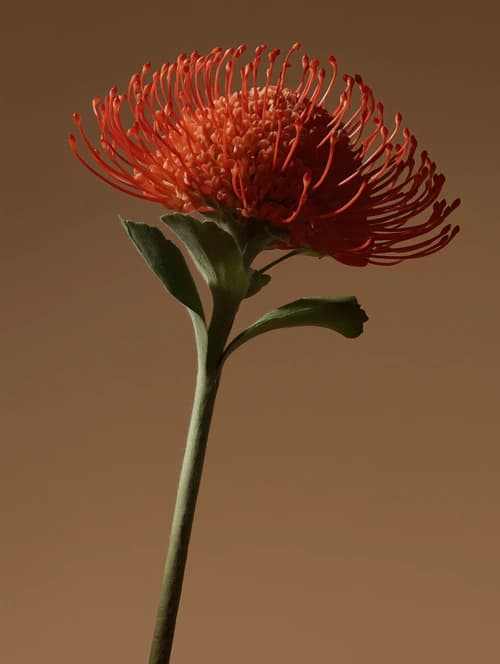
When you have few square meters, you often think flowers are a luxury for large rooms. The opposite is true: in a small home, a single well-placed stem works harder than a lavish bouquet in a high-ceilinged living room. Here it's not about mass, it's about placement. This guide shows how to achieve maximum impact with minimal space — through vase choice, placement, and a few varieties that start small but look big.
The most important shift in perspective first: split, don't pile up. A bought bouquet doesn't have to go into one big vase. Break it into three or four small vessels and spread them out — a bud on the desk, one by the bed, one in the bathroom. Every room gets a fresh accent, and the flowers look deliberately placed rather than crammed together. One bunch becomes four small moments.
1. Choose the vase in the right proportion. The florist's rule of thumb: the finished height of the flowers should be about 1.5 to 2 times the vase height, and the vase itself roughly one third to one half of the stem length. In small rooms that means: low and slim rather than tall and sprawling. A delicate bud vase carries a single stem without taking over the table.
2. Slim stems for slim vessels. Upright, cleanly grown varieties fit narrow, tall vases and need barely any footprint. Tulips with their firm straight stems, anemones with thin but sturdy stalks, or freesias work beautifully here. Full, round flower heads on the other hand — peonies or dahlias — want a lower, slightly wider bowl so they stand stable and don't tip.
3. Bet on a hero stem. The classic florist trick for little money and little space: a single star bloom that draws the eye — a protea, an amaryllis, a gerbera, or a ranunculus. Add just one or two supporting stems like eucalyptus. One expressive stem in a beautiful glass says more than twenty dutiful little flowers.
4. Height and groups create depth. If you only have room for one surface, cluster two or three small vases of different heights — clear glass next to matte, one tall, one flat. This small staggering creates visual depth and looks more decorative than a single vessel. Think vertical: a high narrow shelf, a windowsill, a wall hook with a test-tube vase use the space a small home is most likely to have spare.
5. Pick the right spot — also for longevity. Small homes heat up fast, and the only bright spot is often the windowsill in full sun. Both shorten vase life. Place flowers bright but out of direct midday sun, away from the radiator, and not next to the fruit bowl — ripe fruit releases ethylene and ages blooms faster.
A safety note for small households with a cat: true lilies (Lilium and Hemerocallis species) are highly toxic to cats — even pollen or the vase water can cause kidney failure. In tight spaces where the animal reaches everywhere, choose proven cat-friendly cut flowers like roses (remove the thorns), gerberas, or sunflowers. When in doubt, simply pull the lily out of a gifted bouquet.
Frequently asked
- Which flowers work best in a small home?
- Upright single stems with a clear shape: tulips, anemones, freesias, and ranunculus fit slim vases and take up barely any surface. For a single hero stem, amaryllis, protea, or gerbera work well. Full heads like peonies need a low, wider bowl.
- How big should the vase be for a small space?
- Rather small and low. As a guide, the vase should be about one third to one half of the stem length, and the finished flowers 1.5 to 2 times the vase height. In small rooms a delicate bud vase with one stem looks more harmonious than a large vase dominating the table.
- Is a single stem even worth it, or do you need a bouquet?
- In tight spaces the single stem is especially worth it. One expressive bloom draws the eye and is enough to make a corner feel styled without overwhelming the room. If you want more, spread one bunch across several small vases rather than putting it all in one vessel.
- Where do I place flowers when every surface is already taken?
- Think vertical and at transitions: a narrow shelf, the edge of the windowsill, a wall hook with a test-tube vase, or the spot next to the mirror. Small vessels only need palm-sized space. What matters: bright, but not in full sun and not directly above the radiator.