Cut Flower Care: The Complete Guide
Every principle of vase freshness in one place: cutting, water, location, flower food and the variety tricks that make the difference. The overview that branches into every detail.
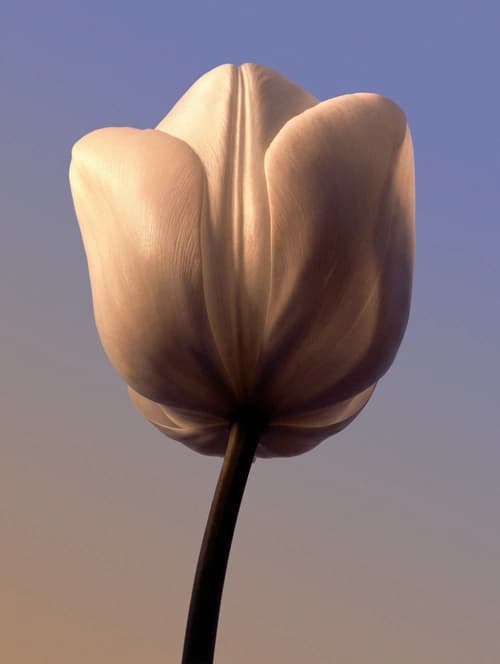
A bouquet lasts not because it was expensive, but because a handful of physical and biological ground rules are respected. At heart there are always two enemies: bacteria in the water and blocked vessels in the stem. This guide gathers the whole care picture into one overview — and points to the right detail guide for every single question. Once you understand why a flower wilts, you no longer have to guess at home remedies.
The basic principle first: a cut flower is severed from its roots and can only draw water through its stem. Wilting almost always means this supply has stalled — either because bacteria clog the stem end and the fine vessels, or because air was drawn into the vessels during cutting and a bubble blocks uptake. On top of that comes ethylene, a gaseous ripening hormone that speeds up aging. Every step that follows targets exactly these three points: keep bacteria low, keep vessels open, avoid ethylene.
Cutting is the single most important action. An angled cut increases the uptake surface, and a sharp knife doesn't crush the vessels the way a blunt pair of scissors does. You cut fresh not just once but every two to three days, because the stem end clogs with bacteria and dried-in air. One exception proves the rule: soft stems such as tulips are cut straight rather than at an angle, so they don't draw up too much water. Exactly how deep, how often and with which tool is covered in the cutting guide — see „Schnittblumen anschneiden“.
Clean water decides the second half of a bouquet's life. Strip every lower leaf that would otherwise sit in the water — rotting plant matter is the best food for bacteria and the most common reason for cloudy, foul-smelling vase water. Change the water completely every two to three days rather than just topping it up, and rinse the vase with a little dish soap to remove the biofilm on the glass. Being consistent here buys more vase days than any miracle additive — details in the guide „Vasenwasser sauber halten“.
Flower food is not marketing but chemistry that works. The sachet that comes with the bouquet typically contains three components: a biocide against bacteria, a pH buffer that sets the slightly acidic level needed for uptake, and sugar as a nutrient for the bloom. Home remedies like aspirin, plain sugar, a dash of dish soap or the famous copper coin don't reliably replace this — sugar without a biocide actually feeds the bacteria. What is genuinely proven and how to improvise in a pinch is covered in „Frischhaltemittel: was wirkt“.
Location is often underestimated. Cut flowers like it cool and bright but not in blazing sun, not directly above a heater and above all not next to the fruit bowl. Ripe apples, bananas and tomatoes release ethylene, which makes buds burst early and blooms age fast. Moved to a cooler room overnight, a bouquet lasts noticeably longer — a trick every florist uses. Summer adds heat and faster bacterial growth; how to carry bouquets through hot days and transport is handled in „Blumen im Sommer frisch halten“ and „Strauß sicher transportieren“.
Variety-specific tricks get twice as much out of a mixed bouquet, because not every flower has the same needs. Tulips want only shallow water and keep growing in the vase; hydrangeas by contrast need plenty of water along the whole stem and even drink through the bloom. Daffodils secrete a slime after cutting that clogs the vessels of other flowers — they should stand alone for a few hours before joining a mixed arrangement. Gerberas swell in deep water and rot easily at the stem. These quirks aren't care lessons for individual plants but decision aids for combining them — the detailed plant care lives in the encyclopedia.
Certain flowers deserve their own look because they are given so often and mishandled so often. Roses, for instance, rarely wilt from old age but almost always from an air bubble in the stem or from bacteria — a fresh cut rescues a drooping head more often than people expect. The full rescue plan and the small tricks are in the guide „Rosen länger frisch halten“. For a quick everyday overview with the seven most important rules at a glance, the compact guide „Schnittblumen-Pflege: 7 Regeln“ is the short version of this ratgeber.
Finally, an honest note: care begins before the vase. A flower that reaches you freshly cut and kept cool starts with days of advantage over stock that has had a long, warm journey behind it. We buy in A1 quality at the Veiling Rhein-Maas in Herongen, the flower auction right on the Dutch border, and process the stock the same morning at our shop in Düsseldorf-Pempelfort — because shelf life starts where the stems first draw water. The rest is decided by the rules in this guide — and the detail guide that happens to fit your question.
Frequently asked
- Which care rule makes the biggest difference?
- Clean water plus a fresh cut. Both fight the most common cause of wilting — bacteria clogging the stem end. If you do only one thing consistently, change the water completely every two to three days and recut while you do it. That beats any home remedy.
- Does sugar in the water really help?
- Only in combination. Sugar feeds the bloom, but without a biocide it also feeds the bacteria and spoils the water faster. That's why professional flower food always contains both — sugar and an antimicrobial — plus a pH buffer. Sugar on its own does more harm than good.
- Can I just put different flowers together in one vase?
- Usually yes, with two precautions. Daffodils secrete a slime that clogs other flowers — let them stand alone for a few hours first. And varieties with very different water needs, such as tulips (shallow) and hydrangeas (deep), are a compromise in the same vessel. For mixed bouquets, a medium water level is the best middle ground.
- Why does my rose suddenly droop?
- Almost always an air bubble in the stem blocking the water — not age. A fresh angled cut under water often clears the blockage, followed by a deep, lukewarm bath for one to two hours. The full rescue plan is in the dedicated rose guide.
Related topics
Flower Library
Tulips
Flower Library
Peonies
Flower Library
Asters
Flower Library
Celosia (Cockscomb)
Flower Library
Dyers Chamomile
Flower Library
Broom
Flower Library
Peruvian Lily
Flower Library
Chinese Lantern Lily
Flower Library
Crocosmia
Flower Library
Ruscus
Flower Library
Red Valerian
Flower Library
Flame Freesia
Service
Flower Subscription Düsseldorf
Service
Plant Delivery Düsseldorf
Further reading
Care
Cutting Stems Properly: The Small Action with the Big Effect
Care
The Right Vase: How Shape, Height and Material Actually Matter
Season
Which Flowers Are Available in January and February?
Health
Scent-Free Flowers: The Best Picks for Sensitive Noses
Care
Flowers in Winter: Staying Fresh Despite Heating
Care
Why Fruit Next to Flowers Ages Them Faster
Wedding
Flowers for the Mothers at a Wedding: Corsages, Etiquette, Concept
Care
How to Clean and Disinfect a Vase Properly: Kill the Bacteria That Kill Your Flowers
Care