Flowers in Winter: Staying Fresh Despite Heating
Dry heated air is the secret flower killer of the cold months. Here's how to find the right spot, keep humidity up and double the vase life.
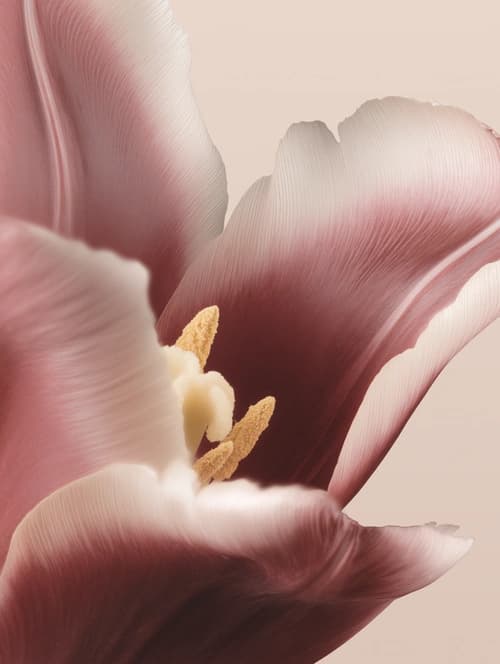
In winter, cut flowers rarely die from the cold outside — they die from the dryness inside. Heated air in January often sits at just 25 to 35 percent relative humidity, while blooms prefer 60 percent and up. The result: drooping heads and wilting edges, even though the vase is full of water. The good news is that the right location and a few small habits fix almost all of it.
Why heated air is so dangerous. A cut flower constantly loses water to its surroundings through leaves and petals — the drier the air, the faster. Place a bouquet right above a radiator and more water evaporates at the top than the freshly cut stem can pull up from below. This isn't about how much water is in the vase; it's an imbalance between uptake and evaporation. Every step that follows targets exactly that.
1. Choose the right location. The simplest and most effective move: never set flowers above, beside or directly in front of a radiator. The warm spot over a fireplace, oven or fridge is off limits too. Ideal is a bright room without harsh sun at a steady 18 to 19 degrees Celsius — cooler than the typical living room in winter. Every degree less slows the bloom's metabolism, and with it the aging.
2. Raise the humidity on purpose. Mist the blooms in the morning with a spray bottle and lukewarm water — it offsets water loss short term and revives moisture-loving varieties in particular. A shallow bowl of water on the radiator or a humidifier in the room lifts the baseline humidity for good. Hydrangeas, which draw a large share of their water through the petals, are especially grateful.
3. Use the night trick. Professionals store flowers cold because cold slows the use of energy reserves — around ten degrees less can roughly halve the respiration rate. At home this means: move the vase overnight into the coolest room, the stairwell or the hallway at around 7 to 10 degrees Celsius. This nightly cool-down noticeably extends vase life without making you give up the bouquet during the day.
4. Avoid cold draughts. As good as steady cool is, fluctuating temperatures are poison. A vase right by a draughty window gap or next to a constantly opened balcony door gets a cold shock every day. The hot blast of a fan heater is just as harmful. Stable and moderately cool beats warm-but-fluctuating every time.
5. Don't skip the basics. Heated air forgives no care mistakes. Cut stems at an angle and repeat every two to three days, strip all leaves below the waterline and change the water completely — topping up isn't enough. The flower food sachet belongs in the vase because it curbs bacteria and buffers the pH. Neither sugar nor aspirin matches it reliably.
6. Buy hardy varieties. If you have little care time in winter, the choice at purchase pays off. Chrysanthemums and carnations are remarkably tolerant of dry air and often last two weeks with good care; amaryllis adds winter glamour with its bold trumpets. Tulips and ranunculus bring spring feelings but want to stand cool. Anyone starting with A1 quality and full reserves — the kind we buy at the Veiling Rhein-Maas — has the decisive head start into the heating season.
Frequently asked
- How often should I mist flowers in winter?
- Once a day in the morning is usually enough; with very dry heated air, twice is fine. Use lukewarm water and a fine spray bottle, focusing on leaves and outer petals. Be careful with velvety or fuzzy blooms — there, humidify the room rather than spraying the flower directly.
- Does cold water harm flowers in winter?
- Yes, ice-cold tap water is a cold shock for the stems and hampers uptake. Use room-temperature water of about 18 to 20 degrees Celsius. One exception is bulb flowers like tulips, which tolerate cooler water well and open faster in overly warm rooms.
- Do flowers last shorter in winter than in summer?
- Not necessarily — with good care they often last even longer in winter, because cooler rooms slow aging. The sole sticking point is the dry heated air. If you manage location and humidity, winter with cool night storage delivers the longest vase life of the year.
- Which cut flowers tolerate heated air best?
- Chrysanthemums and carnations are true long-runners and shrug off dry air best; lilies and amaryllis are comparatively hardy too. Hydrangeas and ranunculus are more sensitive and need extra humidity and a cool spot.
Related topics
Flower Library
Chrysanthemums
Flower Library
Carnations
Flower Library
Amaryllis
Flower Library
Hydrangeas
Flower Library
Tulips
Flower Library
Ranunculus
Flower Library
Lisianthus
Plants
Cambria Orchid
Plants
Boat Orchid
Plants
Maidenhair Fern
Plants
Rabbit's Foot Fern
Plants
Croton
Plants
Rosemary
Plants
Poinsettia
Plants