Cutting Stems Properly: The Small Action with the Big Effect
Angled, sharp, frequent — and why this matters more than any flower food.
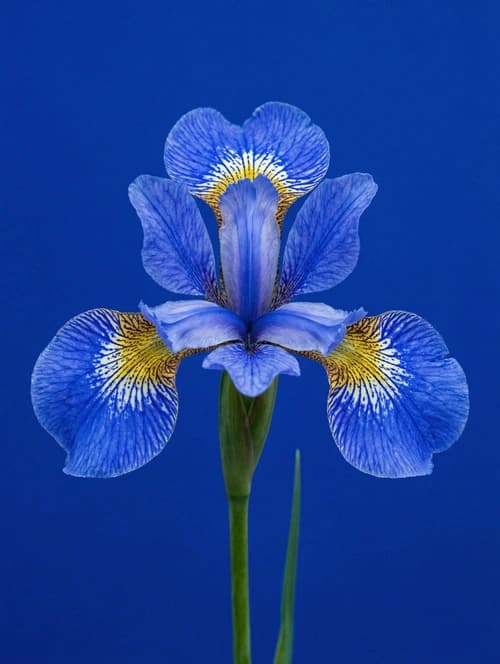
An angled stem cut sounds like a stylistic choice — in fact it's fluid mechanics. Cut properly and you can add days to a bouquet's vase life.
Why angled: an angled cut increases the cut surface. More surface means more places for the plant's vessels to draw water. The angle also keeps the stem from sealing flat against the vase bottom and blocking water flow.
Why sharp: a sharp knife cuts cleanly. Dull scissors crush the stem — vessels are destroyed, water can't rise. Florists almost always work with a knife, not scissors.
Why often: after 2–3 days, a bacterial layer has formed at the stem end that blocks water pumping. A fresh cut removes it.
When under water: as soon as a stem hits air, it pulls air into its vessels. These air bubbles block water transport. Cutting under running water or directly under water prevents this. For beginners, often enough to cut fast and place in water immediately — the air bubble is small enough to clear.
Special case — tulips: cut straight, not angled. Tulips keep growing in the vase, and an angled cut leads to stems bending and breaking. Also strip the lower leaves entirely; they clog the water.
Special case — hydrangeas: score the woody stem crosswise or roughen the lowest centimetre with the knife. Hydrangeas have very woody stems and need more uptake surface.
Special case — peonies: angled, sharp, and sometimes the cotton-ball trick. If the bud won't open, press a pre-soaked cotton ball or warm cloth briefly on the closed bud. The warmth triggers opening.
Special case — roses: angled, sharp, and at a node (point on the stem where leaves attach). Vessel density is highest at nodes — water transport starts immediately.
Tool recommendation: an inexpensive florist's knife ($10–20) or a sharp small kitchen knife. If you prefer scissors, use a dedicated floristry pair (bypass shears) — they crush less than normal household scissors.
Cut angle: roughly 45 degrees. The exact angle isn't critical — what matters is that the cut surface is larger than the stem diameter.
Frequently asked
- How often should I recut?
- Every 2–3 days. For tulips daily, since they keep growing and stems shift. Water change is a natural moment for it.
- Does knife vs scissors matter?
- Yes, measurably. Dull scissors crush, a sharp knife cuts clean. With thick woody stems (roses, hydrangeas) the difference is greatest.
- Should I really cut under water?
- Ideally yes, in practice not mandatory. Cut fast and place in water IMMEDIATELY is enough for most varieties. For very delicate flowers (peonies, gerberas) the extra effort pays off.
- Does recutting really extend vase life?
- Yes, significantly. A bouquet with stems freshly cut every 2 days lasts on average 30–50% longer than one without. For roses, often the difference between 5 and 10 days.
Further reading
Care
Stripping Lower Leaves: Why Every Submerged Leaf Kills Your Bouquet
Care
Delivered Flowers: The First 10 Minutes Decide Everything
Care
The Right Cutting Tools for Flowers: Knife, Scissors or Rose Shears?
Care
Getting Closed Buds to Open Faster: Warmth, Sugar, Light — What Actually Works
Care
Cut Flower Care: The Complete Guide
Craft
Tying a Bouquet: The Complete Guide
Care
How to Clean and Disinfect a Vase Properly: Kill the Bacteria That Kill Your Flowers
Care
Soft vs. Woody Stems: Why Care Differs
Care