Soft vs. Woody Stems: Why Care Differs
Why a tulip and a rose don't take the same cut — and how the stem tells you how much water a flower actually needs.
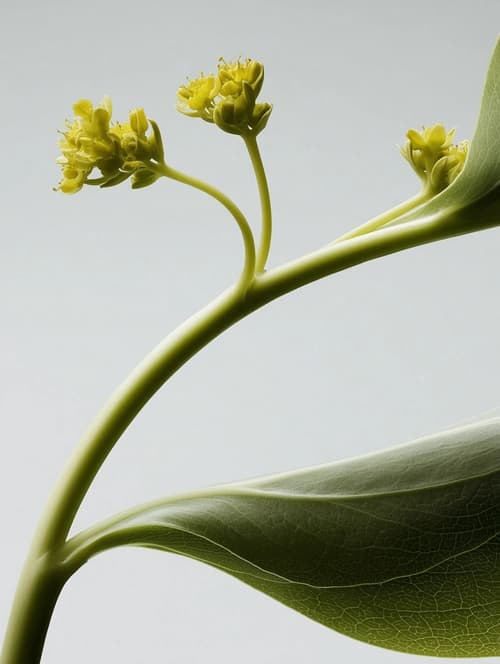
The most common care mistake happens before the flower even reaches the vase: a bouquet gets one cut and one water level, regardless of what's in it. Yet the nature of the stem decides how a flower drinks. Once you can tell soft, hollow and woody stems apart, you get more vase life from every bouquet — without a single home remedy.
Three stem types, three strategies. Cut flowers roughly sort by their stem: soft, sappy stems (tulips, daffodils, ranunculus, anemones, gerbera), hollow stems (amaryllis, many umbellifers) and woody, hard stems (roses, lilac, chrysanthemums, hydrangeas). Each moves water differently — which is exactly why a single rule for all of them fails.
Soft stems: cut straight, set shallow. Sappy stems take up water easily but rot fast in too much of it. Rule of thumb: cut straight or only slightly angled, strip the lower leaves and use roughly a hand's width of water. Tulips also keep growing in the vase and bend toward the light — that's not a care fault but normal soft-stem behaviour.
Woody stems: cut at an angle, set deep, never crush. Hard stems carry woody tissue that resists water uptake more. A sharp, angled cut at about 45 degrees enlarges the surface area. If you like, score the stem end one to two centimetres lengthwise with a clean knife — that opens extra surface without destroying the vessels. Woody stems are happy standing deeper in the water.
The most stubborn myth: smashing stems with a hammer. Generations crushed rose and lilac stems so they would "drink better". The opposite is true: crushed ends destroy the fine vessels and offer a perfect bed for bacteria — the flower rots faster instead of drinking longer. A clean cut or a score beats crushing every single time.
Hollow stems need their own trick. For flowers with a hollow stem — the amaryllis, for instance — you can fill the stem end with water upside down and plug it with a little cotton wool before setting it in the vase. That keeps the water column intact, so the stem won't buckle or curl up. Some also support the hollow stem from the inside with a thin wooden stick.
One rule covers all three: clean water. Soft, hollow or woody — the most common reason for short vase life is bacteria. Remove leaves below the waterline, change the water completely every two to three days, rinse the vase. The stem type decides the cut and the water depth; hygiene decides everything else. We sort by quality at Veiling Rhein-Maas anyway — the right first cut at home does the rest.
Frequently asked
- How do I tell whether a stem is soft or woody?
- Press the stem gently between your fingers. If it gives sappy and pliable, it's soft (e.g. tulip, ranunculus). If it feels firm, fibrous and barely compressible like a thin twig, it's woody (e.g. rose, lilac). A stem that's hollow inside and yields like a straw belongs to the third group.
- Should I really stop crushing rose stems?
- Correct — the old smashing does more harm than good. Crushed ends destroy the vessels and rot faster. Instead, cut at an angle and, if needed, score the end one to two centimetres lengthwise. That enlarges the uptake surface without destroying the tissue.
- Do soft stems really need less water than woody ones?
- In the vase, yes. Soft, sappy stems rot faster in deep water, so a shallow fill is enough. Woody stems meet more resistance during uptake and tolerate — and need — a deeper column. Important: the water level follows the stem, not the size of the bloom.
- What do I do with hollow stems like the amaryllis?
- Fill the freshly cut stem end with water upside down and plug it loosely with a little cotton wool before placing the flower in the vase. That keeps the water column intact and stops the stem from curling. A thin wooden stick inside adds extra support.