Plants
Weeping Fig
Ficus benjamina · Moraceae
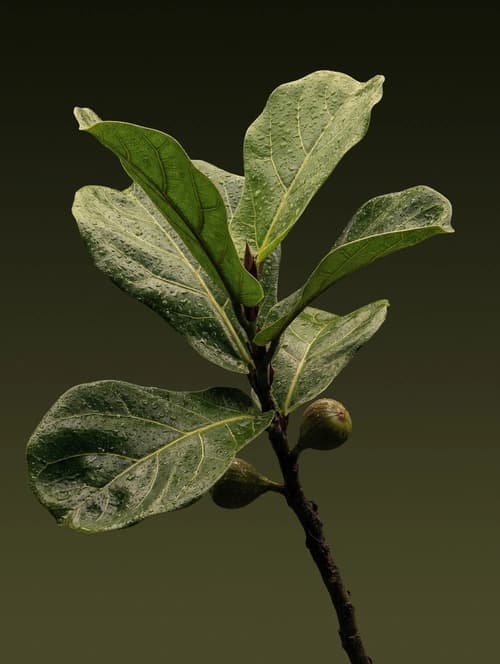
The weeping fig was Germany's best-selling indoor tree for decades — and rightly so: fine, glossy foliage, elegantly arching branches and a genuine tree feeling in the living room. It does have one quirk you need to know about: it responds to every change of location by dropping leaves. Give it a fixed, bright spot and then leave it in peace, and you have a companion for decades.
- Light
- Bright to very bright, no harsh midday sun; variegated varieties need more light.
- Watering
- Moderate and regular with room-temperature water; reduce considerably in winter.
- Care level
- Medium
- Botanical
- Ficus benjamina
Within the ficus family the weeping fig is the fine-limbed sister of the rubber plant and the fiddle-leaf fig: instead of a few large leaves it carries hundreds of small ones, which makes it look far more tree-like. Popular varieties are the green „Danielle“, the white-variegated „Starlight“ and the small-leaved „Natasja“ — it is also often sold with a braided trunk.
The infamous leaf drop is not a disease but an adaptation response. After a move, a change of position or even just a rotation of the pot, the weeping fig sheds part of its foliage and rebuilds it to match the new light. The key is not to panic-water it — after four to eight weeks it flushes out again.
Its preferred spot is bright to very bright, happily with some morning or evening sun but without harsh midday sun behind glass. Variegated varieties need more light than green ones. Draughts, cold feet from stone floors and the dry air directly above a radiator are the three classic causes of a sulking plant.
Water moderately but regularly with room-temperature water: the top layer of soil may dry out, but the root ball should never dry completely and never stand in water. In winter water considerably less and keep the plant at 15 to 20 °C if possible.
A word of caution: like all ficus species, the weeping fig carries white latex sap that causes discomfort in pets if eaten and can irritate sensitive skin. Ficus benjamina is also one of the relevant indoor allergens — with a known latex allergy, another indoor tree is the better choice.
Regular pruning keeps the crown dense: in spring shorten long shoots by a third and it branches willingly. Latex sap seeps from the cuts — dab it off with a damp cloth and the wound seals itself.
Is Weeping Fig toxic to children and pets?
- Children
- Mildly irritating
- Cats
- Toxic
- Dogs
- Toxic
The white latex sap in all parts of the plant is toxic to cats and dogs and can irritate skin and mucous membranes in people. Ficus benjamina is also a known allergen, especially for latex-allergy sufferers.
Typical symptoms: In animals after ingestion: drooling, vomiting, diarrhoea, loss of appetite; skin contact with the sap can cause redness and irritation.
In an emergency:call the German poison control centre in Bonn on +49 228 19240 (24/7) — for pets, contact an emergency vet directly. This information does not replace medical or veterinary advice.
Overview: toxic & non-toxic plants for cats, dogs and children
Care
- 01A fixed, bright spot without harsh midday sun — and then ideally never move it again.
- 02Water moderately: let the top layer of soil dry, avoid both waterlogging and a dried-out root ball.
- 03Avoid draughts and cold floors; in winter do not place it directly above a radiator.
- 04Feed every two weeks from spring to autumn, every six to eight weeks in winter.
- 05Sit out leaf drop after a change of location — do not increase watering, the plant regenerates.
- 06Prune in spring if needed; wipe off seeping latex sap with a damp cloth.
Frequently asked
- Why is my weeping fig dropping leaves?
- Nine times out of ten it is a reaction to change: a new spot, a rotated pot, a house move, suddenly less light in autumn. The plant adapts its foliage to the new conditions. Keep the location, water normally and be patient for four to eight weeks — then it flushes out again. Only if the soil is soggy is waterlogging the cause.
- Is the weeping fig toxic to cats?
- Yes. The latex sap contains irritants that can cause drooling, vomiting and diarrhoea in cats and dogs after chewing. Since the weeping fig also offers material at floor level through dropped leaves, it is only conditionally suitable for households with nibble-happy pets.
- How big does a weeping fig get indoors?
- In a good spot it reaches two to three metres indoors and can easily be kept at any desired height by pruning. It grows at a leisurely but steady pace — old specimens with thick trunks are proper indoor trees after 20 or 30 years and often family heirlooms.
- What is the difference between weeping fig, rubber plant and fiddle-leaf fig?
- All three are ficus species with similar basic care but very different characters. The weeping fig (Ficus benjamina) has many small leaves and looks the most tree-like, the rubber plant (Ficus elastica) carries a few large leathery leaves and is the toughest, and the fiddle-leaf fig (Ficus lyrata) with its huge leaves is the most demanding and most design-driven of the three.