Plants
Holly
Ilex aquifolium · Aquifoliaceae
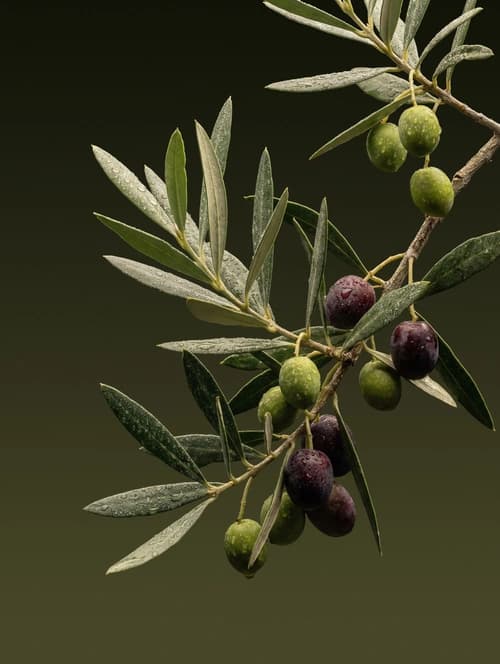
Holly is the classic winter shrub: glossy, dark green, spiny foliage all year round and bright red berries from autumn that hang on well into winter. In the garden Ilex aquifolium is a tough, prune-tolerant shrub for semi-shaded spots; in the workshop it is one of the most important foliages of Advent and Christmas floristry. Important to know: the pretty berries are toxic — to children and pets alike.
- Light
- Semi-shade to shade; tolerates sun only on evenly moist soil.
- Watering
- Keep evenly moist without waterlogging; established plants are fairly drought-tolerant.
- Care level
- Easy
- Botanical
- Ilex aquifolium
Ilex aquifolium is dioecious: there are male and female plants, and only the females carry berries — provided a male pollinator grows nearby. If you want guaranteed berries, choose a self-fruitful cultivar such as „J.C. van Tol“ or deliberately plant a pair. Other popular garden forms are „Alaska“ with heavy berry set and the yellow-variegated „Golden King“ (which, despite the name, is female).
Holly is happiest in semi-shade on humus-rich, evenly moist, slightly acidic to neutral soil. Full winter sun combined with frozen ground causes winter desiccation — brown leaf margins in spring are almost always that combination, not a fungus. A spot sheltered from easterly winds and a mulch layer prevent it reliably.
As a native shrub, Ilex is ecologically valuable: the inconspicuous white flowers in May and June are a good bee pasture, and the berries feed blackbirds and thrushes through winter — birds tolerate them without problems. For people and pets the opposite is true, which is why holly does not belong in gardens where small children play unsupervised and taste everything.
In floristry, Ilex is indispensable during Advent: berried stems of Ilex verticillata (the deciduous winterberry) come through the auction as a cut product in their own right, while the classic spiny foliage goes into wreaths, arrangements and door decor. Cut holly lasts for weeks, even without water — which is exactly why it works so well on an outdoor door wreath.
A typical garden mistake is a radical prune at the wrong time: Ilex tolerates cutting extremely well and can even be grown as a hedge or topiary, but the main prune belongs in spring after the hard frosts. Prune in autumn and you cut away the winter berry display.
Is Holly toxic to children and pets?
- Children
- Toxic
- Cats
- Toxic
- Dogs
- Toxic
Berries and leaves contain saponins and other irritants. Toxic to cats, dogs and children — even a few berries cause vomiting and diarrhoea in children, and larger amounts can become dangerous. Birds, by contrast, tolerate the berries without harm.
Typical symptoms: After ingestion: vomiting, diarrhoea, abdominal pain, drooling; drowsiness after larger amounts. When in doubt, seek medical or veterinary advice.
In an emergency:call the German poison control centre in Bonn on +49 228 19240 (24/7) — for pets, contact an emergency vet directly. This information does not replace medical or veterinary advice.
Overview: toxic & non-toxic plants for cats, dogs and children
Care
- 01Semi-shaded, wind-sheltered spot; avoid full winter sun on frozen ground.
- 02Humus-rich, evenly moist soil — water regularly in the planting year, later only in drought.
- 03Mulch in autumn to protect the shallow roots from winter desiccation.
- 04Do shaping and the main prune in spring after the hard frosts, not in autumn.
- 05For berries, choose a female or self-fruitful cultivar (e.g. „J.C. van Tol“).
- 06Berries and foliage are toxic — keep out of reach of children and pets.
Frequently asked
- Is holly toxic to dogs and cats?
- Yes. Berries and leaves contain saponins that can cause vomiting, diarrhoea and heavy drooling in dogs and cats. The spiny leaves deter most animals, but fallen berries are readily eaten. If you suspect ingestion, call your vet.
- Why does my holly have no berries?
- Usually for one of two reasons: either the plant is male and cannot bear berries at all, or there is no male plant nearby for pollination. The fix is a self-fruitful cultivar such as „J.C. van Tol“ or deliberately adding a male partner. An autumn prune also removes the developing berries.
- My holly gets brown leaves in winter — what should I do?
- Brown leaf margins after winter are almost always winter desiccation: winter sun makes the evergreen leaves transpire while the frozen ground supplies no water. Prevent it with a semi-shaded, wind-sheltered position, a mulch layer and watering on frost-free days. Cut damaged shoots back in spring — Ilex reliably regrows.
- Can I plant holly as a hedge?
- Very well indeed. Ilex tolerates pruning extremely well, is dense and evergreen, and is a popular native alternative to cherry laurel. Plan on two to three plants per metre and growth of roughly ten to twenty centimetres a year — a holly hedge takes patience, but lasts for decades.