Flowers and Wellbeing: Why They Make Us Happier — and How to Use That
The research is surprisingly clear: flowers lower stress, lift mood and deepen our sense of connection. Here's how to build that effect into your day on purpose.
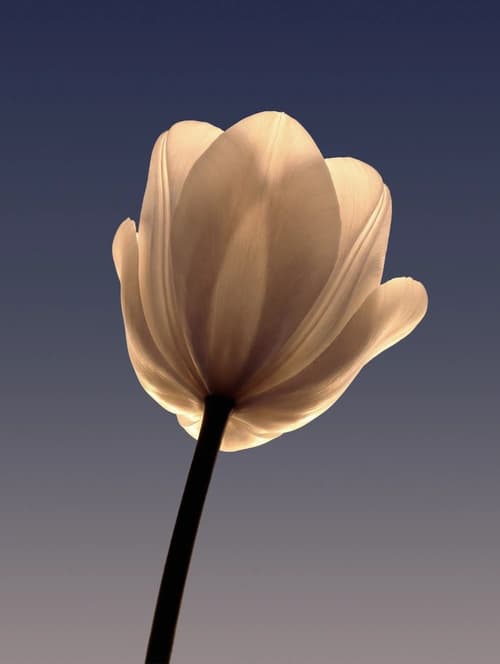
Everyone knows flowers are beautiful. Fewer people know that they measurably do us good — and that several studies back this up. Researchers at Harvard, Rutgers and in Japan have shown that flowers reduce stress, lift mood and make us more sociable. This guide sums up what's actually proven and shows how to put the effect to work in everyday life.
What the research actually shows: a widely cited Rutgers University behavioral study (2005) found that across all ages and genders, flowers trigger immediate genuine joy — the famous “Duchenne smile” you cannot fake on command. Notably, the positive effect was still measurable three days later, not just at the moment of receiving them. Work by Nancy Etcoff (Harvard Medical School / Massachusetts General Hospital) adds that people who live with fresh flowers report fewer episodes of anxiety and low mood.
The stress effect is even physically measurable. In a Japanese study of office workers (Journal of Physiological Anthropology, 2014), just four minutes of viewing roses measurably raised parasympathetic activity — the nervous system's “rest mode” that counters stress. The roses used were unscented, so the effect came through sight alone. Afterwards participants described themselves more often as “relaxed,” “natural” and “comfortable.” So this isn't only a feeling — it's heart rate variability you can measure in the lab.
1. Put flowers where your eyes land first in the morning. In the Harvard work, people reported a better start to the day when flowers sat within the line of sight of their morning routine — kitchen, dining table, bedside. The effect is largest where you pass anyway, not in a rarely used room. A small bunch in the right spot beats a grand arrangement out of view.
2. Use the workplace, not just the living room. In high-pressure environments in particular, flowers lower perceived stress — as the Japanese study on working adults showed. A small glass with a few stems beside your screen is enough. Easy-care, long-lasting varieties are practical here; you'll find what stays fresh longest via our variety pages and the care guide.
3. Give flowers deliberately — the effect is in the giving, too. The Rutgers data show that flowers encourage sociable, friendly behavior and strengthen a sense of connection. Giving flowers sparks real joy in the other person while deepening the relationship. That makes them an ideal gesture for recovery, a new baby, or simply “for no reason” — the last of which often surprises and lands hardest.
4. Turn arranging into a small ritual. Trimming stems, changing the water, building a bouquet — these calm, repeatable motions act like a mini mindfulness exercise and pull your mind into the present. You don't need to be a trained florist: a weekly refresh is plenty. Caring for flowers pays off twice — in the looking and in the doing.
5. Bet on freshness and scent, not volume. Wilting flowers flip the effect; a tired bunch tends to weigh mood down. Better a few top-quality stems that last two weeks than a big bundle drooping after four days. Fragrant varieties can add to the calming effect — the sense of smell is wired closely to the emotional brain. Here in Düsseldorf-Pempelfort we've been buying with exactly that in mind at the Veiling Rhein-Maas for over 45 years: longevity over mass.
Frequently asked
- Do flowers really help against stress, or is it just a nice idea?
- The effect is measurable, not just felt. In a Japanese study of office workers, even four minutes of viewing roses raised the body's parasympathetic (“rest”) activity — the counterweight to stress. Behavioral studies at Harvard and Rutgers additionally show less anxiety and low mood among people living with fresh flowers. So it's documented — not guaranteed in every individual case, but clearly demonstrable on average.
- Which flowers lift mood the most?
- Freshness matters more than the variety — wilting flowers reverse the effect. Studies often used roses, but bright, cheerful types like sunflowers, gerberas or tulips brighten mood instantly for many people. Fragrant flowers such as freesias or lavender can reinforce the calming effect through scent. In the end, what you personally love counts — your own preference is part of the effect.
- How often do I need fresh flowers for it to be worth it?
- A consistently present, fresh bunch does more than a rare giant bouquet. In the Harvard work the effect showed up in daily life — precisely when flowers are constantly in view. In practice: better a small, long-lasting bunch each week in a spot you see daily than a large arrangement once a month. Quality and longevity decide whether that fresh impression lasts two weeks or just days.
- Are flowers a good gift for stressed or sad people?
- Yes, and the benefit runs both ways. The Rutgers study shows flowers spark immediate genuine joy in the recipient and strengthen a sense of connection — a signal of being seen and meant. For recovery, after a birth, or in a hard time, this gesture often speaks louder than words. Just choose lightly scented or unscented varieties for the unwell and mind hygiene; some hospital wards don't allow cut flowers.