Funeral Flower Colours and Their Meaning: What White, Deep Red and Purple Really Say
Which colour fits which farewell — and why the same flower says something different in France than it does in Germany. A decision guide for the final tribute.
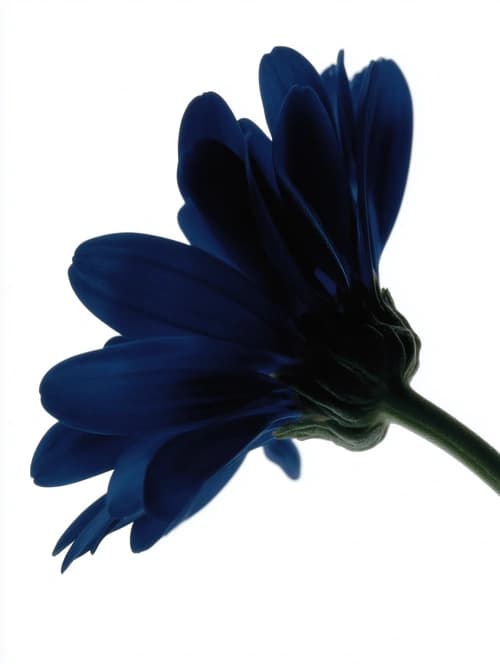
At a farewell, every colour carries a message — often one we never say out loud. Anyone choosing sympathy flowers rightly wonders: is white too cool, red too intimate, purple too old-fashioned? This guide sorts the colours by documented symbolism, by relationship to the deceased and by regional custom — so your tribute says exactly what you feel.
White is the classic, almost always safe choice. In the Christian Western tradition white stands for purity, innocence and — in faith — resurrection. It is neutral enough to suit any relationship: for a great-aunt as much as for a close friend whose religion or taste you do not know precisely. White lilies, callas and roses form the core of classic sympathy work. When in doubt, white is never wrong.
Deep red is the colour of lasting love. A dark, almost burgundy rose or carnation says something white cannot: that the bond endures beyond death. For that reason deep red is traditionally reserved for very close relationships — partners, parents, children. The shade matters: a bright signal red quickly looks festive and out of place, whereas a muted, dark red reads as dignified and warm.
Purple and violet have become firmly established over recent decades. Violet is seen as the colour of transition and dignity — in Catholic liturgy it is the colour of penance, and violet vestments are also worn at Masses for the dead. A violet arrangement pays the deceased particular respect while feeling softer and more personal than pure white. Hellebores, lisianthus or violet freesias bring this note without looking heavy.
Pink, soft yellows and pastels stand for gentleness, gratitude and remembrance — not loud grief, but a loving letting-go. They fit especially well when a long, full life is being celebrated, at the farewell of a grandmother for instance, or when the family expressly wants no sombre mood. Hydrangeas, lisianthus and freesias in powder and cream tones carry this quiet, comforting message.
Regional differences can be larger than you would expect — and they centre on the chrysanthemum. In Germany and Austria it is the classic All Saints' and All Souls' grave flower. In France, Italy, Belgium and parts of southern Europe the chrysanthemum is so firmly tied to death that no one would ever give it as a cheerful gift — a bouquet of white chrysanthemums would be an embarrassing misunderstanding. Yellow is ambiguous too: in Asia it signals eternity and rebirth, in the Western context more friendship and bright memory. Whenever a farewell has a cultural or religious background, a quick question is always worth it.
Make the choice in four steps: 1. Clarify the relationship — very close allows deep red, more distant stays with white or pastel. 2. Consider the occasion — a long life suits gentle colours, a sudden loss rather quiet white. 3. Check cultural and religious references, especially around chrysanthemums and strong yellow. 4. Keep the tones muted rather than glaring. At Fleura we source our sympathy flowers in A1 quality through the Veiling Rhein-Maas — because an arrangement that stays fresh carries comfort beyond the service itself.
Frequently asked
- Which flower colour is safest for a funeral?
- White. Across cultures it stands for purity, peace and dignity and suits every relationship — from close family to acquaintances whose faith or taste you do not know exactly. When unsure, white, perhaps with a touch of green, is never wrong.
- Is it acceptable to bring red flowers to a funeral?
- Yes, but deliberately. Dark, muted red expresses deep, lasting love and is traditionally reserved for very close relationships — partners, parents, children. Avoid a bright signal red, which reads festive rather than dignified. For more distant relationships white or pastels are usually more fitting.
- Why are chrysanthemums seen as purely funeral flowers in France?
- Since the end of the First World War, millions of chrysanthemums have adorned French graves on All Saints' Day — over 20 million pots a year to this day. The flower is so firmly tied to remembrance there that giving it as a gift outside mourning is considered a faux pas. In Germany and Austria it is also a classic grave flower, but can be used more freely in other arrangements.
- What does the colour purple mean in sympathy flowers?
- Violet is regarded as the colour of transition and dignity; in Catholic liturgy it marks penance and is also worn at Masses for the dead. A purple arrangement pays the deceased particular respect while feeling more personal and warmer than pure white — a good choice when the farewell should feel neither cool nor sombre.