How to Make a Wreath: Step by Step
A straw ring, binding wire and a few bundles of greenery — that's all a beautiful wreath needs. The florist's base technique that works for door, table and any occasion.
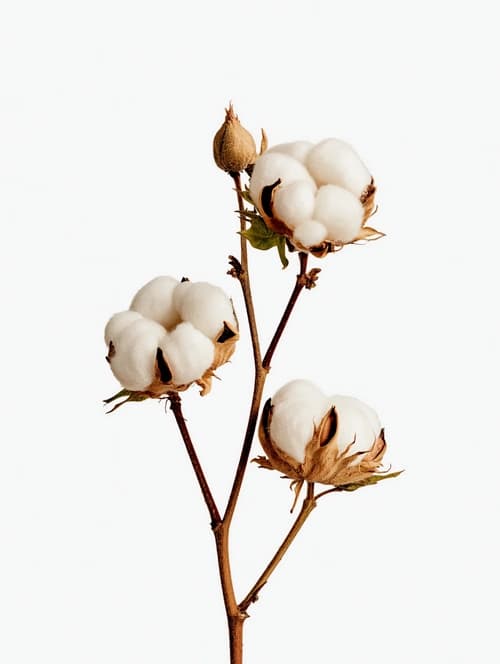
A wreath looks elaborate, but at heart it's one single repeated motion: lay on a bundle, wrap with wire, lay on the next bundle. Once you've mastered this base technique, you can bind a spring door wreath the same way as a winter Advent wreath — the steps don't change, only the material. This guide shows the technique exactly as we use it in our workshop.
What you need. A base ring (a straw ring for full, voluminous wreaths; a corrugated wire ring is cheaper and grips the wire well, but only suits fully wrapped wreaths), a roll of binding wire (green-coated, thin, around 0.3 mm), sharp secateurs and your material: greenery as a base plus accents. Fresh greenery like eucalyptus or ruscus is supple and forgives beginner mistakes; dried flowers such as strawflowers, statice or gypsophila are more brittle but last forever. For a first wreath, start fresh and bendable.
1. Anchor the wire. Wrap the wire firmly around the base a few times and twist the end together with the wire still on the roll so nothing slips. Don't cut the wire — you bind the entire wreath in one go from the same roll. This is the point where most people fail: the wire stays continuously taut, otherwise everything comes loose.
2. Tie small bundles. Assemble little, manageable posies of three to five stems — flat, not too thick. Feel free to mix different greens and the odd bloom. Lay the first bundle flat on the base and wrap the stem ends twice, tightly, with the wire. Pull firm: anything that feels loose now will fall apart later.
3. Always work in the same direction. Place the next bundle so its leaves completely cover the stem ends of the previous one, then wrap again. Work consistently in one direction — usually anticlockwise — covering the inner edge, the top and the outer edge of the ring. That's the only way the wreath ends up evenly thick from all sides with no bare straw showing.
4. Even all the way round. Turn the wreath as you work rather than leaning around it. Keep the bundles roughly the same size and the spacing constant — a good wreath lives on calm rhythm, not on fullness in one spot and gaps in another. Dried material is best used sparingly and as accents; fresh greenery can be more lavish.
5. Close the circle. The last stretch gets fiddly: gently lift the very first bundle from the start, slide the stems of the final bundle underneath and wrap that spot three or four times. This creates a seamless transition with no visible stem end. Then knot or firmly twist the wire two or three times and tuck the end into the base so it doesn't prick.
6. Hanger and finish. For a door, form a loop from a piece of wire or ribbon and fix it to the back — to the sturdy base ring, not just the greenery. Add accents like a bow, berries or dried blooms right at the end, otherwise they get in your way. A fresh greenery wreath lasts one to two weeks on a cool, shaded door; the occasional misting with water extends that. A dried wreath easily survives a whole season indoors.
Door, table or occasion — one technique. For a door, the wreath can be robust and a touch larger. For a table, bind it flatter so candles or a bowl fit in the centre. For occasions, steer the effect through colour: warm tones and berries in autumn, fresh green and first blooms in spring, lavender and strawflowers for a summery, Mediterranean scented wreath. The circle itself has been a symbol of infinity and nature's eternal cycle since antiquity — on the front door it still reads as a welcome greeting. That's exactly what makes it such a lovely gift to bring along or a housewarming present.
Frequently asked
- Wreath: bind or insert — which is better?
- Both have their place. Binding (with wire, as described here) looks more natural, holds dried and fresh material and needs no water. Inserting (into wet floral foam) supplies fresh blooms with water and suits lush, bloom-heavy wreaths that only need to last a few days. For a long-lasting door or greenery wreath, binding is clearly the more robust and sustainable method.
- Which material lasts longest?
- Dried flowers are the long-distance runners: strawflowers, statice, pampas grass or gypsophila easily last a whole season or longer in an indoor wreath. Fresh greenery like eucalyptus or ruscus dries slowly on the wreath and often looks good for months. Pure fresh blooms wilt quickly by contrast — better used as an accent you can swap out when needed.
- How big should a front-door wreath be?
- As a rule of thumb, a door wreath with an outer diameter of about 30 to 40 cm suits a normal front door — it should stand out without swamping the door. Pick a base ring roughly 8 to 12 cm smaller than the desired final diameter, because the material adds bulk all around. For a table, the ring can be smaller and flatter.
- Why does my wreath keep falling apart?
- Almost always two things: the wire was cut partway instead of staying continuously taut, or the bundles were wrapped too loosely. Bind in one go from a single roll, pull every wrap firm and knot cleanly at the end. Then the wreath holds even hanging vertically on a door.