Flower Library
Blackberry Foliage
Rubus fruticosus · Rosaceae
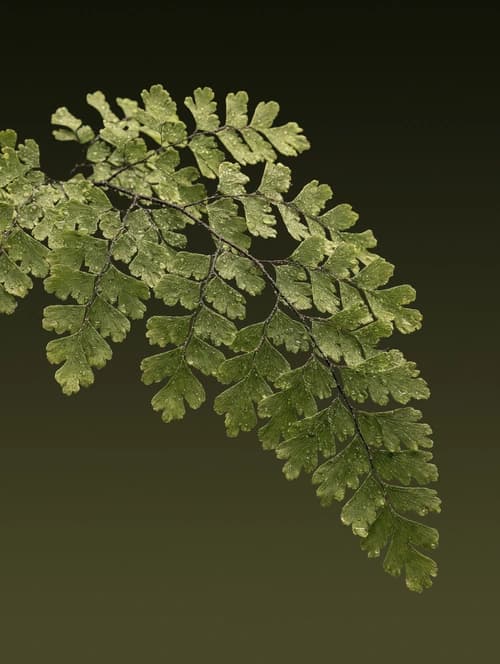
Rubus, the foliage of the blackberry, is a wonderfully wild cut green with glossy dark-green leaves, arching canes and an often bronze-red flush in autumn. It adds movement and a touch of the untamed to any bouquet. At fleura we source our seasonal greenery fresh via the Veiling Rhein-Maas and select firm, well-ripened stems that hold up surprisingly long in the vase.
- Season
- June – July – August – September – October – November
- Vase life
- 7–14 days
- Latin name
- Rubus fruticosus
- Colors
- Dark green, Olive green, Bronze-red (autumn), Black (berries)
In trade and wild harvest you mainly encounter two types: the classic, lightly thorned blackberry foliage with five- to seven-part pinnate leaves, and the near-thornless garden cultivars such as „Loch Ness“, „Thornfree“ or „Navaho“. The latter are more pleasant to handle because the prickles are absent, while the wild foliage with its thorns looks especially rugged and natural. In late summer you often find canes bearing unripe green and ripe black berries, adding a further decorative layer to the greenery.
In floristry Rubus is a classic structural green for naturalistic hand-tied bouquets, autumnal arrangements and larger event designs. Its long, pliable canes are ideal for binding wreaths or shaping arches and garlands. We like to use blackberry foliage as a loosening, cascading element that gives a bouquet depth without weighing it down. Berry-bearing branches are a rewarding detail for rustic table settings in September and October.
Quality is recognised by firm, non-wilting leaves with an even sheen and by canes that have not been cut too young. Freshly cut, still-soft blackberry foliage tends to droop, which is why well-ripened, slightly woody material lasts noticeably longer. From 45 years of experience we know that vase life depends heavily on cutting maturity; clean, cool water and removing the lower leaves visibly extend it.
Stylistically Rubus suits everything earthy and wild: dahlias, roses in muted shades, hydrangeas, eucalyptus and grasses. The bronze-red autumn tones harmonise especially well with warm orange, rust and burgundy hues. For modern, pared-back designs, individual long canes can also be staged on their own in a tall vase, where their natural lines come fully into their own.
Is Blackberry Foliage toxic to children and pets?
- Children
- Non-toxic
- Cats
- Non-toxic
- Dogs
- Non-toxic
Rubus is non-toxic to cats and dogs, and the blackberries are edible. Do mind the thorns of the wild foliage, however, which can cause injury.
Overview: toxic & non-toxic plants for cats, dogs and children
Care
- 01Cut stems at an angle and remove the lower leaves so no foliage rots in the water.
- 02Fill the vase with cool, clean water and change it every two to three days.
- 03Choose a cool spot out of direct sun; heat and draughts shorten the display life.
- 04With berry-bearing branches, make sure no overripe berries drop into the water and cloud it.
- 05Take care when handling wild foliage: deal with the fine prickles using gloves, or use near-thornless cultivars.
- 06Briefly submerge wilted-looking foliage in cool water to revive and firm it up.
Frequently asked
- How long does blackberry foliage last in the vase?
- Well-ripened Rubus greenery often lasts one to two weeks in a cool spot with regular water changes. Foliage cut too young and soft droops faster, which is why we select firm, slightly woody canes.
- Is blackberry foliage toxic to cats and dogs?
- No, Rubus is considered non-toxic to cats and dogs, and the blackberries themselves are edible. The main caution is the thorns of the wild foliage; in a household with pets, near-thornless cultivars are more practical.
- When is blackberry foliage in season?
- As cut greenery Rubus is mainly available from summer into late autumn, roughly June to November. In late summer and autumn it often also shows berries and a bronze-red flush, making it especially decorative.
- What does blackberry foliage combine well with?
- Rubus combines beautifully with dahlias, roses in muted shades, hydrangeas, eucalyptus and grasses. Its autumnal bronze tones harmonise especially well with warm orange, rust and burgundy nuances.