Blue Flowers: Longing, Loyalty, Calm — and Why They’re So Rare
What blue flowers really mean, which varieties truly bloom blue and which only call themselves “blue”. An honest take on symbolism — no kitsch.
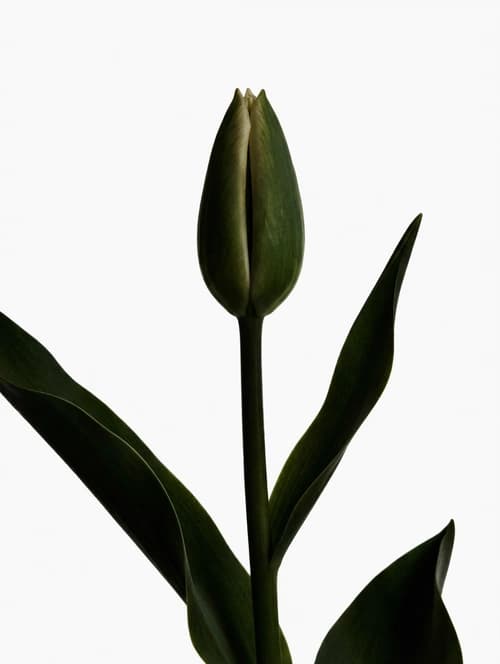
Blue is the rarest flower colour in nature — fewer than ten percent of all flowering plants appear blue to the human eye, and a true, pure blue is rarer still. That very rarity turned blue flowers into a symbol of longing, loyalty and quiet depth ever since the Romantic era. This guide explains what lies behind it — and what to keep in mind when giving them as a gift.
Why blue is so rare: plants simply don’t have a “blue pigment” in the literal sense. Blue tones arise from red and violet dyes, the anthocyanins — above all delphinidin — which only tip into blue through the interplay of metal ions and a specific pH inside the bloom. This is biologically expensive. Plants usually make the effort only where they compete for pollinators: bees see blue and ultraviolet especially well. What we call “blue” is botanically often closer to violet — true sky-blue stays the exception.
The “blue flower” of Romanticism: no other floral symbol is so loaded in literature. The poet Novalis made it the emblem of an unquenchable longing for the infinite, for love and the unreachable, in his unfinished novel “Heinrich von Ofterdingen” (published 1802). The core meaning of blue flowers still derives from that image: wanderlust, reverie, a love that wants more than can be spoken. Giving blue flowers rarely means flat romance — more a quiet, yearning “I’m thinking of you”.
The meanings at a glance — documented, not invented: blue traditionally stands for loyalty and trust; the symbolism of faithfulness is remarkably constant across cultures. Add calm, peace and serenity — blue has a demonstrably soothing effect on perception. And finally longing and depth. For an occasion that means: blue flowers suit reconciliation, “rest well”, long-standing devotion — less so loud celebration.
Truly blue or just called blue? An honest variety guide. Genuinely blue bloomers include cornflower, gentian, larkspur, forget-me-not, bellflower and some irises. “Blue roses”, by contrast, don’t exist in nature: the rose lacks the delphinidin gene entirely. What’s sold as a blue rose is either dyed or the genetically engineered variety “Applause” (on the market since 2009) — and even that looks more lilac. Many “blue” orchids or tulips are dyed too. If you want real blue, reach for the varieties that manage it naturally.
The special case of hydrangea — blue here is chemistry, not chance. Hydrangeas change colour with the soil: on acidic soil with available aluminium many varieties turn blue, on lime-rich soil pink. That’s no trick and no dyeing, but real plant physiology — the same delphinidin principle, just steered through the roots. A lovely metaphor, by the way: blue arises here from what the soil gives — not from what you dictate to the bloom.
Caution with two blue beauties: monkshood is considered the most poisonous plant in Europe, all parts are highly toxic; larkspur was Germany’s “poisonous plant of the year” 2015 and is toxic in all its parts. Both are stunning garden perennials but don’t belong in a bouquet around children or pets indoors — and never in a vase next to food. For a gift, choose the harmless blues like cornflower, forget-me-not or bellflower.
Practical tips for gifting: pure blue can read as cool in a bouquet and tends to “disappear”. Three reliable combinations: 1. Blue with white — clean, fresh, elegant, lets the blue glow. 2. Blue with soft pink or apricot — warm and conciliatory, takes the severity off the blue. 3. Blue with strong yellow — the greatest possible contrast, lively and summery. For a message of loyalty or longing, a single blue accent in a light bouquet is often enough.
Frequently asked
- Do real blue roses exist?
- No, not naturally — the rose lacks the gene for the blue dye delphinidin entirely. Blue roses on the market are either dyed or the genetically engineered variety “Applause” (since 2009), which looks more lilac than pure blue.
- Which flower best expresses loyalty or longing?
- Classically the forget-me-not — the name says it all — and the cornflower, which has stood for longing as the “blue flower” since Romanticism. Both bloom genuinely blue, are harmless and work well in bouquets for people close to you.
- Why are there so few blue flowers?
- Because plants have no direct blue pigment. Blue only emerges when red or violet anthocyanins like delphinidin combine with metal ions and the right pH — a costly process. Fewer than ten percent of flowering plants appear blue at all, and many of those are strictly speaking violet.
- Are blue flowers poisonous?
- Some are. Monkshood is regarded as Europe’s most poisonous plant, larkspur is toxic in all its parts — both bloom deep blue. Cornflower, forget-me-not and bellflower, by contrast, are harmless. In households with children or pets it pays to check the variety carefully.
Related topics
Flower Library
Cornflowers
Flower Library
Forget-Me-Not
Flower Library
Delphinium
Flower Library
Iris
Flower Library
Bellflowers
Flower Library
Blue Lace Flower
Flower Library
Swan River Daisy
Flower Library
Clematis
Flower Library
Globe Thistle
Flower Library
Love-in-a-mist
Flower Library
Cupids Dart
Flower Library
Throatwort
Plants
Squill
Plants
Fan Flower
Plants
Baby Blue Eyes
Plants
Floss Flower
Plants
Lobelia
Plants
Glory of the Snow
Plants
Vanda Orchid
Occasions
Engagement Flowers
Occasions
Get-Well Flowers
Occasions