Flower Library
Clematis
Clematis · Ranunculaceae (Hahnenfußgewächse)
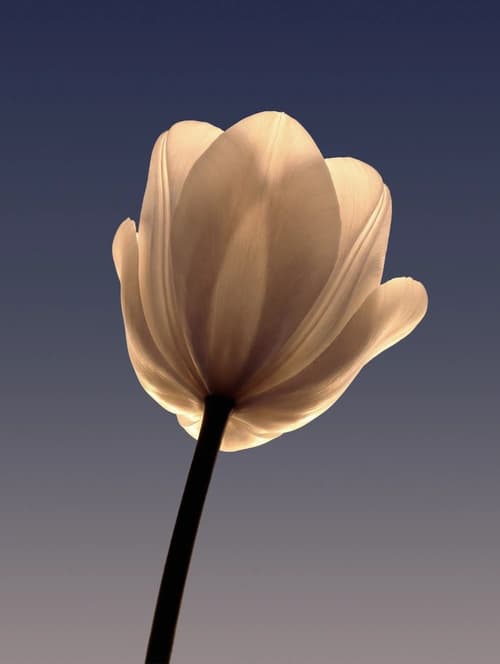
Clematis, known in German as Waldrebe, is one of the most expressive climbing plants in our gardens and at the same time a still underrated cut flower. Its star-shaped blooms in deep violet, clear blue or soft pink bring movement and romance to any vase. It is best cut just as the bud breaks open, because that is when it reveals its full, long-lasting display.
- Season
- May – June – July – August – September
- Vase life
- 6–12 days
- Latin name
- Clematis
- Colors
- Violet, Blue, Purple, Pink, White, Cream
Botanically, clematis belongs to the buttercup family and offers an enormous variety of forms. There are large-flowered hybrids with plate-sized blooms such as Jackmanii or Nelly Moser, delicate bell-shaped flowers from the Viticella group, and fragrant, cloud-blooming species like Clematis montana. The sturdy, slightly woody stems with well-developed buds are best suited for the vase.
In floristry, clematis is used deliberately and sparingly. A single trailing flowering stem lends lightness and cascade to a bridal bouquet, while short flower heads act as delicate spots of colour in arrangements. The decorative, silvery feathery seed heads of spent flowers are also highly sought after in autumn floristry and can be reused dried.
With clematis, quality shows in a firm, non-limp stem and in buds opened to roughly two thirds. Fully opened specimens last considerably shorter in the vase. Look for stems with plump buds and rich foliage, because only then does the delicate bloom carry over many days.
Stylistically, clematis fits beautifully into romantic, naturalistic and English-style arrangements. It harmonises with roses, peonies and delicate grasses and emphasises the garden character of a bouquet. For a more modern look, the clear violet tones pair well with graphic, structurally striking blooms.
As a buttercup relative, clematis is a thirsty drinker that needs plenty of fresh, cool water and dislikes floral foam or anything else that impedes water uptake. Arranged loosely and freely in the vase, it rewards you with the longest possible display.
Is Clematis toxic to children and pets?
- Children
- Toxic
- Cats
- Toxic
- Dogs
- Toxic
All parts contain protoanemonin and are toxic to dogs, cats and humans; the sap can irritate skin and mucous membranes. Keep away from pets and children.
Typical symptoms: Drooling, vomiting and diarrhoea, plus irritation of skin and mucous membranes.
In an emergency:call the German poison control centre in Bonn on +49 228 19240 (24/7) — for pets, contact an emergency vet directly. This information does not replace medical or veterinary advice.
Overview: toxic & non-toxic plants for cats, dogs and children
Care
- 01Cut stems at an angle and place them in plenty of cool, fresh water immediately; woody stems tolerate a slightly deeper water level.
- 02Only cut or buy buds when they are about half to two thirds open, very young buds often fail to open.
- 03Remove lower leaves so no foliage rots in the water and bacterial growth stays low.
- 04Use fresh flower food and change the water every two days, recutting the stems each time.
- 05Protect from direct sun, draughts and fruit bowls and keep the vase bright but cool, this noticeably extends the life of the delicate blooms.
- 06Avoid floral foam where possible, as clematis is a heavy drinker that prefers unimpeded water uptake.
- 07Wear gloves when handling, as the plant sap can irritate the skin.
Frequently asked
- How long does clematis last in a vase?
- Treated correctly, clematis flowers last about six to twelve days, occasionally longer in a cool, bright spot. The key is that the buds are not fully open when cut and that the stems go into plenty of water freshly trimmed.
- Is clematis toxic to cats and dogs?
- Yes. All parts of the plant contain irritant compounds, mainly protoanemonin released from ranunculin. In humans and animals the sap can cause skin and mucous membrane irritation, drooling, vomiting and diarrhoea. Because of the bitter taste, animals rarely eat the plant in larger amounts. Still keep the vase out of reach of pets and children.
- When is clematis in season as a cut flower?
- The main season runs from May to September, when most species and hybrids bloom. During this period the selection is widest. In autumn the decorative, feathery seed heads are additionally in demand.
- Why do my clematis buds fail to open?
- Usually the buds were cut too early and too tightly. Clematis needs buds already opened to about half to two thirds in order to continue opening in the vase. Fresh water, a cool spot and flower food all help.