How Much Water Belongs in the Vase? Fill Height by Flower Type
Filling to the brim is almost always wrong. Which flower wants little, shallow, or deep water — and why fill height decides how long they last.
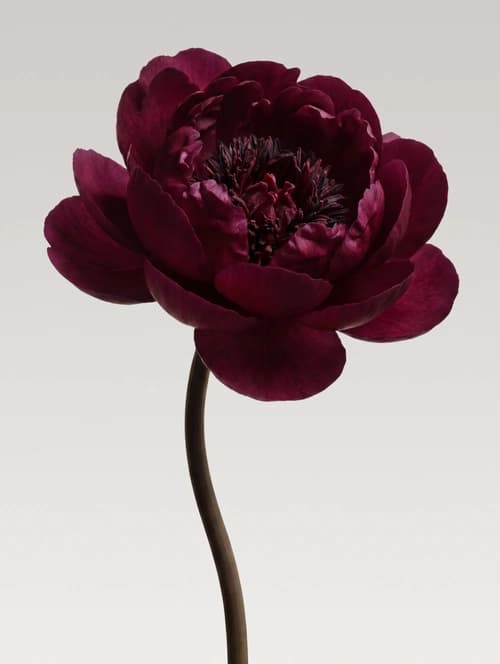
Most people fill the vase to the brim — then wonder why the bouquet flops after three days. But fill height isn't a matter of taste, it's biology: every stem has its own tolerance for standing water. Here's the rule of thumb our florists apply at the vase station every day.
Why fill height matters at all. A stem only takes up water through the cut surface at its very bottom — not along its length. Anything sitting in the water above that adds no extra drop to the bloom; it just softens, rots and feeds bacteria. And those exact bacteria end up clogging the fine vessels inside the stem. So more water isn't more nourishment — it's often more decay.
1. Tulips: little water, around 5 cm. Tulips are a special case — they keep growing in the vase, up to 2 cm a day, because they were still mid-growth when cut. If their soft stem stands too deep, it goes limp and droops over the rim. With only a shallow level the stems stay firm and upright. Better to top up often than to fill high.
2. Gerberas: very shallow, 4–5 cm. The gerbera stem is hollow and fuzzy — a perfect target for bacteria. In deep water it soaks through, softens and snaps right below the flower head (the dreaded flop). Keep the water deliberately low so the upper stem stays dry and sturdy. If you love gerberas, give them fresh shallow water daily instead.
3. Hydrangeas: plenty of water, almost to the brim. The woody, thirsty exception: hydrangeas transpire enormously through their large flower surface and need matching supply from below. A deep water level is exactly right here. If a hydrangea droops anyway, a full immersion bath helps — it can take up water through its petals too, and often perks right back up.
4. Everything else: the golden middle, about one third. Roses, carnations, lisianthus, chrysanthemums and most mixed bouquets do best with the vase filled to roughly one third. Deeper than needed gains nothing; shallower than a hand's width dries out too fast. When in doubt: one third full, lower leaves off, fresh water every two days.
5. With mixed bouquets the most sensitive stem decides. If tulips or gerberas share a vase with thirsty varieties, go by the most delicate flower and keep it shallow — make up for the robust stems' thirst by topping up more often. And whatever the height: only clean water counts. Strip every leaf below the water line, because nothing spikes the bacterial count faster than rotting greenery in the water.
Frequently asked
- Do flowers die faster if the vase is too full?
- Often yes — especially with soft-stemmed types like tulips and gerberas. The extra submerged stem softens and rots, multiplying bacteria that clog the water vessels. Woody heavy drinkers like hydrangeas, by contrast, handle deep water without issue.
- How deep should the water be for a mixed bouquet?
- Go by the most sensitive flower in the bunch and keep it on the shallow side — about a third of the vase. If tulips or gerberas are in the mix, lower still, and top up more often. That way no variety gets too much standing water.
- Should you top up the water or change it completely?
- Both have their place: between changes you can top up evaporated water so the stem doesn't run dry. But every two to three days the water should be changed completely and the vase rinsed out — otherwise you're just feeding the existing bacterial culture.
- Why does my hydrangea droop despite plenty of water?
- Woody stems sometimes pull air into the vessels and block uptake. Hydrangeas can also absorb water through their petals: submerge the whole flower head in cold water for 20–30 minutes. The bloom often perks back up afterwards.