Veiling Rhein-Maas: How the Flower Auction in Germany Works
Where German florists source their flowers — the Herongen auction we bid at daily before 5 AM.
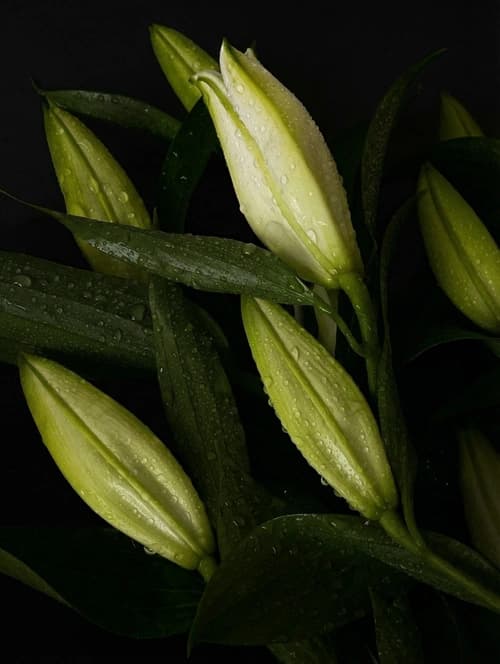
Most customers don't know where florists get their flowers. The answer for Düsseldorf florists is usually: Veiling Rhein-Maas in Herongen, 60 km west of Düsseldorf, right on the Dutch border. Floristry stock is auctioned here daily from 5 AM.
What is a Veiling? A flower auction. Unlike classic auctions it runs as a 'descending' auction — prices start high and drop, the first bidder to press gets the lot. Makes it very fast: a lot of tulips sells in 4 seconds.
Veiling Rhein-Maas in detail: in Herongen (near Geldern), part of the Dutch Royal FloraHolland group. Daily auction Mon–Sat mornings. Florists in the hall from 4:30 AM, auction starts 6 AM, runs to about 9 AM.
Who buys: licensed florists with a trade certificate and bidder number. Consumers can't buy directly. It's B2B wholesale.
What's on offer: tulips, roses, peonies, hydrangeas, lilies — whatever came that day from Dutch and German greenhouses, fields, or imports (Kenya, Ecuador). Freshness is the main difference from wholesale markets or online wholesalers.
How we source at Fleura: Demir or a colleague drives at 4 AM toward Herongen, in the hall at 5, bids on 30–50 lots, back in the car at 9:30. Arrives at the Pempelfort shop around 11. Sorting and into water by 13:00. Sales from 13:00.
What it means for customers: a tulip you buy Thursday afternoon was cut in Holland Wednesday and auctioned Thursday morning. Max 48 hours between plant and your vase. A supermarket tulip is usually 7–10 days old when you buy it.
Why Veiling beats online wholesale: with online wholesalers you don't see stock before buying. At the auction florists see every bundle, every bucket. Defects are sorted out immediately.
Season specifics: at peak times (Valentine's, Mother's Day) the Veiling is extremely full. Prices rise 30–60%. We pass through the rise, but only 1:1 — no occasion-gouging surcharges.
Transport: 50 minutes from Herongen to Düsseldorf. We transport in refrigerated vehicles — flowers like 6–10°C in transit. In summer heat, cooling is decisive.
What the Veiling doesn't do: tropical varieties, exotic imports, orchid breadth — those come from specialty importers. For German standard floristry though, the Veiling is the central hub.
Frequently asked
- Can I buy at the Veiling as a consumer?
- No — the Veiling is B2B. Consumers without a florist licence have no access. Through us though, you can pre-order specific varieties.
- Are Veiling flowers more expensive?
- Per stem yes, because they're fresh and higher quality. In vase-day terms cheaper, since they last 2–3 times longer than supermarket flowers.
- What happens to unsold Veiling stock?
- Very rare. What doesn't sell by auction's end often goes to supermarkets and discounters — hence the visibly older stock there. High-quality stock always sells at the Veiling.
Further reading
Industry
How a Flower Auction Works: The Clock That Runs Backwards
Industry
The Carbon Footprint of Cut Flowers: An Honest Answer
Industry
Fairtrade Flowers: What the Label Really Means
Industry
Floristry as a Craft: What Really Makes the Profession
Wedding
Wedding Flowers: The Complete Guide
Industry
Sustainable Floristry: What Really Matters When You Buy Flowers
Industry
Buying Seasonal and Regional Flowers: Is It Worth It?
Season
Seasonal Flowers: Month by Month Through the Year
Industry