Red Flowers: Meaning Beyond the Rose
Red doesn’t automatically mean “romantic love”. What red tulips, carnations, poppies and the rest actually say — and when another flower carries the more honest message.
Reach for “red” and most people grab a red rose on reflex. Yet the colour red is far richer than its most famous ambassador: it stands for love, but equally for passion, courage, admiration — and in one case even quiet remembrance. This guide sorts out which red flower carries which message, so your bouquet says exactly what you mean — and not, by accident, the wrong thing.
Why red carries so many meanings. Red is the signal colour — physiologically the colour of blood and fire, culturally the colour of the heart and the alarm at once. That’s why its symbolism shifts with context: in a Valentine’s bouquet, red reads as love; on a day of remembrance, as memory; on a stage, as passion. The variety decides which of those meanings comes to the front. Red, then, isn’t a finished sentence but a tone of voice — the flower supplies the words.
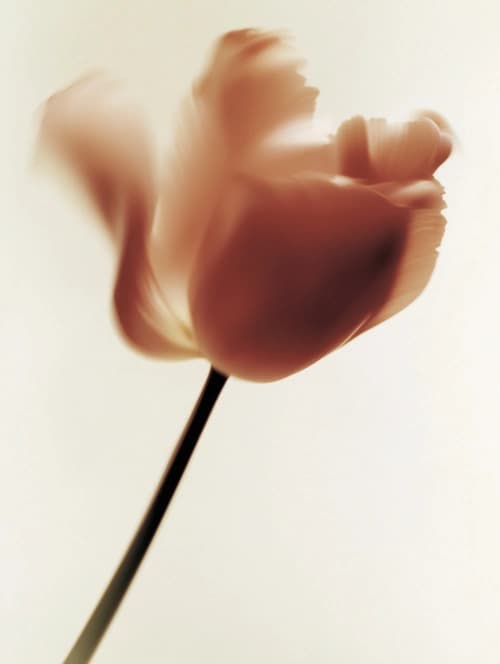
Red tulip — the declaration of love without the pathos. In the language of flowers, the red tulip traditionally stands for perfect, declared love. It feels younger and more relaxed than the rose: less velvety weight, more plain statement. If you want to say “I love you” without the rose’s grand romantic entrance, red tulips are exactly right — especially in spring, their main season from February to April.
Red carnation — admiration and deep affection. The carnation has fallen out of fashion undeservedly. In Victorian floriography, the deep-red carnation meant deep love and admiration (“my heart aches for you”), while lighter reds signalled affection and friendship. That makes it the ideal pick when the message should be warm but not exclusively romantic — for people you cherish deeply without it being love in the couple’s sense. As a bonus, the carnation is among the longest-lasting cut flowers there are.
Red poppy and red chrysanthemum — two extremes. Here it gets delicate, and that’s precisely why it matters: since the First World War and John McCrae’s poem “In Flanders Fields”, the red poppy has been the international symbol of remembrance for the fallen — a beautiful but solemn meaning. The red chrysanthemum, by contrast, simply means “I love you” in the language of flowers. Two red blooms, two opposite messages — a fine example of why the variety should never be ignored. Note: as a cut flower, poppy is more of a seasonal guest (early summer) and short-lived; it’s only briefly happy in the vase.
Red gerbera, ranunculus and anemone — joy and charm. Not every red wants to swear love. The red gerbera stands for cheerfulness, energy and good spirits — it suits birthdays and get-well wishes better than any rose. The red ranunculus signals radiant charm and “you are attractive”, and the anemone, read positively, anticipation and expectation. These are your choice when the message should be light, warm and unforced — affection without the grand vow of love.
How to choose the right red flower — three questions. First: which relationship? Romantic → rose or red tulip. Deep regard without romance → carnation. Friendly and cheerful → gerbera. Second: which occasion? Love and engagement → rose/tulip; birthday/recovery → gerbera/ranunculus; remembrance → poppy. Third: which season? Tulip and ranunculus are spring flowers, poppy an early-summer guest, carnation and gerbera available year-round. Buying in season almost always means better quality and vase life — one reason we at Fleura buy fresh every day at the Veiling Rhein-Maas rather than holding stock.
A word of warning on toxicity. Beauty and harmlessness are not the same thing. Ranunculus and anemone belong to the buttercup family and contain an irritant (protoanemonin) that can irritate skin and mucous membranes — don’t leave cut ends exposed, and wash your hands after arranging. Poppies contain alkaloids and are likewise not meant to be eaten. Tulips irritate mainly via the bulb, less via the bloom. Good news for households with pets: gerbera is considered non-toxic to dogs and cats — when in doubt, keep any bouquet out of reach of curious noses.
Frequently asked
- Do all red flowers mean romantic love?
- No. Depending on the variety, red carries very different messages. Red rose and red tulip mean romantic love, the red carnation rather admiration and deep affection, the red gerbera joy of life — and the red poppy even remembrance. The colour sets the tone, the variety supplies the actual content.
- Which red flower fits when it shouldn’t be romantic?
- Reach for the red gerbera or red ranunculus: both stand for cheerfulness and charm rather than a vow of love. A lighter red carnation also conveys affection and esteem without being misread as romantic. Ideal for friends, colleagues or get-well wishes.
- Is the red poppy suitable as a gift bouquet?
- Only with care. Since the First World War the red poppy has been an international symbol of remembrance — a rather solemn message that doesn’t suit love greetings. It is also short-lived as a cut flower and only available in good quality in early summer. For cheerful occasions, gerberas or tulips are the better choice.
- Are red flowers toxic to pets?
- It depends on the variety. Ranunculus and anemone (buttercup family) as well as poppy contain irritant or alkaloid substances and should be kept away from animals. Gerbera, by contrast, is considered non-toxic to dogs and cats. When in doubt, place every bouquet out of reach of pets.
Related topics
Flower Library
Roses
Flower Library
Tulips
Flower Library
Carnations
Flower Library
Gerberas
Flower Library
Poppies
Flower Library
Ranunculus
Flower Library
Chrysanthemums
Flower Library
Maltese Cross
Plants
Scarlet Sage
Occasions
Valentine's Day Flowers
Occasions
Engagement Flowers
Occasions
Birthday Flowers
Occasions