Minimalist Floristry: Less Is More — A 6-Step Guide
How three stems and a plain vase become a quiet still life. The rules of the reduced style — from choosing the vessel to deliberate emptiness.
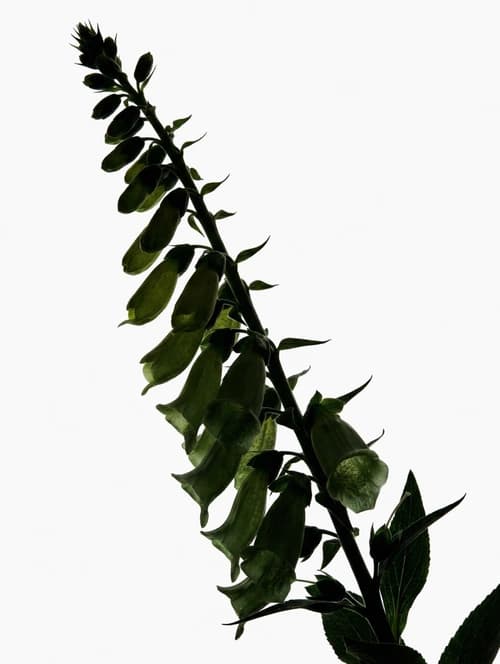
The most common mistake: more flowers look more generous. In truth, full bouquets often drown each other out — no single stem stands out anymore. Minimalist floristry reverses this: it gives every stem room instead of filling the vase. Here you will learn how a few blooms, a clear vase and deliberate emptiness become a composition that calms rather than overwhelms.
What “minimalist” really means. Reduced floristry is not a budget version of a large bouquet but a style with its own logic. Inspired by Japanese ikebana and the slow-flowers idea, it follows the “aesthetics of subtraction”: the focus is not on filling space but on what happens between the stems. The Japanese call this deliberately left-open gap “Ma” (間) — the pause that lets everything come into its own. Form, line and emptiness count as much as the bloom itself.
1. Few stems, an odd number. Start with one, three or five stems — never an even count. Odd groups feel more natural because the eye reads them as a living group rather than a static pair. A single characterful stem — a peony, a dahlia, a poppy — can have more impact than twenty mixed blooms. Rule of thumb: better one A1 stem with perfect vase life than three mediocre ones.
2. The plain vase as a quiet frame. In minimalism the vase works with the flower, not against it. Simple, unpatterned shapes are ideal: a clear glass cylinder, a matte ceramic column, a slim bud vase. A narrow opening is your best friend — it holds a few stems upright without you having to cram the vase full. The wider the opening, the more material you need to fill it. That is exactly what we want to avoid here.
3. Proportion: height decides. So that a reduced arrangement looks neither stunted nor top-heavy, the visible stem should measure roughly one and a half to two times the height of the vase. With a 15 cm vase, the bloom sits around 22 to 30 cm above the table. Trim in stages — once too short cannot be undone.
4. Asymmetry instead of symmetry. The classic Western bouquet aims for a round, even dome. The minimalist style does the opposite: it sets stems at different heights and angles and lets one line break out of the vase. This intentional imbalance mirrors how plants grow in nature — never strictly symmetrical. Turn each stem until its most beautiful line faces forward, then leave it alone.
5. Allow deliberate emptiness. The hardest step is to stop before it gets full. Resist the reflex to “tuck in one more”. The gap between two stems is not a flaw but part of the composition — it lets each bloom breathe on its own. Step back, look from two metres away: does each stem read on its own? Then it is finished.
6. Greenery is structure, not filler. A single eucalyptus branch or a few stems of ruscus give the arrangement line and depth — but used sparingly, as a deliberate stroke, not a green cloud. In minimalism foliage plays the role of drawing: it leads the eye rather than hiding gaps. Seasonally, this works with almost anything that arrives fresh from the Veiling Rhein-Maas.
Frequently asked
- How many flowers do I need for a minimalist arrangement?
- One to five, always an odd number. A single stem in a bud vase is enough for a calm effect; three or five stems make a small composition with staggered heights. More than seven stems usually leaves the minimalist style and becomes a classic bouquet.
- Which vase suits minimalist floristry?
- Simple, unpatterned shapes with a fairly narrow opening: clear glass, matte ceramic or a bud vase. The narrow opening holds a few stems in place without filler. The visible stem should measure roughly one and a half to two times the height of the vase.
- Which flowers work especially well for the reduced style?
- Varieties with a clear line or a striking single bloom: tulips and poppies for the curved line, peonies, dahlias or amaryllis as a characterful soloist, plus a branch of eucalyptus or ruscus for structure. What matters is less the variety than the quality of the single stem — in minimalism it stands entirely on its own.
- Why odd numbers instead of even ones?
- The eye reads even counts as static pairs, odd ones as a living group with a natural focal point. Three and five therefore feel more dynamic and natural than two or four — a basic design principle that has long held in floristry.
Related topics
Flower Library
Tulips
Flower Library
Peonies
Flower Library
Dahlias
Flower Library
Amaryllis
Flower Library
Poppies
Flower Library
Eucalyptus
Flower Library
Ruscus
Flower Library
Calla Lilies
Flower Library
Artichoke
Flower Library
Aspidistra (Cast-Iron Plant)
Flower Library
Angelica
Plants
Aeonium
Plants
Living Stones
Plants
Moonstones
Plants