Winter Wedding Flowers: Marrying in White, Green and Quiet Style
Which flowers are truly in season from December to February — and how amaryllis, ranunculus and eucalyptus make a cool winter wedding feel warm and refined.
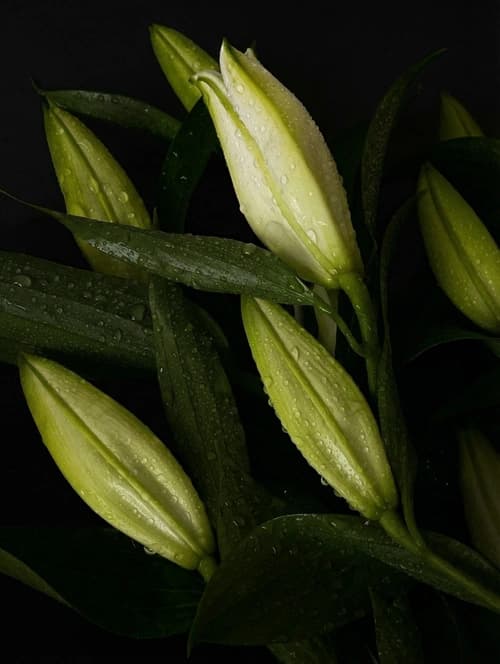
A winter wedding has its own magic: clear light, muted colors, a stillness summer never offers. The biggest worry many couples have — ‘nothing blooms in winter' — is unfounded. Three flowers carry the cold season with ease: amaryllis, ranunculus and eucalyptus. This guide shows how to build a white-and-green concept from them that feels refined rather than frosty.
What is actually in season in winter. Contrary to the common claim, the cold season is floristically rich — just stocked differently. Amaryllis has its big moment from November to February, ranunculus enters its main season in January and runs into May, and eucalyptus as cut greenery is available year-round but feels especially defining in winter. Add anemones, tulips, hydrangeas and sweet peas. Planning with the season instead of against it gives you fresher material with longer vase life, and noticeably calmer prices than imported off-season stock.
The color concept: why white and green works in winter. A pure white-and-green palette in winter isn't a compromise, it's a deliberate choice. White picks up the light of snow and cold skies, green provides structure and keeps things from looking sterile. The trick against the ‘hospital effect' many fear with pure white: work with textures rather than colors. The paper-thin layers of ranunculus, the waxy bloom of amaryllis and the silvery, matte foliage of eucalyptus create depth without a second color. If you want warmth, add a single accent — muted burgundy, sage or dusty rose.
The three leads and their roles. Amaryllis is the statement bloom: large, architectural, perfect for tall table arrangements and altar pieces — its hollow stems can be stabilized with a thin cane. Ranunculus is the romantic heart of the bridal bouquet; its many fine petals look almost like little roses up close and photograph beautifully. Eucalyptus is the connector: as a table runner, chair décor and greenery it runs through the entire decoration, tying bouquet, tables and ceremony into one picture. Linked varieties can be explored in detail in the lexicon.
Symbolism that suits a wedding. Winter floristry also lives on meaning. Amaryllis stands for pride, strength and radiant beauty — and precisely because it blooms in the cold season, it is a symbol of constancy and endurance, a lovely image for a marriage. In the Victorian language of flowers, ranunculus carries the message ‘you are radiant with charm', a compliment that sits perfectly in a bridal bouquet. Eucalyptus traditionally represents protection and steadfastness. Three flowers, three statements that combine into one coherent promise.
An important safety note: amaryllis is toxic. The whole plant, especially the bulb, contains the alkaloid lycorine and is toxic to cats and dogs — if eaten it causes vomiting, drooling and diarrhea, and in larger amounts more serious symptoms. For wedding décor this means: don't leave stems and trimmings within reach of pets, and place amaryllis arrangements where guests' dogs can't get to them. For humans the concern is mainly ingestion — on the table and in the bouquet the bloom is harmless.
How to plan step by step. 1. First fix your palette: pure white-green, or white-green plus one accent color. 2. Choose a lead flower per area — amaryllis for height, ranunculus for the bouquet, eucalyptus for surface. 3. Talk to your florist early, in winter ideally six to eight weeks ahead, so the material can be reserved at the auction in time. 4. Mind logistics: cut flowers like cold but not frost — protect delicate blooms with paper on the way from the car into a cold church. 5. Plan boutonnières and hair flowers from the same varieties so the picture stays cohesive. At Fleura we assemble such winter concepts regularly — with A1 stock from the Veiling Rhein-Maas that still looks fresh after a long celebration.
Frequently asked
- Which flowers are available for a winter wedding?
- Plenty. Amaryllis (November to February), ranunculus (from January), anemones, tulips, hydrangeas and sweet peas bloom in the cold season, plus year-round greenery like eucalyptus and ruscus. Planning with the season means fresher material, longer vase life and calmer prices.
- Doesn't a pure white-and-green winter wedding feel too cold?
- Only if you think purely in color. In winter, warmth comes from texture and material: the delicate layers of ranunculus, the waxy white of amaryllis, the matte silver-green of eucalyptus. Candles, warm light and natural materials like wood or linen do the rest. If you like, add a single muted accent such as burgundy or sage.
- Are wedding flowers with amaryllis a problem when pets are present?
- Amaryllis contains the alkaloid lycorine and is toxic to cats and dogs, most strongly in the bulb. As a cut flower the risk is lower, but trimmings and fallen stems should stay out of reach of animals. Place amaryllis arrangements elevated and away from guests' dogs — then the bloom is no concern.
- How early should I order winter wedding flowers?
- Ideally six to eight weeks before the date. Winter material is sourced deliberately, and demand for amaryllis and white greenery is high around the holidays. Talking to your florist early secures the varieties you want in A1 quality and lets you realize the concept without compromise.